



Today at GDC 2026, Microsoft used its developer keynote to drop two of the biggest gaming announcements of the year so far. Xbox VP of Next Generation Jason Ronald confirmed that Xbox Mode is coming to all Windows 11 devices starting in April, and shared the first real technical details on Project Helix, the next-generation Xbox console that will play both Xbox and PC games natively.
Both announcements point in the same direction: Microsoft is officially done treating console and PC as separate worlds.
The keynote, delivered March 11 at the 2026 Game Developer Conference, also marked Xbox’s 25th anniversary, and Ronald used the moment to make clear that the platform is thinking as much about its future as it is about preserving its past.
Xbox mode is the console experience your Windows PC has been missing
Xbox Mode is the evolution of what Microsoft originally launched as the Xbox Full Screen Experience, a feature that debuted late last year on the ASUS ROG Xbox Ally handhelds and was later made available to Windows Insider testers. Starting in April, it rolls out to all Windows 11 devices, including desktops, laptops, and tablets, beginning with select markets.
What it does is straightforward: it transforms your Windows 11 PC into something that feels a lot more like a console. You get a full-screen, controller-optimized interface where you can browse your game library, launch titles, use Game Bar, and switch between apps, all without needing a keyboard or mouse. The interface is designed to be clean and distraction-free, and you can jump back to the regular Windows desktop whenever you want.
Xbox Mode also reduces unnecessary background tasks that consume RAM and processing power during gaming, so your hardware stays focused on the game. It also pulls together your gaming libraries from multiple storefronts, including Steam and the Epic Games Store, into a single unified place to launch everything from. Microsoft had been testing this approach first on the ROG Xbox Ally, and the results were clearly convincing enough to bring it to every Windows 11 device on the market.
Microsoft has been running the feature through Windows Insider testing since late 2025, and the April rollout will bring it to the general public for the first time. The renaming from Xbox Full Screen Experience to Xbox Mode is subtle but meaningful, it signals that this is no longer a preview or an experiment limited to handheld devices, it’s a permanent part of what Windows gaming looks like from here on out.
For anyone who has ever connected their PC to a TV and wished the experience felt less like a desktop and more like a console, Xbox Mode is exactly what that situation has been missing. The timing, with Project Helix on the horizon, makes it clear this is also a preview of the interface Microsoft is designing for its next console.
Project Helix: The next Xbox will play your console and PC games
Alongside the Xbox Mode news, Ronald confirmed new details on Project Helix, the official codename for Microsoft’s next-generation console. The headline feature is one that Microsoft Gaming CEO Asha Sharma had already hinted at last week: Project Helix is designed to play both Xbox console games and PC games natively on the same machine.
What that means in practice, whether it extends to third-party storefronts like Steam or Epic Games Store, hasn’t been officially spelled out yet. But given that Xbox Mode already pulls those libraries together on Windows, the direction Microsoft is heading is hard to misread.
On the hardware side, Project Helix is powered by a custom AMD SoC, co-designed alongside the next generation of DirectX and AMD’s FSR technology. Microsoft says the system delivers what they describe as “an order of magnitude leap” in ray tracing performance compared to current hardware. It also integrates machine learning directly into the graphics pipeline, with support for ML upscaling, ML Multi-Frame Generation, ray regeneration, and neural texture compression.
Microsoft is co-developing the next generation of AMD’s FSR upscaling technology as part of a long-term partnership with AMD. Some reports have pointed to AMD Magnus chips and RDNA 5 architecture under the hood, consistent with AMD’s upcoming roadmap. Microsoft also confirmed that Project Helix will support backward compatibility with games from four generations of Xbox hardware, so your existing library carries forward to the new machine.
Alpha versions of the hardware are set to ship to developers in 2027, which puts a consumer release window sometime after that. No official price has been announced, though some analysts have speculated the machine could land at $999 or higher given its hybrid ambitions.
The wall between Xbox and PC is gone, and the classics are coming back too
The bigger picture here is something Microsoft has been building toward for years. Xbox Mode brings the console interface to Windows. Project Helix brings PC gaming to the console. Between the two, the line that has always separated those two worlds is effectively gone.
Jason Ronald made that intention explicit: “As games increasingly span devices, we’re breaking down the barriers between console and PC games for more seamless cross-device play, and we’re making the Xbox experience consistent across screens.”
The Xbox Play Anywhere catalog now sits at over 1,500 games, with 500 development teams already shipping titles under the program. Advanced Shader Delivery, a technology that pre-compiles shaders to eliminate the stuttering that plagues so many PC game launches, is also being expanded at GDC to all developers on the Xbox store, after previously being limited to ROG Xbox Ally titles.
Microsoft also announced that DirectStorage is getting support for Zstandard compression, along with a new Game Asset Conditioning Library to help studios manage and optimize assets during production. Both additions are aimed at faster load times and smoother performance for players.
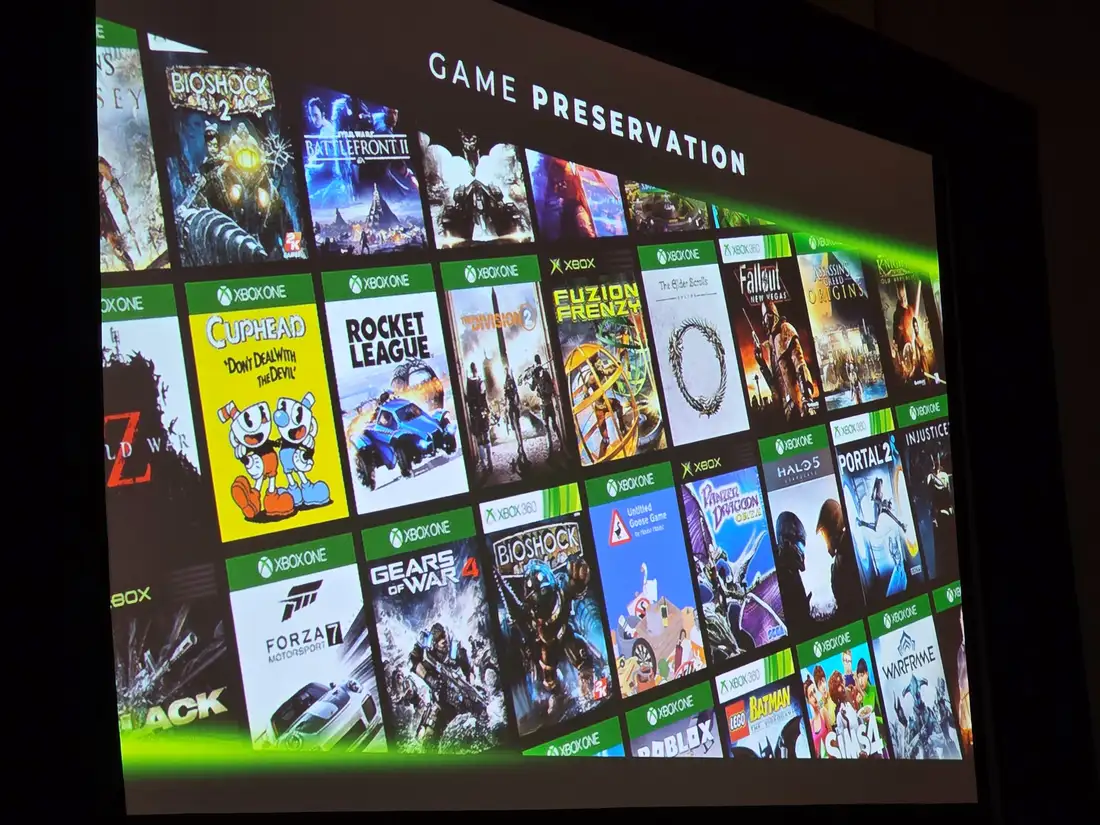
And Microsoft wasn’t just talking about the future. As part of the 25th anniversary, the Xbox preservation team will be re-releasing classic titles and rolling out new ways to play iconic games from the platform’s history. Ronald also confirmed that first-party franchises are coming back this year, naming Halo and Gears of War specifically. Two of the biggest names in Xbox history, returning in 2026.
It’s a lot to take in from a single keynote, but everything Microsoft announced today fits together. The platform is being rebuilt from the ground up to treat PC and console as one thing, and April is when that starts becoming real for everyone.
Are you excited about Xbox Mode coming to your PC, or is Project Helix the announcement that really got your attention? Tell us in the comments!