



Insider SneakerSO, the same leaker who correctly called Microsoft’s multiplatform strategy months before anyone at Xbox officially admitted it, is back with a new wave of information about Project Helix, the confirmed codename for Microsoft’s next-generation console. And if what he’s saying is accurate, the next Xbox will be something the industry has never seen before.
Project Helix was officially confirmed by Asha Sharma, the newly appointed CEO of Microsoft Gaming who took over following Phil Spencer’s retirement on February 23, 2026. In a post on X, Sharma stated that “Project Helix will lead in performance and play your Xbox and PC games,” and promised more details at GDC the week of March 9. That single statement confirmed what had been circulating in leak circles for months: the next Xbox is a hybrid machine that blurs the line between console and PC. What Sharma didn’t go into, and what SneakerSO now claims to know, is just how deep that blurring actually goes.
According to SneakerSO’s posts on NeoGAF, Project Helix will not have a native Xbox build target for developers. The dedicated Xbox SKU that studios were previously building toward has reportedly been scrapped entirely. “There’s no Xbox Helix build target, it’s just a UWP build. You’re just shipping a game for the Windows Store,” the insider wrote. In practical terms, that means the “Xbox version” of a game would simply be the PC version packaged as a Universal Windows Platform application, no separate console port, no custom build for Xbox hardware. Developers would only need to create and maintain one version of their game, and it would work across both PC and Project Helix automatically.
SneakerSO also described the device itself as “basically a PC that uses the Windows Full Screen Experience that we just saw in the ROG Ally X to emulate a console experience.” The Windows Full Screen Experience is the same interface Microsoft deployed on the ASUS ROG Xbox Ally handheld, designed to replicate the feel of a traditional console dashboard while running on Windows underneath. Project Helix, according to the leak, would bring that same approach to a living room set-top box format.
Your game library is safe, but it works differently
One of the most important details in SneakerSO’s report is what happens to existing Xbox games. Current titles will still be playable on Project Helix, but not natively, they’ll run through backwards compatibility emulation, the same system Xbox has used for years to make older games work on newer hardware. “You still have access to your Xbox library thanks to BC emulation,” SneakerSO clarified, “but as far as having a ‘native’ Xbox console SKU you built your game towards, that’s done.”
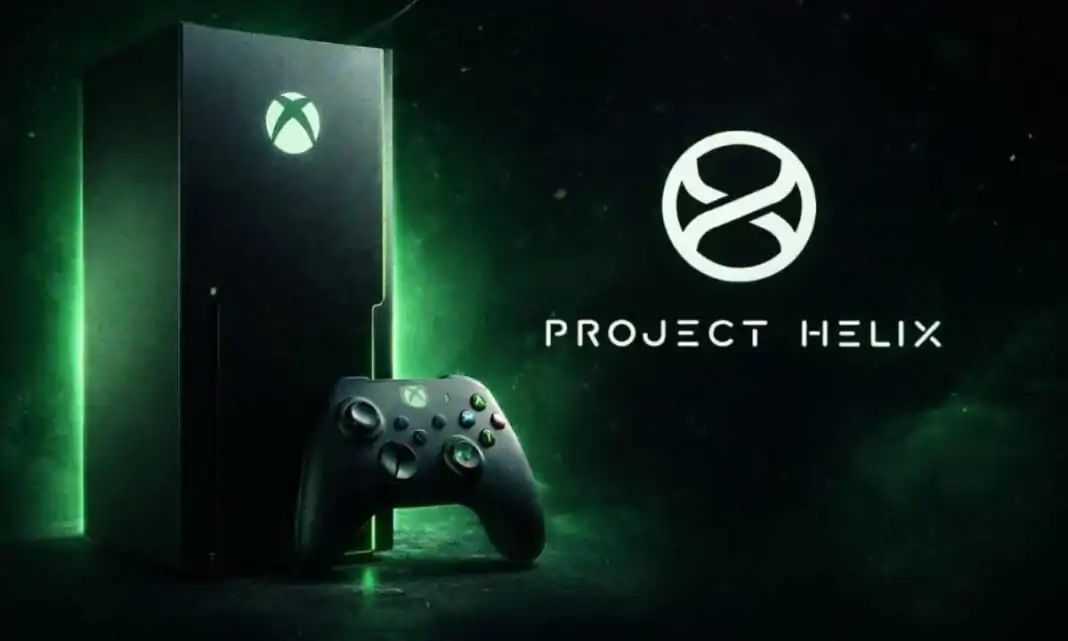
Reports also indicate that Project Helix will ship with Steam, the Epic Games Store, and other PC storefronts installed on the device, further cementing its identity as a Windows PC in console clothing rather than a traditional dedicated gaming machine. The hardware powering it is expected to be serious, leaked specs suggest AMD Zen 6 CPU cores paired with an RDNA 5 GPU targeting native 4K at 120 frames per second, with AMD CEO Lisa Su confirming during an earnings call that development of the next-gen Xbox chip is “progressing well” to support a 2027 launch. But that performance will come at a price. Analysts estimate Project Helix could cost anywhere from $900 to over $1,400 at launch, making it one of the most expensive gaming devices ever positioned for a living room audience.
SneakerSO himself acknowledged that Microsoft is fully aware this won’t be a mass-market product. He described it as “pretty expensive and made for a very niche audience,” and suggested internally that Microsoft plans to use the device’s limited sales as justification for eventually winding down its hardware business altogether. Notably, the decision to proceed with Project Helix wasn’t a fresh strategic bet, Asha Sharma reportedly could not cancel it because too much R&D investment had already been spent before she took the role.
This is what the end of the console war looks like
To understand why Project Helix is such a significant moment, you need to look at the numbers behind it. Xbox hardware revenue has now declined for three consecutive financial years. In Microsoft’s Q2 FY2026 earnings report, overall gaming revenue dropped 9% year-over-year, with Xbox hardware specifically plunging 32%. For context, the Xbox Series X has sold around 34 million units since its 2020 launch, the PS5 has sold over double that, at more than 84 million units. The gap isn’t closing; it’s widening.
That context matters because Project Helix isn’t being built from a position of strength. It’s being built by a company that has already publicly acknowledged it is no longer trying to out-console Sony or Nintendo. As Microsoft CEO Satya Nadella put it during the earnings call, the company is “committed to delivering great games across Xbox, PC, cloud, and every other device”, with record growth specifically coming from PC players and cloud streaming hours. The hardware business, by contrast, keeps shrinking.
This is what makes Project Helix’s architecture so revealing. A device that runs Windows, sells games through the Windows Store, and ships with Steam pre-installed isn’t really competing with the PlayStation 6. It’s competing with Valve’s upcoming Steam Machine, another living-room PC hybrid aimed at enthusiasts who want PC flexibility on their TV. Japanese gaming analyst Dr. Serkan Toto made exactly that point following Sharma’s GDC announcement, arguing that Microsoft’s real battle with Project Helix isn’t against Sony, but against Valve. He also warned that if Project Helix fails to win that fight, Microsoft may exit the console market entirely.
Sony, meanwhile, has been moving in the opposite direction. The company has been pulling back on bringing PlayStation exclusives to PC, titles like Ghost of Yotei and Marvel’s Wolverine are confirmed to stay off PC, doubling down on traditional hardware loyalty while Microsoft walks away from it. The two companies’ next-generation strategies now point in completely opposite directions, which means the “console war” as we’ve known it for 25 years is effectively over. It’s not that one side won, it’s that one side changed the game entirely and walked off the field.
Whether that turns out to be a brilliant long-term platform play or the quiet beginning of Microsoft’s exit from gaming hardware is something that won’t become clear until Project Helix actually ships. What is clear is that none of SneakerSO’s specific claims have been officially confirmed by Microsoft yet, so treat all of this as credible, well-sourced speculation until GDC delivers something concrete. But given his track record, and given the financial reality Xbox is living in right now, the picture he’s painting is one that’s very hard to dismiss.
Now we want to hear from you. Is Project Helix the bold reinvention Xbox needed to survive, or does it feel like Microsoft quietly handing in its resignation from the console business? Drop your take in the comments, we read every single one, and this is exactly the kind of debate worth having.