

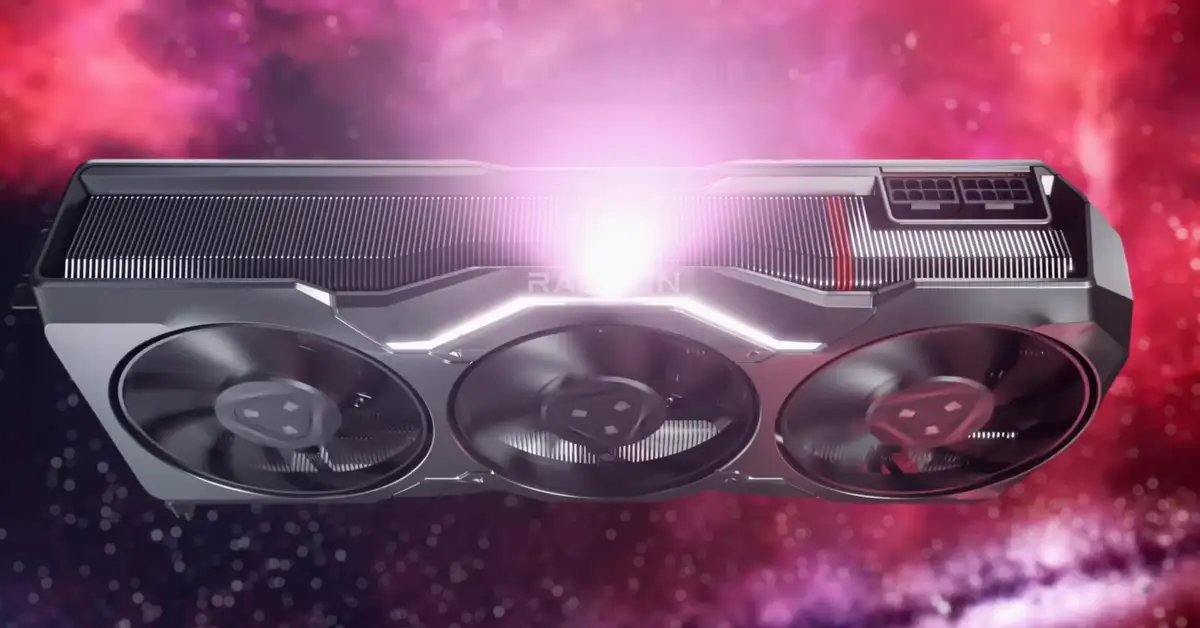

On March 7, 2026, TinyCorp, the AI startup behind the tinygrad neural network framework and the TinyBox workstation, published a fundraising proposal on X that immediately got the tech world talking.
The company wants to raise $20 million at a $200 million valuation, buy an $11.5 million building in Oregon with 5 megawatts of power capacity, pre-order 3,000 units of an AMD RDNA 5 GPU with 96GB of VRAM at around $2,500 each, and sell AI inference computing power through platforms like OpenRouter. Projected revenue: around $5.4 million per year.
The problem? That GPU doesn’t exist. And TinyCorp is essentially asking AMD to build it.
Founded by George Hotz, the hacker who at 17 became the first person to unlock an iPhone, later cracked the PlayStation 3, and went on to build the self-driving car company Comma.ai, TinyCorp has never been shy about big swings. In the same X post, Hotz tagged AMD CEO Lisa Su directly and wrote: “RDNA 5 should be GDDR7 with a 512-bit bus. Get the 3GB modules and double side it like the Blackwell. We’ll build the board if they don’t.”
The technical logic behind the proposal is straightforward. Mounting 3GB GDDR7 modules on both sides of a board with a 512-bit memory bus gets you to 96GB of VRAM, the same approach NVIDIA uses on its Blackwell-based professional cards. On paper, it works. In practice, it requires AMD to make hardware decisions it has not publicly committed to making, for a market segment it has largely stepped back from in recent generations. That’s the part nobody is talking around.
TinyCorp’s mission has always been to “commoditize the petaflop”, to make serious AI computing power accessible outside the big tech companies that can afford NVIDIA’s enterprise hardware. This proposal is that mission taken to its logical extreme.
if tiny corp was raising $20M (@ $200M), who’d be interested? business model is basically this.
buy this $11.5M building (with 5MW of power): link in our discord
wait for AMD to launch the RDNA5 96GB cards (mid 2027). preorder 3000 cards (hopefully we can negotiate for $2500…
— the tiny corp (@__tinygrad__) March 7, 2026
A 96GB GPU that only NVIDIA makes, for $8,000 to $10,000
Right now, the only GPU on the market with 96GB of VRAM is NVIDIA’s RTX PRO 6000 Ada Blackwell, which retails between $8,000 and $10,000 per unit. That is a workstation card aimed at professionals and large enterprises, not something a small AI lab or independent developer can easily budget for. For context, TinyCorp is asking for that same memory capacity at less than a third of the price.
Leaked information about RDNA 5 does point to the flagship AT0 chip featuring 96 Compute Units and up to 12,288 cores, with a 512-bit memory bus appearing in the rumor pool as well. But those specs are tied to configurations likely destined for enterprise and cloud deployments, not consumer cards. Nobody in the industry is currently anticipating a consumer-grade 96GB AMD GPU, and AMD has made no public announcements pointing in that direction.
This is the core tension of TinyCorp’s pitch. The business model only works if AMD builds something it hasn’t signaled any intention to build, at a price that current market conditions make extremely difficult to hit, for a launch window, mid-2027, that already feels tight given where memory supply chains are heading. Hotz knows the ask is aggressive. That’s kind of the point.
The GDDR7 shortage that makes the math even harder
Even setting aside whether AMD wants to build this GPU, there is a supply chain reality in 2026 that makes the $2,500 price target look very optimistic.
The global memory industry is under serious strain this year. AI data centers are consuming memory at a pace the industry wasn’t built to sustain. According to TrendForce, AI is expected to effectively consume nearly 20% of global DRAM manufacturing capacity in 2026, with GDDR7 requiring 1.7 times the wafer capacity of standard DRAM. Memory manufacturers Samsung, SK Hynix, and Micron have been redirecting fab capacity toward higher-margin AI orders, pushing consumer GPU memory down the priority list.
The impact is already being felt. NVIDIA has reportedly been planning to cut RTX 50-series GPU production by up to 40% in early 2026 specifically because GDDR7 supply is too constrained to maintain full output. VRAM now accounts for more than 80% of the total bill of materials on some high-end GPUs, according to industry reports.
Getting to $2,500 on a 96GB card by mid-2027 would require a significant drop in memory costs from where they stand today. Not impossible, but a lot has to go right, and right now almost nothing in the memory market is going right.
TinyCorp and AMD have a long and bumpy history
TinyCorp’s frustration with AMD isn’t new, and neither is their commitment to working with Team Red anyway. The original TinyBox Red ships with six Radeon RX 7900 XTX cards, built on the belief that AMD’s price-to-performance ratio makes them the smarter pick for accessible AI computing compared to NVIDIA’s more expensive hardware.
But the relationship has had real friction. AMD’s ROCm software stack caused enough problems that TinyCorp eventually decided to build their own solution from scratch. They developed a completely independent software stack for AMD GPUs, their own driver, runtime, libraries, and emulator, all in roughly 12,000 lines of code, bypassing ROCm entirely. That is a serious engineering investment, and it underlines just how committed they are to making AMD hardware work, even when AMD doesn’t make that easy.
That history matters when reading Hotz’s “we’ll build the board ourselves” line. He is not bluffing for attention. TinyCorp has a track record of doing exactly what they say when the industry doesn’t cooperate, and Hotz personally has spent his entire career breaking into systems everyone said were unbreakable.
Whether AMD delivers a 96GB consumer RDNA 5 GPU or not, TinyCorp is putting a real question on the table: if NVIDIA’s 96GB option starts at $8,000, is affordable AI inference at scale actually possible for anyone outside the biggest tech companies? AMD is the only company positioned to answer that question. And right now, they’re staying quiet.
Do you think AMD should take TinyCorp up on this challenge, or is Hotz dreaming too big? Tell us what you think in the comments!