



Counter-Strike 2 has one of the most active digital economies in gaming history, and at the center of it are weapon skins, cosmetic items that change the visual appearance of in-game weapons without affecting gameplay in any way. Despite having zero competitive value, some of these skins sell for thousands of dollars, with the rarest ones crossing six figures. Understanding why comes down to psychology, social dynamics, and a community culture that has turned virtual items into genuine status symbols.
The game currently has over 20 million active players worldwide, and its skin market cap reached an all-time high of over $6 billion in October 2025 according to Pricempire data. The broader global gaming skins market across all titles is projected to reach $25 billion by 2033. That alone tells you this stopped being a niche hobby a long time ago.
Why people pay thousands for a digital knife
The most expensive skins in CS2 are knives and gloves, which can only be obtained by opening cases, a system that functions much like a slot machine. Valve introduced the first weapon cases back in August 2013 with the Arms Deal update, and what started as a simple cosmetic experiment has grown into a multi-billion dollar virtual marketplace. The drop rate for knives sits at approximately 0.26%, making them extremely rare to unbox.
A Butterfly Knife Doppler Sapphire, for example, currently sells for between $7,000 and $12,000 depending on its condition and float value. Some particularly rare skins have sold for over $150,000, and Souvenir versions of iconic weapons like the AWP Dragon Lore regularly list for several hundred thousand dollars.
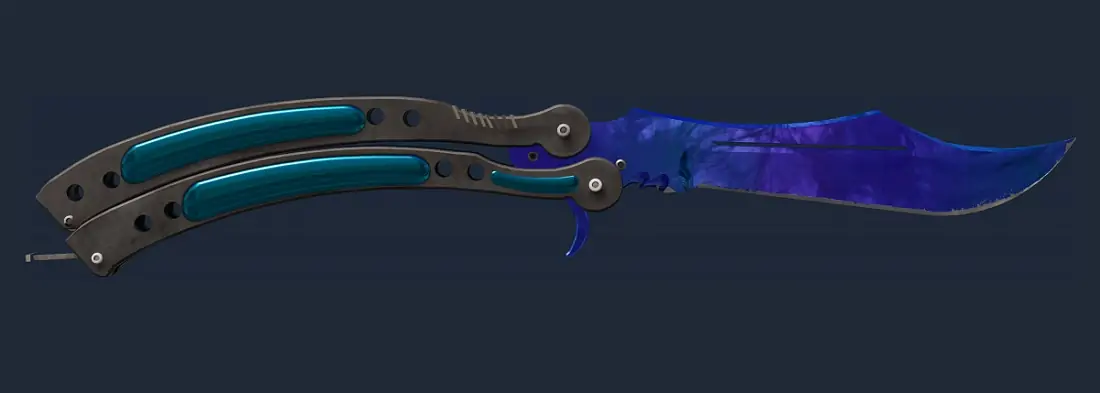
Part of what drives these prices is straightforward supply and demand. When a case gets discontinued, its skins stop entering circulation, supply is fixed forever while demand keeps growing, so prices climb steadily over time. The rarity system itself has seven tiers, ranging from Consumer Grade all the way up to the Exceedingly Rare category that covers knives and gloves. The lower the drop chance, the higher the price, and the more desirable the item becomes to collectors.
But psychology plays just as important a role as economics. The anticipation of opening a case and potentially unboxing something rare triggers a dopamine release in the brain, the same mechanism behind gambling. Players who open several low-value cases in a row tend to feel like a big drop is just around the corner, which keeps them spending more than they intended. The visual design of the case opening animation, a scrolling reel of skins that teases you with rare items before landing, is not accidental. It is built specifically to generate that anticipation.
There is also a clear investment logic that justifies the spending for many buyers. Unlike most in-game purchases, CS2 skins can be resold on the Steam Marketplace or third-party platforms for real money, often at a profit over the original purchase price. This makes them function more like digital assets than cosmetics, and a growing number of players treat their inventories exactly that way.
People buy skins worth thousands of dollars knowing that if they ever want out, they can sell and recover, or even grow, their money. At the same time, not every player wants to spend large amounts upfront. Some instead use platforms like Gatherskins, where users complete offers or surveys from advertisers in exchange for skins that can later be traded or sold on the market.
Streamers, status, and the flex culture inside every match
Inside CS2 matches, skins are always on display. Every time a player pulls out a knife, inspects their weapon, or shows up in a kill cam, their entire loadout is visible to everyone in the lobby. This constant visibility is what transforms expensive skins into status symbols. Owning a rare knife communicates experience, dedication, and in many cases real-world wealth, all without saying a word. A significant part of the CS2 community considers their skins more representative of their standing than their actual leaderboard rank.
This has given rise to what players call flex culture, showing up to competitive matches with a high-end, coordinated loadout of matching knife, gloves, and rifle as a form of presence before a single shot is fired. Highlight clips and stream VODs become as much a showcase for inventories as for skill, and streamers and traders actively pay premiums for skin combinations that look clean on camera.
Streamers are one of the most powerful forces shaping the CS2 skin market. While Valve controls the game’s infrastructure, content creators dictate trends, drive demand, and directly move prices. A single video highlighting underrated skins can cause prices to jump 30 to 50 percent in a single day. When a popular creator is seen using a specific skin regularly, their audience wants the same item almost immediately, pushing demand and prices up fast. If a skin has a known history of belonging to a famous streamer or player, that provenance adds real monetary value on top of its base rarity.
Professional players at major tournaments work the same way. Souvenir skins, obtainable only from special packages dropped during major events, carry autograph stickers from competing players. A Souvenir AWP Dragon Lore signed by a major champion can reach hundreds of thousands of dollars. The market treats these items the same way the physical world treats signed memorabilia from legendary athletes: the story behind the object matters as much as the object itself.
CS2 became the most-watched esport on Twitch in Q1 2025, surpassing League of Legends with 99.16 million hours watched according to esports charts. That level of viewership keeps skin culture alive and growing constantly, pulling new waves of players into a community where what you carry in your loadout says just as much about you as how well you play.
What started as a simple cosmetic experiment in 2013 has evolved into something that genuinely resembles the luxury goods market, with status symbols, collector culture, speculative investment, and influencer-driven demand all working together. The items are digital. The money and the psychology behind them are very real.
What do you think, are CS2 skins a legitimate investment or just the most expensive flex in gaming? Drop your take in the comments, we want to hear it!