

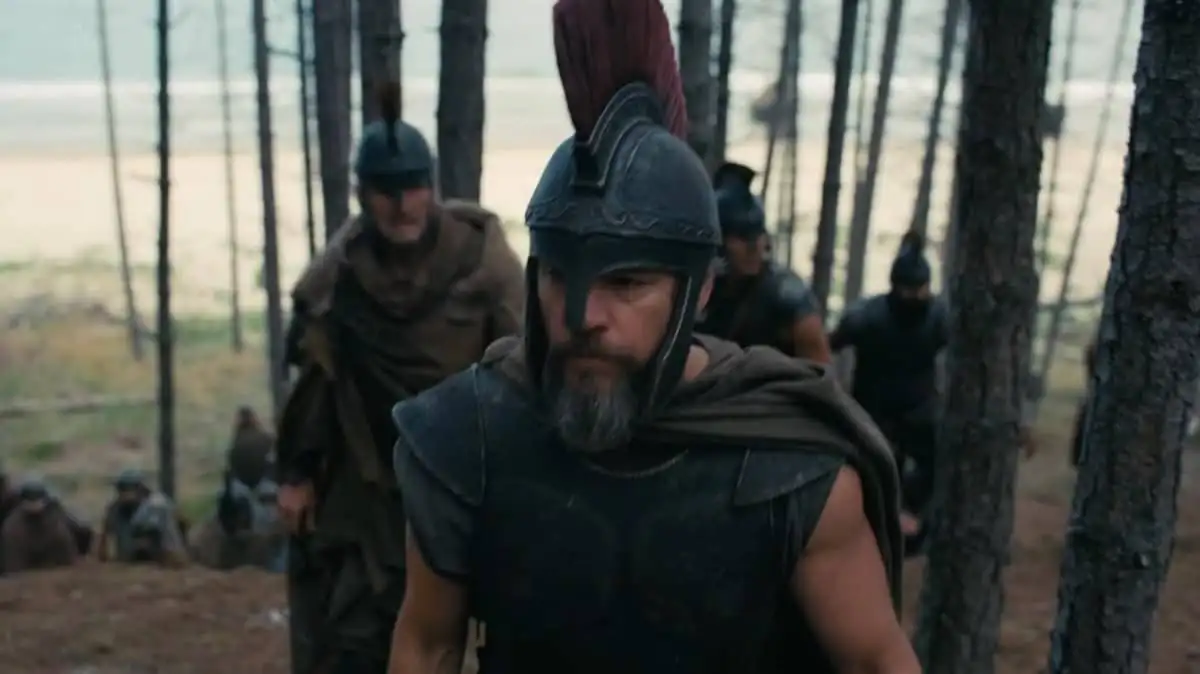

Christopher Nolan’s The Odyssey finally hit theaters on July 17, 2026, closing out a marketing campaign that had fans theorizing for over a year about secret roles, IMAX 70mm cameras, and a cast stacked with enough A-listers to fill three movies.
Matt Damon leads as Odysseus, with Tom Holland as his son Telemachus, Anne Hathaway as Penelope, Zendaya as Athena, Charlize Theron as Circe, Lupita Nyong’o as Helen of Troy, and Robert Pattinson as Antinous. On paper, it reads like the adaptation Homer’s epic has been waiting three thousand years for. On screen, it plays like a movie that forgot what story it wanted to tell.
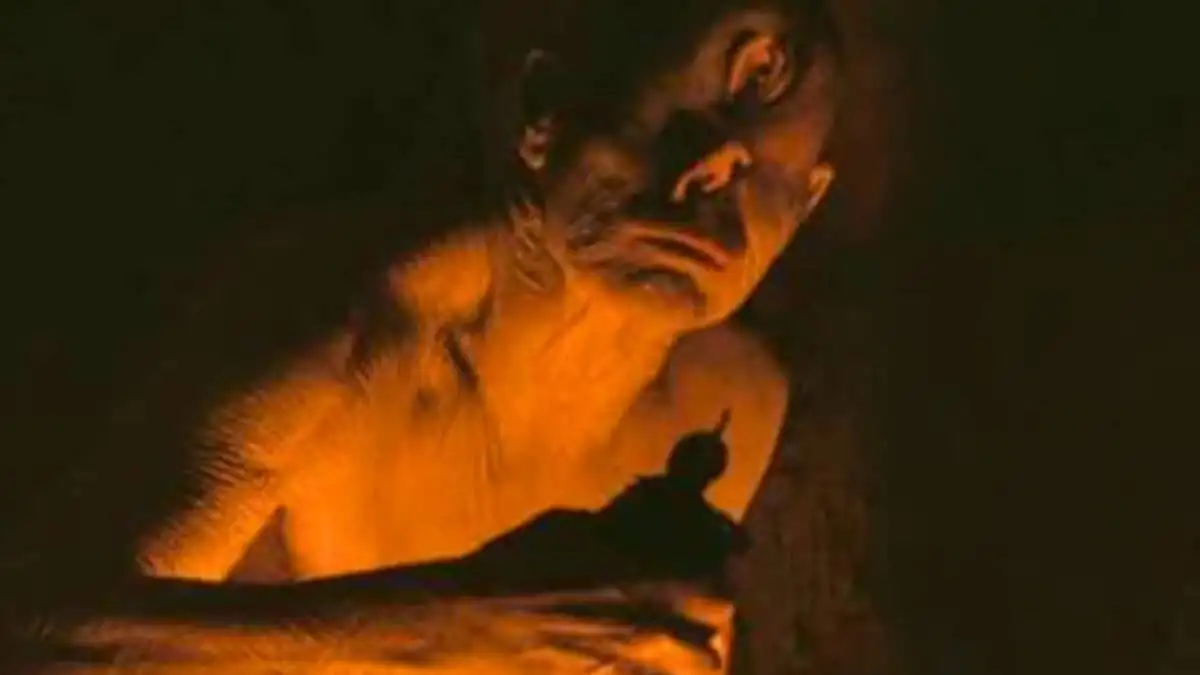
Let’s start with what actually works, because there is one sequence worth defending: the Cyclops. The cave is suffocating, the lighting drains every trace of warmth from the frame, and Polyphemus himself is genuinely unsettling in a way that recalls the atmosphere of “Troll” rather than anything else in this cast’s filmography. For about fifteen minutes, The Odyssey feels like it knows exactly what kind of movie it wants to be: a horror story about a man trapped somewhere he should never have gone. It’s the only stretch of the film that could survive being cut loose and shown on its own. Everything around it can’t say the same.
A script that doesn’t trust is own source material
The biggest problem with this Odyssey isn’t that it changes Homer, adaptations change things, that’s the job. The problem is that the changes don’t seem to be in service of anything. Take Elliot Page’s character, Sinon. After more than a year of speculation that Page would be playing Achilles, it turns out Sinon isn’t from The Odyssey at all, he’s pulled from Virgil’s Aeneid, written centuries after Homer, where he’s the Greek soldier who tricks Troy into dragging the wooden horse through its gates.
Nolan gives him a death scene in the underworld built around the same “I would rather live as a servant than be king among the dead” sentiment that belongs to Achilles in the actual text. So the film imports a character who was never here to begin with, hands him someone else’s most famous line, and expects the audience to feel the same weight Homer earned over ten thousand lines of poetry. It doesn’t land. It just feels like a swap nobody asked for.
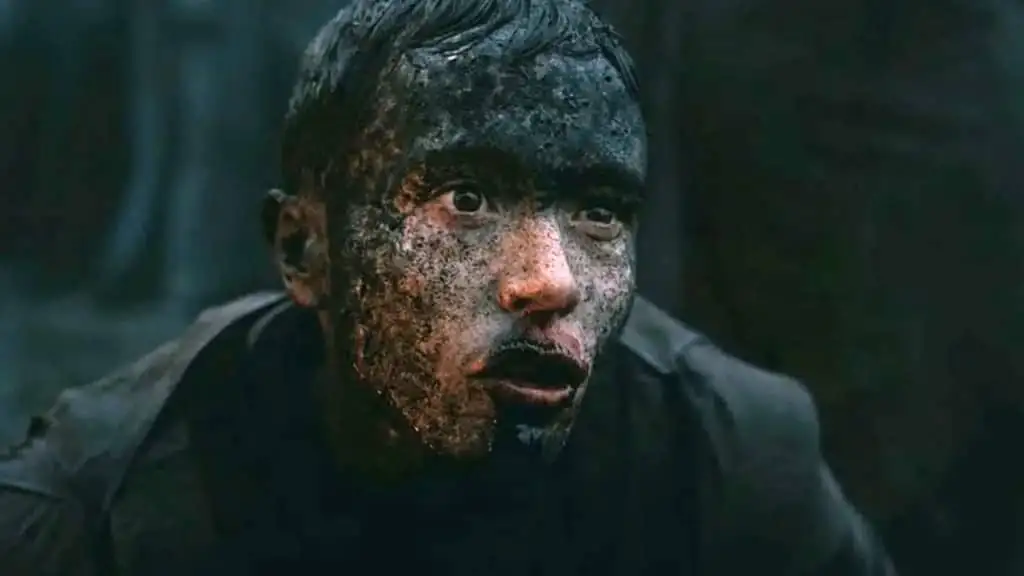
But the real damage isn’t in the side characters, it’s in Odysseus himself. Homer’s Odysseus is cunning, intelligent, resourceful, arrogant and deeply flawed precisely because all of that ambition and cleverness comes with a cost, that’s the whole point of the character, the guy smart enough to outwit a Cyclops and still too proud to know when to stop talking.
Nolan’s version strips almost all of that away. This Odysseus is sad. He’s remorseful. He spends most of the runtime looking traumatized rather than acting like the sharpest mind in the room. The cunning is barely there, the arrogance is gone, and what’s left is a survivor processing grief instead of a hero driving his own story forward. That’s not a small tweak, that’s a different character wearing a familiar name. Call it Christopher Nolan’s Odyssey if you want, because it isn’t Homer’s.
That disconnect runs through the whole runtime. Scenes arrive without transitions, drop you into the middle of a new island, the middle of the ocean or a new flashback with no sense of how much time has passed, and then cut away again before anything resolves emotionally. Ludwig Göransson’s score, so effective in Oppenheimer, never finds a theme here, nothing swells, nothing repeats, nothing gives the ten-year journey a musical spine to hang onto. A story about a man trying to get home should feel like a journey. This one feels like a slideshow.
A modern dialogue, in an ancient world
Nothing pulls you out of a period epic faster than hearing it talk like it isn’t one. The Odyssey is set roughly three thousand years ago, in the aftermath of the Trojan War, and yet its characters keep reaching for language that belongs anywhere but there.
At one point Matt Damon’s Odysseus screams at his own soldiers, “Ten years on this fucking beach”, and it’s not that the line is shocking, it’s that it’s so tonally out of place that it snaps the illusion instantly. You’re not watching Odysseus anymore. You’re watching Matt Damon read a line. Small moments like this happen throughout the film, modern phrasing dropped into an ancient setting like it forgot which movie it was making, and every time it happens, the immersion resets to zero.
It doesn’t help that the cast doesn’t always disappear into these roles the way you’d want. Watching Tom Holland share the screen with Jon Bernthal, it’s hard not to think about Spider-Man: Brand New Day rather than Ithaca, and that’s a real problem for a film asking you to believe in gods, monsters, and a decade-long voyage home.
A cast built for headlines, not for the story
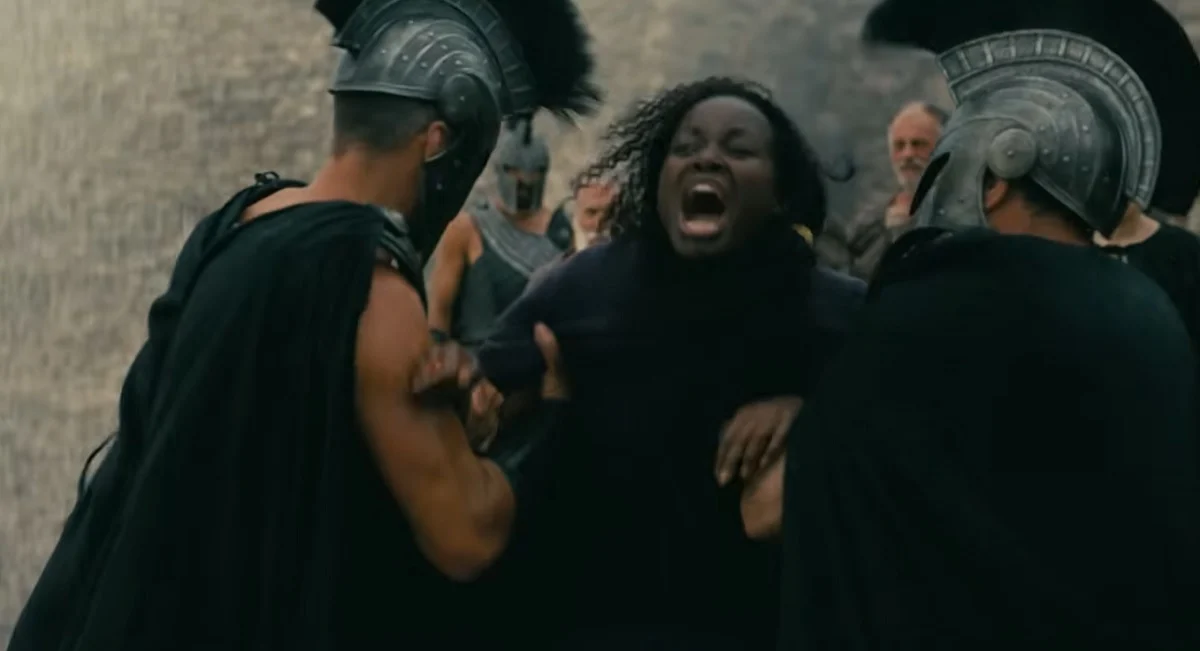
There’s also the matter of who’s here and why. Zendaya and Lupita Nyong’o are undeniably talented performers, but their presence in this film feels less like a creative decision and more like a box being checked, representation for the sake of the press cycle rather than characters the story actually needed built this way.
It’s the same instinct that seems to be behind Sinon replacing Achilles’ most iconic moment: The Odyssey often plays like it’s less interested in telling Homer’s story than in proving a point to studio executives, that a “woke” movie can still open big if you wrap it in a recognizable title, an influential director and a big enough budget. At $250 million, with a $51 million opening day already on the books, it clearly has the box office to make that argument. Whether it earned it creatively is a different conversation, and audiences are getting tired of being asked to accept “the message” instead of a story that stands on its own.
That’s the frustrating part. There was a genuinely great horror movie hiding inside the Cyclops sequence, and there’s a genuinely talented cast scattered across this film. What’s missing is a script willing to trust the original material enough to let it breathe, and a director willing to let atmosphere and character do the work instead of star power and spectacle.
And honestly, if what you actually want is The Odyssey to make sense as a story, clear stakes, a hero you understand, a throughline you can follow, do yourself a favor and watch the 1954 Ulysses instead. It’s shorter, it’s more colorful, and it respects what the text is actually about. Three hours of this new version is three hours you could spend watching the 1954 Ulysses, twice.
Did you catch The Odyssey this weekend? Tell me if the Cyclops scene hit you the same way, or if I’m being too harsh, I want to know what you thought!