

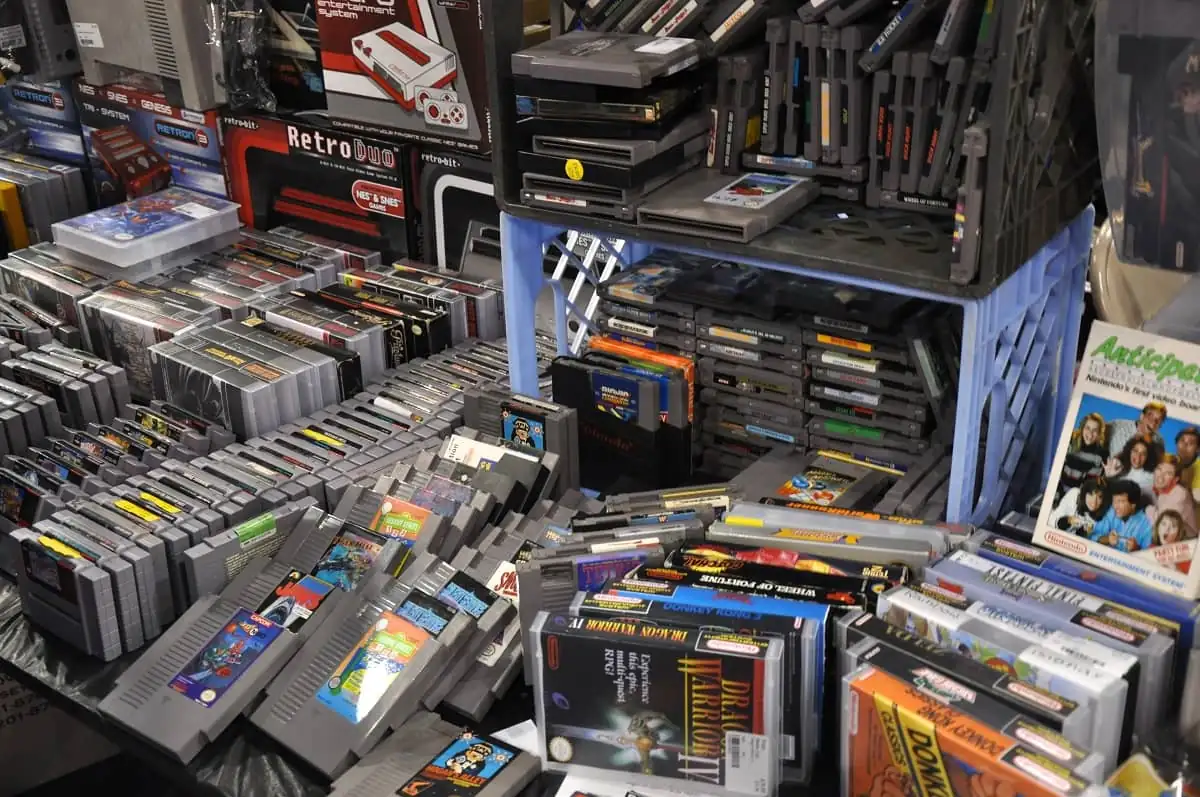

Sony Interactive Entertainment confirmed on July 1, that it will stop producing physical discs for new PlayStation titles starting in January 2028, ending more than three decades of boxed PlayStation software and pushing the industry’s best-selling console line toward an all-digital future. The announcement, made via the PlayStation Blog, cited internal data: digital downloads accounted for 85% of full-game software sales on PS4 and PS5 in the most recent fiscal quarter, with physical copies making up the remaining 15%.
“This is a natural direction for Sony Interactive Entertainment to adapt to consumer trends as the general preference for digital media significantly outpaces physical discs,” the company wrote. Existing disc-based games will continue to work on compatible hardware, and Sony has indicated new titles will still reach retailers in digital form, most likely as “code-in-box” download codes rather than actual discs.
The announcement arrived just days after Rockstar Games confirmed that Grand Theft Auto 6’s physical edition would ship without a disc, containing only a download code inside the box. That decision had already drawn criticism from fans who assumed a “physical edition” meant an actual disc, and it primed the reaction to Sony’s own announcement days later.
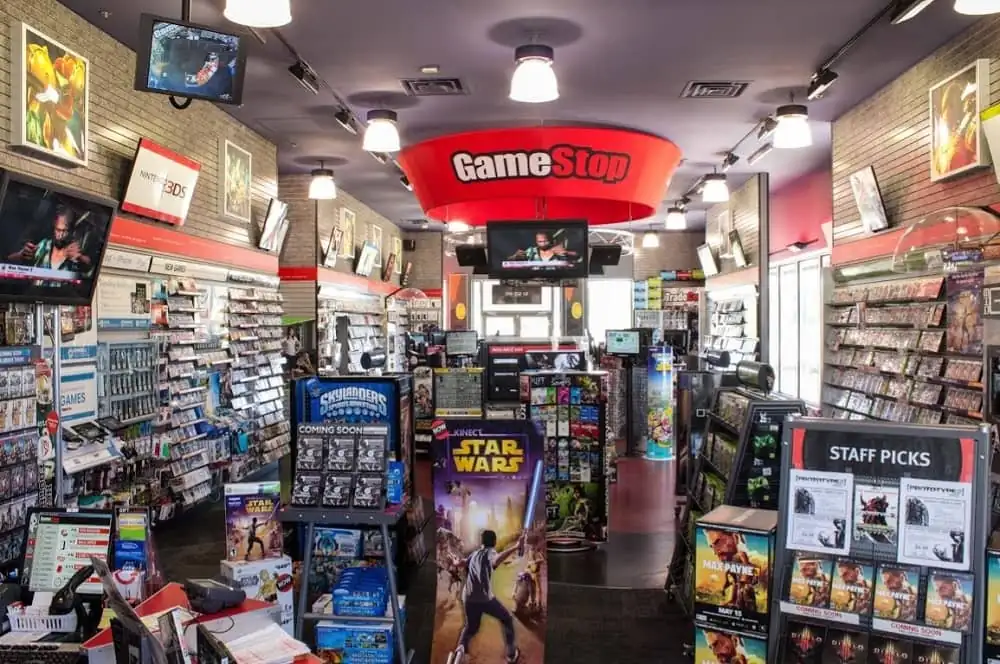
Retail has absorbed much of the impact of the shift toward digital. GameStop has closed more than 1,300 stores over the past two fiscal years, according to reporting cited in Sony’s own announcement coverage. Netflix shut down its 25-year-old DVD-by-mail rental service in September 2023 after shipping more than 5 billion discs, a similar trajectory that physical game sales have followed.
The PlayStation 6 is not expected to abandon disc support entirely. Multiple reports indicate the console will follow the approach used on the PS5 Slim, offering a detachable disc drive as an optional accessory rather than removing the format outright.
Former PlayStation Worldwide Studios boss Shawn Layden addressed the decision directly in a July 2026 interview, calling it “a fairly dramatic decision” and noting he had “no idea it was going to happen” and doesn’t “necessarily agree with it.”
Layden argued that PlayStation, as “the number one platform in probably 170 countries around the world,” carries a responsibility that Xbox, whose all-digital strategy has mainly succeeded in a handful of English-speaking markets, does not. He pointed to players in regions with limited broadband, as well as military personnel stationed abroad, as groups the format shift would leave behind.
According to Bloomberg’s Jason Schreier, Sony’s internal reasoning comes down to economics rather than consumer demand. Schreier reported that for a first-party $70 physical game, Sony’s retail cut after distributor fees and manufacturing costs comes to roughly $45.50; a digital sale of the same game keeps nearly the full amount inside the PlayStation Store.
For third-party publishers, a physical sale nets Sony a licensing fee of around 15%, compared to roughly 30% commission on a digital sale through the Store. Schreier’s reporting also states that Sony does not plan to change its retail distribution strategy, will continue shipping empty boxes containing download codes to stores, and does not consider it necessary to respond publicly to the backlash, which reportedly explains the company’s six days of public silence following the announcement.
The antitrust problem Sony didn’t see coming
Fortune reported on July 9, that Sony’s decision may have undercut its own long-standing defense against antitrust accusations. Andrew Ching, marketing chair at Johns Hopkins Carey Business School, told the outlet that Sony’s 30% “PlayStation tax” applies only to digital purchases made through the PlayStation Store, while physical retailers pay a lower, flat royalty based on units manufactured rather than units sold. That distinction has historically made physical games, particularly used copies, cheaper than their digital equivalents, since a disc’s resale value depreciates as it loses its retail “freshness.”
Sony has repeatedly cited that resale ecosystem as evidence against monopoly claims, arguing that competition from physical retailers and the used-game market proved PlayStation customers had alternatives outside Sony’s own storefront. “However, by phasing out physical discs, Sony essentially destroys its own defense,” Ching told Fortune.

Without a physical option, he said, price-sensitive consumers have nowhere to go but Sony’s own storefront, “absorbing the full price with no alternative in the resale space.” Ching estimated that a buyer who could previously trade in a $60 game for roughly $20 was effectively paying $40 for it; without that option, “their willingness to pay is going to decrease.”
The claim is already the subject of litigation. Dutch consumer group Stichting Massaschade & Consument is pursuing a lawsuit against Sony under the country’s WAMCA class-action framework, seeking more than €400 million (roughly $457 million) in damages on behalf of an estimated 1.7 million Dutch PlayStation users.
The group’s “Fair PlayStation” campaign alleges Sony’s 30% commission on digital sales, combined with the elimination of physical alternatives, will drive Dutch consumers to pay significantly more for games starting in 2028.
“The end of physical discs removes the last place where a PlayStation game could still be bought and sold at a competitive price,” said Lucia Melcherts, chair of Stichting Massaschade & Consument, in a statement. “No discs means no second-hand market and no alternative to the PlayStation Store, so from 2028, Sony alone decides what a game costs and even how long you are allowed to use it.” A Dutch court validated the class-action claim in June 2026, and hearings on the case began June 29.
The lawsuit is not isolated. A separate case in the United Kingdom, brought on behalf of roughly 11 million consumers, concluded a 10-week trial in May 2026 at the Competition Appeal Tribunal over similar allegations of digital overpricing, with total exposure to Sony estimated near £2 billion.
Sony’s own leadership has shown signs of concern following the announcement: SEC filings show President and CEO Hiroki Totoki sold 225,000 shares, more than half his personal stake in the company, on July 3, 2026, netting approximately $4.7 million. Other Sony executives, including Chief Strategy Officer Toshimoto Mitomo, sold shares around the same time. There is no confirmed link between the sales and the disc announcement, and analysts note the transactions represent a small fraction of Sony’s total market value.
The backlash crosses borders: Mexico joins the fight
The pushback has extended beyond Europe. Mexican federal deputy Iraís Reyes, of the Movimiento Ciudadano party, announced alongside Senator Luis Donaldo Colosio Riojas that they will file a formal complaint with Mexico’s antitrust authority, the Comisión Nacional Antimonopolio, requesting an investigation into Sony Interactive Entertainment over the disc phase-out. Reyes previously led opposition to an 8% video game tax proposed by the Sheinbaum administration in 2025, earning her the nickname “la diputada gamer” in Mexican gaming media.
“Sony has just announced that in January 2028 it will eliminate the physical format of its video games and will leave its own digital store as the only sales channel,” Reyes said, according to Mexican outlet La Crónica de Hoy. “If discs disappear, anyone who owns a PlayStation will no longer be able to decide where to buy their games; they will have to do so only in Sony’s store.” In a follow-up statement, she added that Sony would become “judge and party to everything: the console, the store, the distribution, and the price.”

Colosio raised an additional concern specific to Mexico, noting that a fully digital model assumes reliable internet access that is not evenly distributed across the country: “As if that weren’t enough, forcing everything to be digital assumes that everyone has access to good-speed internet, when we know that this is unequal in Mexico.”
The complaint, which the legislators plan to file as private citizens rather than in their official capacity, identifies two harms for regulators to weigh: the elimination of the secondary market for resale, lending, and collecting, which the legislators argue removes price competition on primary sales and leaves Sony as the sole price-setter; and the transformation of digital purchases into revocable licenses rather than outright sales.
To support the complaint, Reyes and Colosio cited Sony’s 2022 removal of previously purchased content from some European users libraries, and a more recent case in which PlayStation warned it would revoke licenses on more than 500 films and television titles already in customer accounts. As of the most recent reporting, the formal complaint had not yet been filed; Reyes and Colosio said they are first seeking support from players, content creators, and industry organizations.
Brazil has seen a parallel response. Federal deputy Jandira Feghali has proposed legislation intended to prevent digital games from becoming inaccessible once official publisher support ends, citing the international Stop Killing Games movement as inspiration. Separately, São Paulo’s consumer protection agency PROCON-SP issued a ruling describing Sony’s ability to remove digital collections without notice as abusive and invalid, stating that consumers retain the right to use, sell, lend, and share games regardless of format once a license has been paid for.
Nintendo’s Game-Key cards prove physical isn’t always what it seems
Nintendo has faced its own physical media controversy since the Switch 2 launched. A large share of third-party titles have shipped as Game-Key Cards, cartridges that resemble standard game cards but contain no game data, instead triggering a download from Nintendo’s servers once inserted.
Japan’s National Diet Library, which has preserved more than 9,600 video games in archival conditions since October 2000, announced it will not include Game-Key Cards in its collection. “Only physical media that contains the content itself” qualifies for preservation, an NDL spokesperson told Famitsu. “Since a key card, on its own, does not qualify as content, it falls outside of our scope for collection and preservation.”
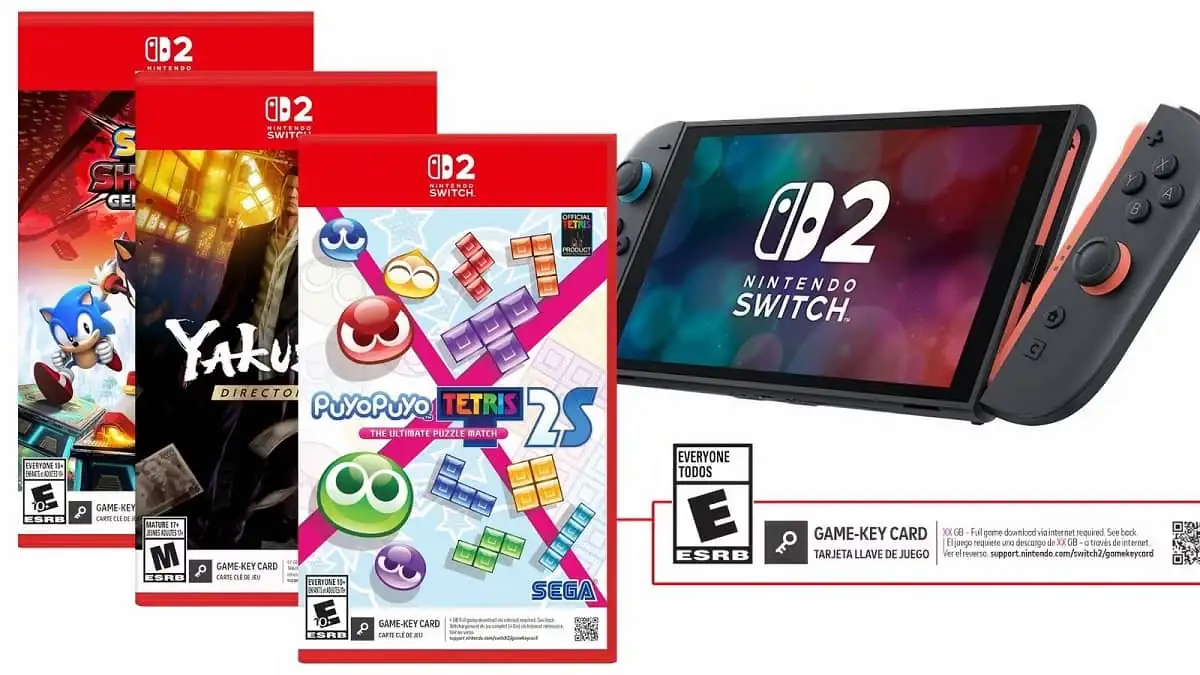
Nintendo’s own first-party titles continue to ship on traditional cartridges containing the full game, while Game-Key Cards have been used almost exclusively by third parties, including Capcom, Square Enix, and Sega. CD Projekt Red drew praise from physical-media advocates for releasing Cyberpunk 2077: Ultimate Edition on a full Switch 2 cartridge rather than a Game-Key Card; a CD Projekt executive said publicly that offering a real cartridge was “the right thing to do,” adding, “do not underestimate the physical edition.”
Nintendo sent Japanese customers a survey in April 2025 asking about their views on Game-Key Cards, followed by a second survey in July 2025. What has not changed is the underlying economics: Nintendo currently offers third-party publishers only a single, more expensive 64GB cartridge option, which is why smaller publishers frequently default to Game-Key Cards rather than absorbing the cost of a full cart.
Players and some publishers have asked Nintendo to introduce a cheaper, lower-capacity cartridge tier that would make full physical releases financially viable for smaller titles, but as of the most recent reporting, Nintendo has not announced any such option.
Microsoft’s Positron Project wants to bridge the gap
Microsoft has been testing a disc-to-digital conversion system internally, reportedly code-named Positron, that entered Xbox Insider testing in mid-July 2026. According to reporting from The Verge’s Tom Warren, references to “enable Disc2Digital” appeared in the Xbox PC app’s code in May 2026, before Microsoft began testing the feature with employees.
The system allows a player to insert a compatible Xbox One or Xbox Series X disc, install the game, and receive a digital entitlement tied to both their Microsoft account and the specific disc used. Xbox 360 and original Xbox discs are not eligible, and some older Xbox One discs may not qualify depending on their manufacturing date.
If a converted disc is sold or lent to another player, the digital entitlement transfers to the new owner once they activate it on their own account, while the original owner loses access, preserving the resale and lending market rather than eliminating it. Titles supporting Xbox Play Anywhere will also become available on PC and compatible handhelds through the conversion, and cloud access through Xbox Cloud Gaming may be available for supported titles with an active Game Pass subscription.
Microsoft attempted a similar disc-to-digital concept during the original Xbox One’s development in 2013, but that version was bundled with a mandatory 24-hour online check-in requirement that drew significant consumer backlash. Microsoft reversed the policy entirely before the console’s November 2013 launch. Positron appears to be a more limited, opt-in version of that earlier concept, without an always-online requirement attached.
The preservation problem no one is solving
According to a 2023 study by the Video Game History Foundation, conducted with the Software Preservation Network, an estimated 87% of classic video games released in the United States before 2010 are out of print and unavailable for legal purchase through any channel. The study, based on a random sample of 1,500 games, found availability below 20% for every platform and time period examined; only 5.87% of the Game Boy library and 4.5% of the Commodore 64 library remained in print at the time of the study.
Marvel’s Avengers, published by Square Enix and developed by Crystal Dynamics, was delisted from all digital storefronts on September 30, 2023, roughly three years after its 2020 launch, once its live-service model stopped generating sufficient revenue.
Ubisoft’s The Crew, an always-online racing game released in 2014, was delisted from all platforms on December 14, 2023, with its servers shut down on March 31, 2024, rendering the game permanently unplayable for anyone who owned it, physically or digitally. The shutdown became a flashpoint for the international “Stop Killing Games” campaign, which is pushing for legislation requiring publishers to leave purchased games in a playable state after official support ends.

Responding to Sony’s disc announcement, the Video Game History Foundation noted that the decision would not significantly affect professional preservation efforts, since discs have not been the standard for game archiving for some time, given how many modern titles depend on day-one patches and online activation that a disc alone cannot capture. The organization added that the move remains a setback for consumer rights, the resale market, and smaller studios that depend on physical sales.
In October 2024, the U.S. Copyright Office denied a petition, filed jointly by the Video Game History Foundation and Software Preservation Network, that would have allowed libraries to share digital access to out-of-print games remotely with researchers.
The ruling cited arguments from the Entertainment Software Association and other industry groups that there would be “a significant risk that preserved video games would be used for recreational purposes.” The ESA stated during hearings that it would not support remote game access for research purposes under any circumstances, according to VGHF.
Fumi Games bets on “No empty boxes” With MOUSE: P.I. For Hire
MOUSE: P.I. For Hire, a first-person shooter developed by Fumi Games and published by PlaySide Studios, launched digitally on April 16, 2026, drawing visual inspiration from 1930s cartoons. PlaySide announced in July 2026 that the game had sold more than 730,000 copies since launch.
Ahead of the game’s physical release on July 10, 2026, Fumi Games confirmed on social media that the PlayStation 5 and Nintendo Switch 2 versions would contain the complete game on the disc and cartridge respectively, rather than a Game-Key Card or a download code. The studio stated the physical versions would not require an internet connection to play, though connecting is recommended to download optional updates and fixes.
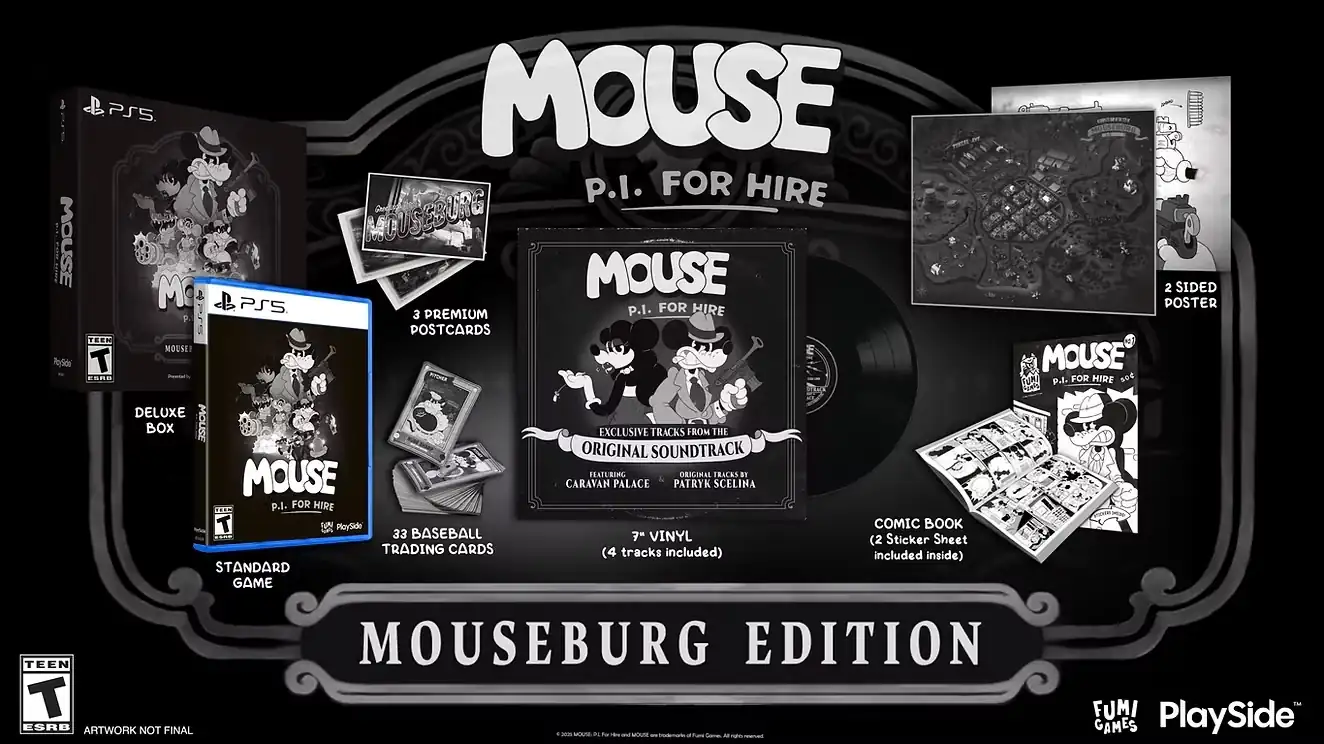
The Standard Edition released globally for PlayStation 5 as a physical disc at $29.99 and for Nintendo Switch 2 as a full game-on-cartridge release at $39.99. A premium “Mouseburg Edition” released for PC, PlayStation 5, Xbox Series X, and Switch 2, priced between $49.99 and $59.99 depending on platform, and includes a 7-inch vinyl record with tracks from the game’s soundtrack, a double-sided poster, a printed comic book with two sticker sheets, and 33 baseball-themed trading cards tied to an in-game minigame.
Meanwhile, Gen Z is falling back in love with physical media
U.S. vinyl revenue reached $1.04 billion in 2025, crossing the billion-dollar mark for the first time since 1983, according to the RIAA’s 2025 Year-End Recorded Music Revenue Report. Vinyl unit sales rose 7.9% to 46.8 million records, marking the format’s 19th consecutive year of growth, even as streaming accounted for 82% of total U.S. music revenue.
According to Futuresource Consulting’s Audio Tech Lifestyles report, roughly 60% of Gen Z consumers say they buy vinyl records, though nearly 30% of them do not own a turntable. A Vinyl Alliance survey found 56% of Gen Z vinyl buyers cite the format’s aesthetic appeal, and 37% describe using records as home decor.
Physical disc sales for movies and television followed a similar pattern. According to the Digital Entertainment Group, physical disc sales fell 9% in 2025, a sharp slowdown compared to declines exceeding 20% in both 2023 and 2024. Vidiots, a nonprofit video store and theater in Los Angeles, reported its highest-volume month to date in January 2026, renting an average of 170 movies daily and 500 titles in a single day.

The store loaned out approximately 22,000 discs in 2023, its reopening year, a figure that had grown to roughly 50,000 by 2024. “Not even close” to the format’s mid-2010s peak, according to video store director Robbie McCluskey, but enough that the current period feels like “a golden age” for physical media. A separate 2026 survey found that 63% of respondents aged 18 to 24 expressed interest in adopting a more analog lifestyle, a trend also reflected in rising interest in MP3 players and digital cameras.
Gaming has followed the same trajectory. The retro gaming collectibles market is projected to reach $4.18 billion in 2026, up from $3.8 billion in 2025, a 10% increase. A factory-sealed 1986 NES Deluxe Set sold for $120,000 at Heritage Auctions, and a graded sealed copy of Super Mario 64 previously sold for $1.56 million.
A February 2025 survey commissioned by Pringles in the United Kingdom found that 24% of Gen Z respondents own a retro gaming console, and 89% of Gen Z gamers surveyed said they prefer retro titles specifically because they offer a break from constant internet connectivity.
Sony’s disc phase-out is still more than 18 months away, but the fallout is already playing out on multiple fronts. A Change.org petition titled “Don’t Kill the Disc,” started by a small Canadian retailer, passed 250,000 signatures within a week and a half of Sony’s announcement, making it one of the largest petitions the gaming industry has seen.
A Dutch court is currently hearing Stichting Massaschade & Consument’s case, a separate UK tribunal representing roughly 11 million consumers concluded its trial in May with Sony’s exposure estimated near £2 billion, and Mexican legislators are still gathering support before filing their own complaint.
Sony has issued no public response to any of it beyond its original blog post and a single unrelated product promotion that drew more than 67,000 critical comments.
Would you keep buying physical games if it meant paying more, or is digital-only worth it for the convenience? Let us know in the comments.