

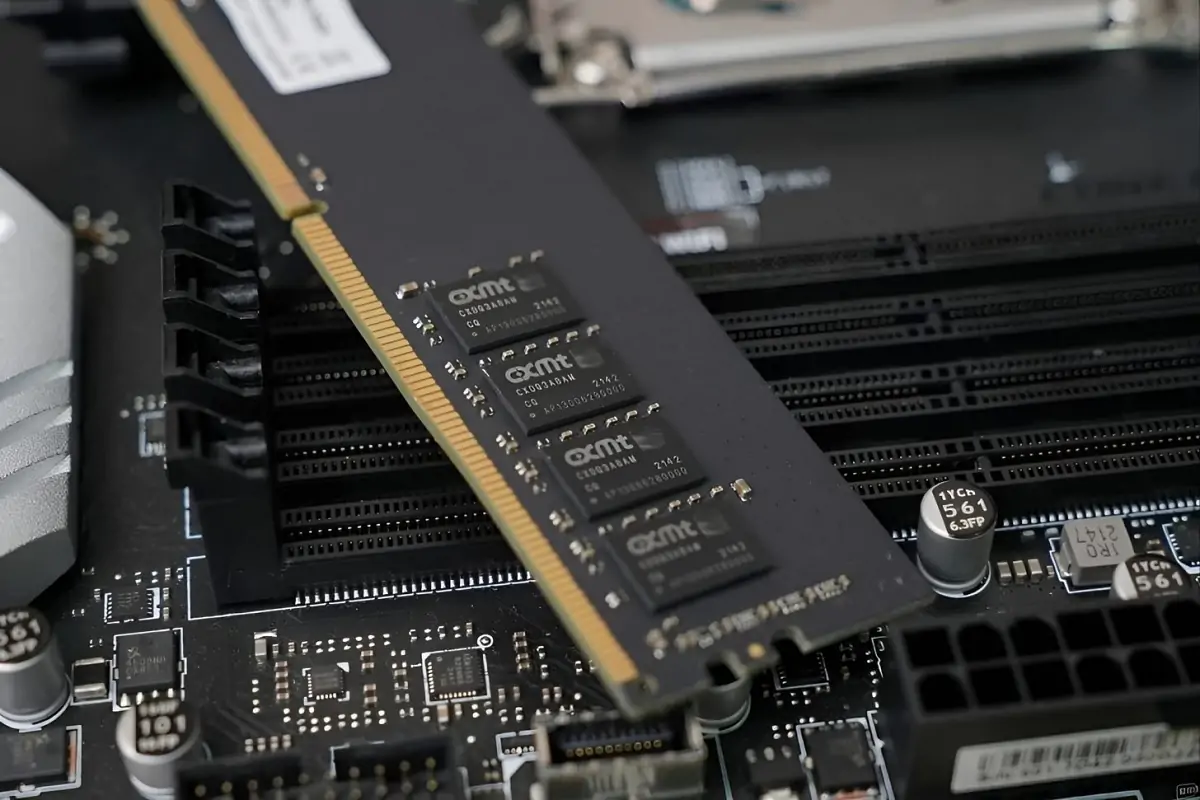

A Corsair DDR5 Vengeance module was spotted this week running DRAM made by ChangXin Memory Technologies, better known as CXMT, China’s largest memory chip producer. The module is a DDR5-6000 16GB stick with CL36 timings, 1.35V, and full support for both Intel XMP and AMD EXPO profiles. The part number is CMK5X16G3E60C36A2-CN, and it sits squarely inside Corsair’s gaming Vengeance lineup.
Until now, CXMT had only really sold to local businesses and lesser-known brands. Being featured in a Corsair kit marks a major shift in the landscape. Corsair is one of the most recognized names in PC gaming hardware worldwide, and this is the first time a brand of that stature has been linked to Chinese-made DRAM in a consumer product.
Corsair has not confirmed a global release of CXMT-equipped DDR5 memory. The fact that the product name carries “CN” suggests it may be a trial production for the Chinese market. Even so, the precedent it sets for the global memory industry is significant.
A market abandoned by its own suppliers
To understand why this matters, you need to look at what has been happening to the consumer memory market over the past several months.
Major memory makers have shifted production toward memory used in AI data centers, such as high-bandwidth memory (HBM) and high-capacity DDR5, restricting the supply of general-purpose memory modules and driving up prices across the board.
Samsung, SK Hynix, and Micron are not making this move out of nowhere. A single HBM3E module sells for roughly $60 to $100, compared to approximately $5 to $10 for a comparable amount of conventional DDR5 DRAM. When production capacity is constrained, manufacturers will always prioritize the product that generates the highest revenue per wafer.
The result has been a supply vacuum that module makers like Corsair are now scrambling to fill. CXMT is not tied to any data center contracts, so it has, relatively speaking, empty production lines just waiting for customers. And that clientele CXMT seems to be targeting is regular consumers left in the dust by the rest of the RAM industry.
According to research firm Omdia, CXMT’s share of global DRAM sales jumped from 3.97% in Q2 2025 to 7.67% by Q4 2025. Other Chinese memory players like Jiahe Jinwei are also accelerating DDR5 RDIMM production for data centers and workstations. The push into global supply chains is coordinated and growing fast.
What CXMT brings to the table, and what it could do to prices
A lot of people still associate Chinese memory with low-end, no-name products. That picture no longer reflects reality.
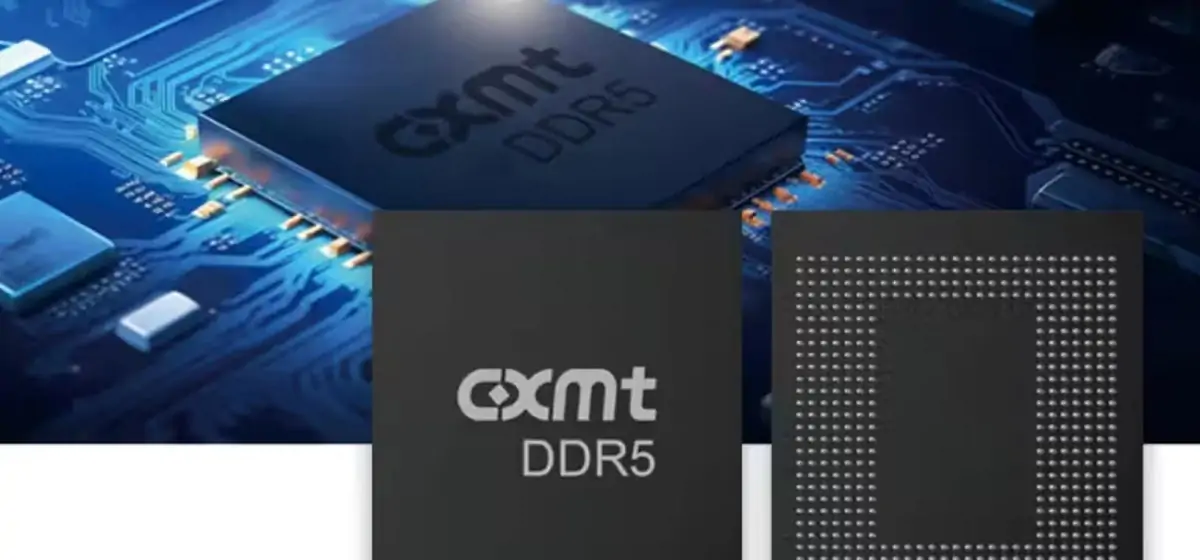
CXMT unveiled its DDR5 chips at the China International Semiconductor Expo in Beijing, with speeds of up to 8,000 megabits per second and a maximum single-die capacity of 24 gigabits.
The company laid out a full spectrum of products across UDIMM, SODIMM, RDIMM, CSODIMM, CUDIMM, and TFF MRDIMM formats, targeting all segments from data centers to desktop PCs and laptops. These are not niche or experimental products. This is a company competing head-on with the big three across every major memory category.
The question consumers care about most right now is whether any of this will actually bring prices down.
It was common to find 32GB DDR4 kits selling for $60 to $90 back in October 2025. By January 2026, the same kit could cost anywhere between $150 and $180. DDR5 has been hit even harder. The Kingston FURY Beast 64GB DDR5-6000 CL36 kit was available for $229.99 on Amazon until October 2025. By December it was listed at $629.99 at the same retailer.
Given how massively Chinese firms are increasing their memory production capacity, they can not only facilitate their own domestic needs but also provide a cheaper yet similar spec’d alternative to offshore PC manufacturers. More supply from a new competitive source puts downward pressure on prices, or at the very least slows the climb. CXMT-made DDR5 should be significantly more affordable for it to matter and make an actual dent in the market.
If shortages continue, more brands may turn to Chinese memory suppliers for DDR5 kits and other components, which could increase competition, improve availability, and potentially put pressure on pricing. Whether that relief arrives in months or years depends on how fast CXMT scales and how many other brands follow Corsair’s lead. But for the first time in a while, there is a credible new player in the consumer memory space, and the industry is taking notice.
Are you open to buying RAM with CXMT chips if it means paying significantly less? Let us know in the comments!