



The memory chip industry is in the middle of one of the biggest demand explosions it has ever seen, and it’s all thanks to artificial intelligence. Every major AI data center being built today needs enormous amounts of high-bandwidth memory to function, and that’s putting Samsung, SK Hynix, and Micron, the three companies that essentially control the world’s memory supply, in a very powerful position.
DRAM prices jumped around 60% throughout 2025, and DDR5 contract pricing more than doubled, going from roughly $7 per unit earlier in the year to $19.50 by December. SK Hynix even announced during its October earnings call that its HBM, DRAM, and NAND capacity was essentially sold out for all of 2026. Micron, for its part, exited the consumer memory market entirely to focus on enterprise and AI customers.
The numbers are staggering, but what’s just as interesting as the boom itself is how these companies are responding to it. Rather than going all-in and building as many new factories as fast as possible, Samsung, SK Hynix, and Micron are playing it surprisingly cautious, and there are very good reasons for that.
AI is turning memory into the most critical component in tech
To understand what’s happening, you have to understand what modern AI actually needs to run. Large language models and generative AI systems have a fundamental technical bottleneck: moving data between memory and processors consumes more time and energy than the actual computations being performed. Standard consumer memory can’t keep up with those demands.
That’s where high-bandwidth memory, or HBM, comes in, a specialized type of stacked DRAM designed specifically to feed massive amounts of data to AI accelerators at extreme speeds.
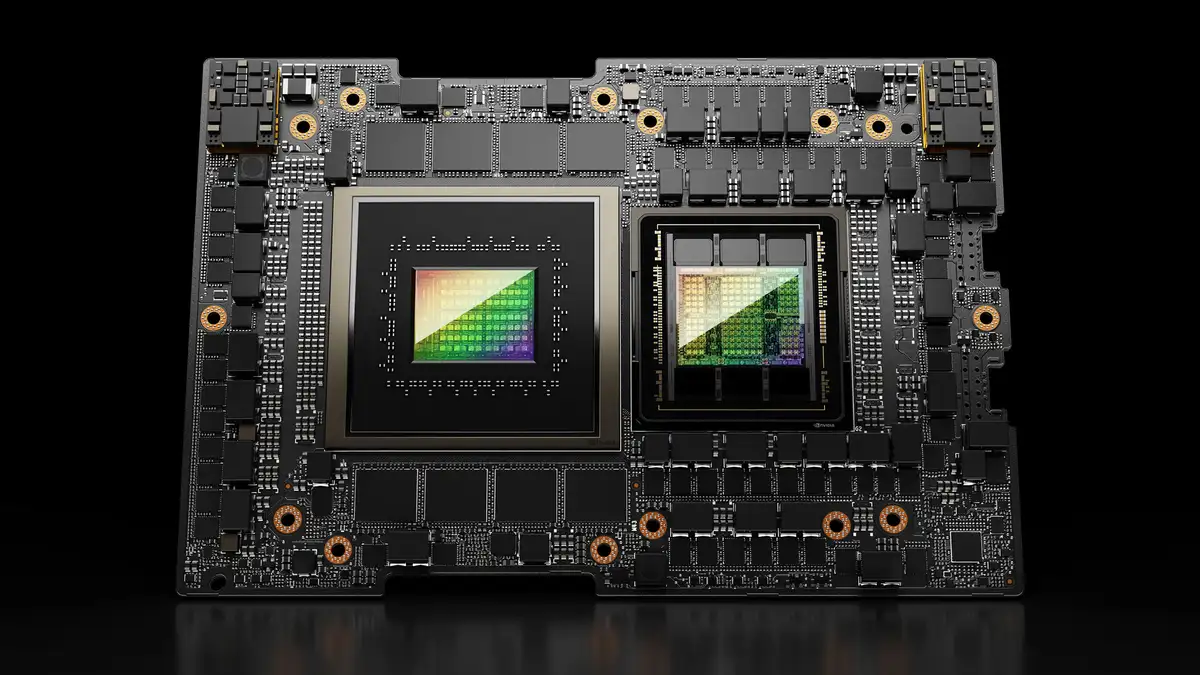
Every major AI chip on the market, from NVIDIA’s H100 and H200 to Google’s TPUs, depends entirely on HBM to function. And because HBM is so technically complex to manufacture, it consumes roughly three times the wafer capacity of standard DDR5 to produce the same number of bits, every wafer allocated to AI memory is a wafer taken away from everything else. Laptops, smartphones, gaming PCs, servers: they all compete for what’s left.
The scale of the demand coming from AI infrastructure is unlike anything the memory industry has seen before. In October 2025, Samsung and SK Hynix signed letters of intent with OpenAI to supply memory for the Stargate project, with production targets reaching 900,000 DRAM wafer starts per month, a figure that could represent up to 40% of total global DRAM output. For context, SK Hynix currently produces around 160,000 HBM wafers per month. The gap between where the industry is and where AI wants it to be is enormous.
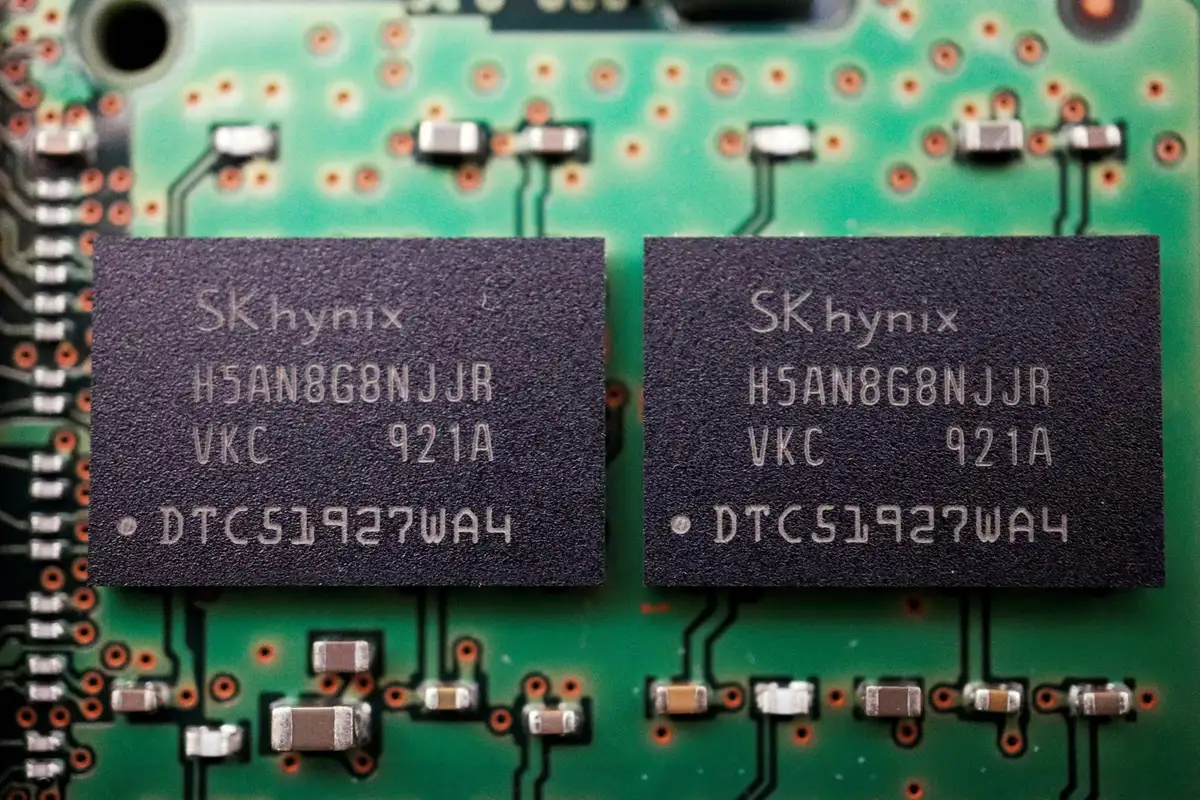
The ripple effects are already hitting consumers hard. Up to 70% of all memory chips produced globally in 2026 are expected to go to AI data centers, which means everyone else is fighting over the remaining 30%. A 32GB DDR5 kit that sold for around $100 to $200 in October 2025 now starts at $350, if you can even find one in stock.
The strategy shift: Quality over quantity
Here’s where it gets interesting. Given how much money is moving through the AI supply chain right now, the logical move for memory manufacturers would be to announce massive factory expansions immediately. And while they are investing significantly, the approach is far more measured than you might expect.
Samsung is looking to expand production capacity by around 50% in 2026, and SK Hynix has announced plans to multiply its infrastructure investment by more than four times a previously announced figure. But both companies are building new fabs on timelines stretching to 2027 and 2028, not this quarter.
Micron’s new ID1 fab in the United States isn’t expected to start operations until 2027, and even with a planned increase in capital expenditure from $18 billion to $20 billion for fiscal 2026, the company projects only around a 20% increase in total bit shipments for the year.
Instead of racing to build new capacity, the three manufacturers are focusing on getting the most out of what they already have, and prioritizing the most profitable products. Samsung and SK Hynix have reallocated up to 40% of their advanced wafer capacity toward HBM and enterprise-grade memory. As Deloitte noted in its 2026 semiconductor industry outlook, despite record revenues projected at around $200 billion for memory that year, makers appear cautious about overbuilding. That word, cautious, is the key to understanding everything happening in this market right now.
The reason is simple: the memory industry has a long and painful history of boom-and-bust cycles. Heavy investment in new fabs, followed by oversupply a few years later, followed by price collapses that wiped out profits for extended periods. The downturns of 2012-2013 and 2018-2019 are not distant memories for the executives making these calls today. Building a new DRAM fab takes years and costs billions. If the AI spending wave slows down before that capacity comes online, the resulting oversupply could trigger the next major market crash.
The question nobody can answer yet
The central uncertainty hanging over all of this is one that no analyst, executive, or research firm has been able to definitively answer: how long will the AI infrastructure spending wave actually last at this intensity?
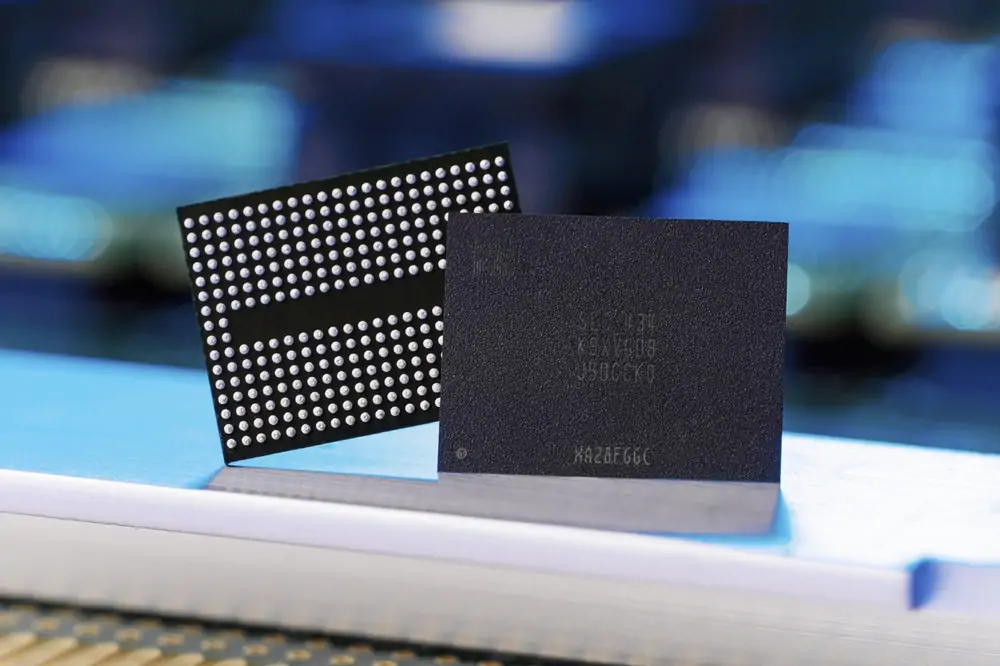
Hyperscaler capital expenditure, the money Microsoft, Google, Amazon, Meta, and others spend on data centers, is projected to exceed $600 billion in 2026, a roughly 40% increase year over year. Some forecasts suggest the HBM market size in 2028 will surpass the entire DRAM market of 2024.
Those are numbers that support the case for aggressive expansion. But there’s an equally credible bear case: if many data center projects front-loaded their memory orders in 2025 and demand stabilizes, or if the broader economy weakens, a wave of new fab capacity coming online in 2027 and 2028 could land right into a market that no longer needs it. In that scenario, prices reverse hard and margins collapse fast.
That’s precisely why Samsung, SK Hynix, and Micron are walking the line they are. They’re capturing historic profits right now by prioritizing high-margin HBM over commodity DRAM, expanding deliberately rather than aggressively, and watching the AI spending horizon very carefully. The memory price rally is likely to continue past 2028 given how cautiously manufacturers are managing supply, but an oversupply scenario in 2028-2029 remains a realistic possibility if AI demand moderates as new capacity eventually arrives.
For the memory industry, the challenge has never really been keeping up with demand in the short term. It’s always been about not overcorrecting and crashing the market in the process. Right now, Samsung, SK Hynix, and Micron are threading that needle, and so far, it’s paying off spectacularly.
Do you think the AI memory boom still has years of runway ahead, or are we heading toward the next big market crash? Drop your take in the comments!