



Memory manufacturers Samsung, SK Hynix, and Micron have redirected their production lines toward high-performance chips for AI data centers, triggering a global shortage of DRAM, GDDR, and NAND flash that is directly hitting the consumer market.
RAM prices have surged 171% year-over-year according to data from CTEE, reported by Tom’s Hardware in November 2025. Memory that sold for $95 in mid-2025 now exceeds $184, and some 64GB DDR5 kits that were priced at $150 have ballooned past $400.
According to memory producer Adata, DRAM, NAND flash, and hard drives are experiencing simultaneous shortages for the first time in 30 years.
The trigger for this crisis has a name: artificial intelligence. OpenAI alone signed agreements with Samsung and SK Hynix in October 2025, as part of its Stargate initiative, to supply up to 900,000 DRAM wafers per month, a figure that analysts at Tom’s Hardware and TrendForce estimate could represent approximately 40% of total global DRAM output.
With Microsoft, Google, Meta, and dozens of other hyperscalers also racing to build AI infrastructure, manufacturers have no incentive to prioritize consumer products when data center contracts offer dramatically higher margins and multi-year commitments.
Memory inventories dropped to a mere 8 weeks of supply by late 2025, according to industry analysis from IntuitionLabs, a level of scarcity the industry had not seen in decades.
Why AI workloads require so much memory
To understand why AI is consuming memory at a scale that is distorting global supply chains, it helps to look at what is actually happening inside these systems during training.
Every AI model is built on parameters, numerical values that store everything the model has learned. A parameter by itself is small, just a few bytes, but modern large language models contain hundreds of billions of them.
GPT-3, released by OpenAI in 2020, already had 175 billion parameters. More recent models operate at significantly larger scales. At 2 bytes per parameter in half-precision format, a 175-billion-parameter model alone requires around 350GB just to load its weights into memory, before any computation begins.

During active training, the memory requirement multiplies further, because the system must simultaneously store the model parameters, the gradients computed during each learning step, and the optimizer states that track how each parameter should be adjusted.
Amazon’s SageMaker documentation puts it plainly: even a relatively modest 10-billion-parameter model trained with standard optimizers requires at least 200GB of memory, more than any single GPU can hold.
That last point is what drives the parallelism problem. Because no individual GPU, not even Nvidia’s flagship H100 with 80GB of HBM, can hold the largest models in memory by itself, AI companies split training across thousands of chips simultaneously.
This is done through several techniques: data parallelism, which sends different batches of training data to different GPUs while each holds a full copy of the model; model parallelism, which splits the model itself across multiple GPUs layer by layer; and tensor parallelism, which goes further and splits individual mathematical operations within a single layer across multiple chips.

Meta used 16,000 H100 GPUs running in parallel to train Llama 3.1 405B, a process that took 54 days. Each of those GPUs needs its own high-bandwidth memory. The result is that a single large training run can consume more memory capacity than entire countries produce in consumer electronics in a given quarter.
The type of memory used in AI accelerators is fundamentally different from what goes into gaming GPUs. Consumer graphics cards use GDDR, Graphics Double Data Rate memory, chips soldered around the GPU die on the circuit board, connected via a relatively narrow data bus.
Gaming-grade GDDR7 delivers strong bandwidth for its cost, but it is designed primarily for rendering, where the data patterns are different and large capacity is more important than raw transfer speed. AI training, by contrast, is bottlenecked not by computation but by how fast data can move between memory and the processor.
This is where HBM, High-Bandwidth Memory, becomes essential. HBM stacks multiple DRAM dies vertically using microscopic connectors called Through-Silicon Vias, then places the entire stack directly next to the GPU processor on a shared silicon interposer. The result is a memory bus that is thousands of bits wide, compared to the 256- or 384-bit buses typical of gaming cards.
Nvidia’s H100 achieves 3.35 terabytes per second of memory bandwidth using HBM3. A gaming RTX 4090, by comparison, reaches around 1 terabyte per second with GDDR6X, impressive for gaming, but insufficient for the continuous, massive data movement that AI training demands.
The distinction between bandwidth and capacity matters here too, and the two are often confused. Capacity is how much data a memory system can hold at once, the total storage. Bandwidth is how fast data can move in and out.
Gaming workloads tend to need capacity more than extreme bandwidth: a GPU rendering a 4K game scene loads textures and geometry into VRAM and processes them at a manageable rate. AI training is the opposite.

The model parameters and gradients must be read and written continuously at maximum speed on every single computational step, across thousands of GPUs communicating with each other simultaneously.
Running out of bandwidth during training does not just slow things down, it creates a bottleneck that makes the entire cluster of GPUs wait, wasting hundreds of millions of dollars in hardware.
This is why HBM, despite costing several times more to manufacture than GDDR, is the only viable choice for large-scale AI training, and why manufacturers have restructured their entire production around it.
The direct consequences for gaming hardware
The shortage is not abstract. Nvidia has reportedly been planning production cuts of 30 to 40% for its GeForce RTX 50-series GPUs in the first half of 2026, according to reports from Benchlife, corroborated by VideoCardz, Tweaktown, and multiple board partners.
The models taking the first hit are the RTX 5070 Ti and the RTX 5060 Ti 16GB, both of which rely heavily on GDDR7 memory, which manufacturers are increasingly diverting toward AI accelerators and professional hardware.
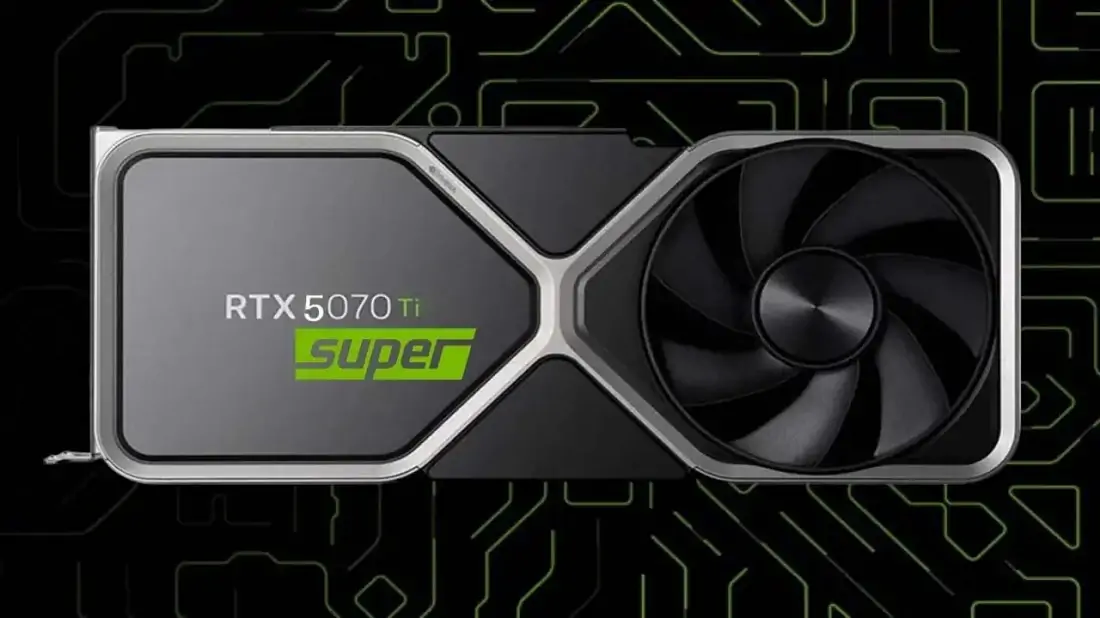
As we previously reported in our analysis of Micron’s GDDR7 memory warning, early supply signals were already pointing to allocation pressure on next-generation gaming GPUs.
On February 25, during Nvidia’s Q4 fiscal 2026 earnings call, CFO Colette Kress confirmed the situation publicly: “We expect supply constraints to be a headwind to gaming in the first quarter of fiscal 2027 and beyond.”
The numbers from that same earnings report illustrate exactly where Nvidia’s priorities lie.
Data Center revenue reached a record $62.3 billion in Q4 FY2026, representing 91% of the company’s total revenue for the quarter. Gaming brought in $3.7 billion, roughly 5.4% of the total. CEO Jensen Huang summarized the shift in his earnings statement: “Computing demand is growing exponentially. The agentic AI inflection point has arrived.”
With a revenue split that stark, the decision to prioritize memory allocation toward AI over gaming GPUs is, from a business standpoint, almost inevitable.
The NAND flash market is following the same pattern. Contract prices surged 15 to 20% in late 2025, with some manufacturers reporting weekly cost increases of 50 to 100%, according to BattleForge PC.
Phison’s CEO confirmed that NAND prices more than doubled over six months, with all 2026 production capacity already sold out at the time of the statement. SSD prices are taking the same hit as RAM, and the two problems are compounding simultaneously for anyone trying to build or upgrade a gaming PC right now.
Micron abandons the consumer market entirely
The most symbolic moment of this crisis came on December 3, when Micron Technology officially announced it would exit the Crucial consumer business, the brand it had operated for 29 years, selling RAM kits and SSDs directly to PC builders through major retailers worldwide.
The company’s own statement left no ambiguity. “The AI-driven growth in the data center has led to a surge in demand for memory and storage. Micron has made the difficult decision to exit the Crucial consumer business in order to improve supply and support for our larger, strategic customers in faster-growing segments,” said Sumit Sadana, Micron’s Executive Vice President and Chief Business Officer.
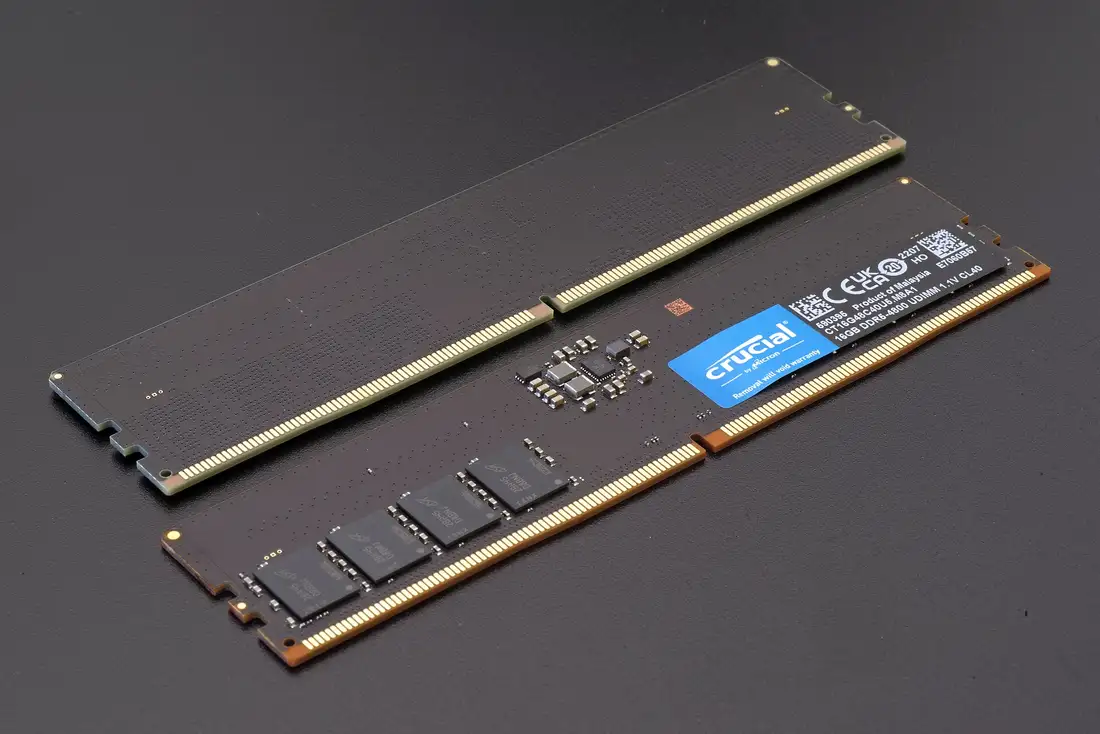
Crucial consumer product shipments through retail channels ended in February 2026. With Micron’s exit, only Samsung and SK Hynix remain as major DRAM manufacturers still serving the consumer market directly.
The evidence increasingly suggests the shortage may be structural rather than cyclical. TrendForce researchers have described the reallocation of memory capacity toward AI data centers as permanent, meaning that even as new production facilities eventually come online, a significant portion of output will remain committed to AI customers under long-term contracts.
Cloud providers like AWS, Microsoft Azure, and Google Cloud have been purchasing memory and GPU capacity years in advance, locking up supply before consumer products can enter procurement pipelines.
New fabrication plants, including Micron’s facility in Idaho, are not expected to have a meaningful impact on supply before 2028, given the years required to build, validate, and ramp production lines. SK Hynix’s own internal analysis, shared in December 2025 and reported by Tom’s Guide, projected that commodity DRAM supply will remain constrained through 2028.
Epic Games CEO Tim Sweeney has publicly warned that RAM price increases will be a serious problem for high-end gaming for several years. Analysts at IDC have stated the shortage is expected to persist well into 2027, describing current conditions as the end of an era of cheap, abundant memory and storage.
For consumers planning a PC build or upgrade, the near-term picture is straightforward: prices are already elevated and are expected to continue rising through 2026. Waiting for a correction could end up costing more, not less.
The era of cheap, abundant GPU memory may be coming to an end, not because of a temporary disruption, but because the center of gravity in computing has shifted.
In the race to build artificial intelligence infrastructure, gaming is no longer the primary customer. And in a market driven by margins, the highest bidder almost always wins.