



AnyPS5, an open-source project created by a developer known as boykopovar, is making waves in the gaming and emulation scene by running PlayStation 5 games on Windows and Linux PCs as native programs, without an emulator in between. On September 28, the project published its first two official releases on GitHub, v0.1.0 and v0.1.1, and in the first days of October its community took Astro Bot, one of Sony’s own first-party games, through its opening cinematic and tutorial on PC. Some of the developers behind that progress openly disclose working with AI coding tools, a detail that adds a new layer to the story.
The interest is easy to measure. At the time of writing, the repository has more than 22,000 stars and over 1,800 forks and its discussion board includes a “Game bring-up” section where contributors document how far individual titles get, with logs, technical breakdowns and gameplay videos.
A relinker instead of an emulator
Traditional emulators recreate a console in software while the game runs, imitating its processor, graphics chip and operating system at the same time, which comes at a heavy cost in performance. AnyPS5 takes a different path. The PS5 uses the x86-64 architecture, the same one found in most desktop PCs, so the game’s original code doesn’t need to be translated to another architecture. It simply doesn’t know how to talk to Windows or Linux, and that is exactly the problem the project solves.
To do it, AnyPS5 combines three pieces. A relinker converts the PS5 executable into the native format of the target system, an .exe file for Windows or an ELF file for Linux. A set of reimplemented PS5 system libraries, known as PRX modules, including libc, libkernel and various libSce libraries, lets the converted game link to them dynamically, just like any regular program. Finally, a shader recompiler turns the game’s GPU shaders into SPIR-V, the format used by Vulkan, so the graphics can run on a PC graphics card. As the project’s GitHub page states, there’s no emulation and no separate runtime process involved.
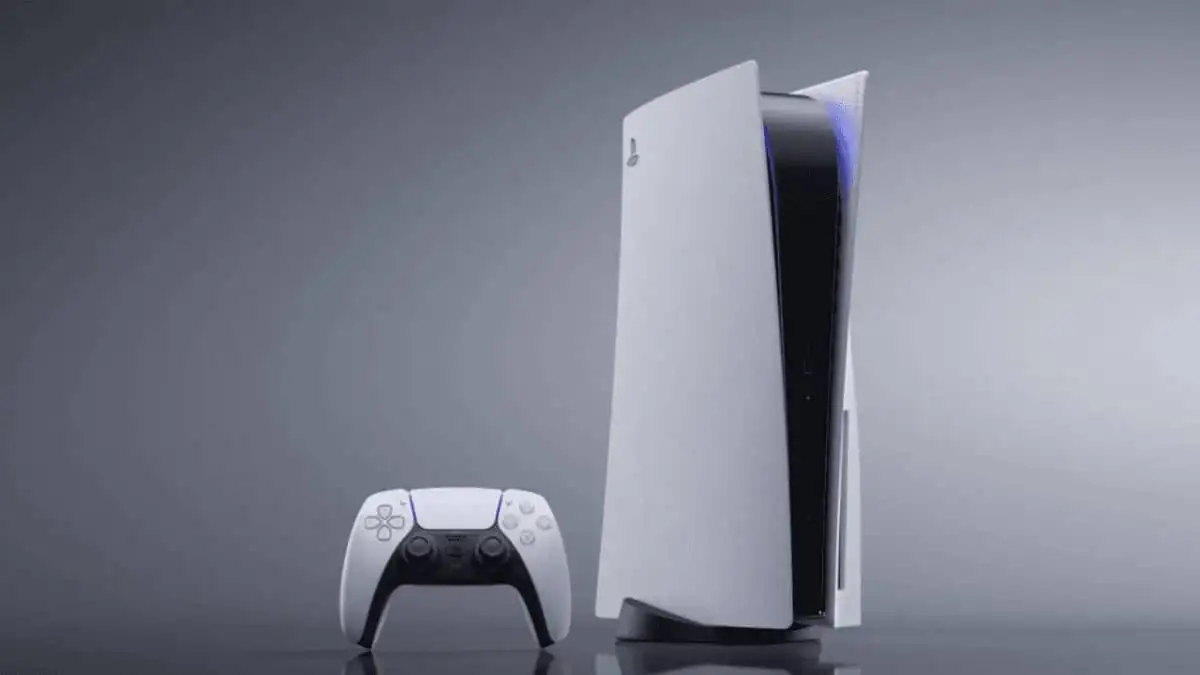
The approach works on a principle similar to Wine, the compatibility layer that lets Windows programs run on Linux, only applied to Sony’s platform. The project is also strict with errors: whenever it hits an unsupported or unexpected state, it closes the program instead of trying to keep going. It supports controllers mapped through SDL, including analog sticks and triggers, and keyboard and mouse controls can be configured through a simple file. According to its official disclaimer, AnyPS5 does not include, distribute or require copyrighted software, firmware, cryptographic keys or proprietary libraries, and it describes itself as a tool for interoperability, research, preservation and compatibility.
From Dead Cells to Astro Bot’s first worlds
The first game on the project’s official compatibility list is Dreaming Sarah, a 2D platformer marked as playable on Windows, running at 60 FPS on a GTX 1050 Ti with an Intel i5-7500 and at 36 FPS on Intel HD Graphics 620 integrated graphics. On September 27, one day before the official releases, a developer known as OverkillLabs published DeadCells-PS5-Native, a Windows build of Dead Cells: Return to Castlevania Edition relinked directly from the game’s PS5 code using AnyPS5. On a PC with a Ryzen 7 5800X3D and an RTX 5070 Ti at 4K, the game reached around 55 to 60 FPS indoors and 30 to 35 FPS in open areas, with music and sound effects working.
OverkillLabs described it as “the first PS5 game to run fully natively without any emulators,” although Russian tech site Kod.ru pointed out that other experimental PS5 projects had already managed to run certain commercial games, Dead Cells included. So far, only one version of the game (title ID PPSA15552) has been tested, and its performance still trails the official PC version of Dead Cells, which has been on the market for years. The build doesn’t include the game, so players must provide their own legally obtained, decrypted copy.

The most ambitious test so far is Astro Bot. In a public discussion on the repository, several contributors have documented their progress step by step. On a Linux branch maintained by contributor oneandonlydean, the tutorial is reported as playable, and a gameplay capture shows the game moving through the intro cinematic, the crash site tutorial and the world map, all the way into Sky Garden. On Windows, contributor SP4C3B4R-8 used an experimental branch with extra fixes and, with a DualSense controller in hand, went through the boot videos, the title screen, the save selection and the full Crash Site tutorial before flying into the first level of the Gorilla Nebula.
The result is still far from smooth. That Windows run went at 5 to 10 FPS and dropped to about 0.1 FPS once the first level appeared, and since Astro Bot advances its logic once per presented frame, anything below 60 FPS turns the game into slow motion instead of simply skipping frames. Even so, seeing one of Sony’s own first-party games play its opening cinematic on a PC is a major step for a project that only published its first releases at the end of September.
AI enters the reverse engineering lab
Part of AnyPS5’s progress comes from contributors working side by side with AI. In the Astro Bot discussion, user DotDebian published detailed reports on two crashes that stopped the game on Windows, one related to how memory was being reserved and another in the game’s audio thread. After investigating, DotDebian found that the audio crash came from a Windows behavior: when a write fault is resumed, the system overwrites a small area of the stack the game was still using. According to oneandonlydean, the problem doesn’t happen on Linux, which handles that process differently.
DotDebian’s update posts end with the same note: “Investigated with AI assistance (Claude Code).” SP4C3B4R-8 labeled their own post “Written with AI assistance (Claude Code).” That transparency comes from the project’s own rules, since its contribution guidelines ask everyone who submits a change to state whether it was written with AI assistance. In practice, AI helps investigate problems and write changes, while the contributors run the tests on their own hardware, machines with an RTX 5080, an RTX 5070 Ti and an RTX 4090, among others, and report the results themselves.
Not everyone celebrates this way of working. Some voices in the community have criticized OverkillLabs for “vibe coding,” the practice of relying heavily on AI to write code, a debate that remains open as the project keeps growing.
The road ahead is still long. The README itself clarifies that its system library progress figure only counts the functions the project has identified so far, not every function in the PS5, and Astro Bot’s frame rates show how much work remains before large 3D games run properly. Official builds are published on the project’s GitHub releases page, and users are responsible for making sure any game files they use are obtained and used legally.
Would you play your PS5 games on PC through AnyPS5? Tell us in the comments, we’re dying to know what you think!