

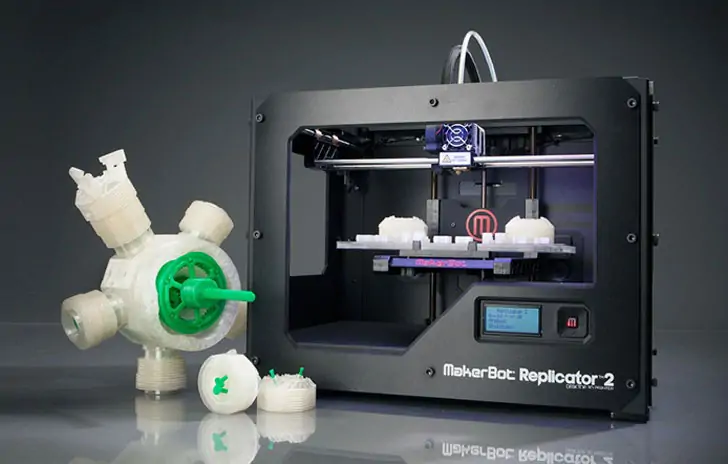

New York Governor Kathy Hochul signed landmark legislation into law on May 27, 2026, as part of the state’s FY27 budget, making New York the first state in the country to mandate that every 3D printer sold within its borders include “blocking technology”, software or firmware that scans every print file through a firearms blueprint detection algorithm and refuses to print anything flagged as a potential firearm or firearm component.
The law, codified in Executive Law §837-aa and General Business Law §396-eeee, directs the state’s Division of Criminal Justice Services to lead a task force of experts in additive manufacturing, AI, digital security, and firearms regulation to define minimum safety standards within 90 days, with detailed regulations following up to nine months after that.
California’s AB 2047, authored by Assemblymember Rebecca Bauer-Kahan and passed by the Assembly on May 26, is now moving through the state Senate and goes further still: it mandates the same type of detection software on all 3D printers sold in California and criminalizes the use of open-source firmware alternatives, making it a misdemeanor to disable or bypass the screening system.
Washington’s ESHB 2320, signed by Governor Bob Ferguson on March 24, 2026, banned using 3D printers to privately manufacture firearms, while its companion bill HB 2321, which would require blueprint detection algorithms embedded directly in printer hardware, stalled in committee and is considered effectively dead for this legislative session. Colorado has introduced its own version as well.
The broader concern driving all of this is the rise of “ghost guns”, untraceable firearms with no serial number, increasingly built with 3D-printed components. Federal data shows the number of privately made guns recovered in crimes and submitted to federal authorities climbed from roughly 1,600 in 2017 to nearly 27,500 in 2023.
The most high-profile case to date involved Luigi Mangione, arrested in December 2024 and charged with the murder of UnitedHealthcare CEO Brian Thompson, who police say was carrying a loaded 3D-printed pistol with a metal slide, a plastic handle, and a 3D-printed suppressor, a weapon with no serial number and no way to trace it. That case, and the broader ghost gun trend behind it, sits in the background of the public safety argument both New York and California are making.
The stated goal is straightforward: stop the spread of untraceable firearms manufactured at home. The technical reality is that legislators are attempting to impose a closed-source, corporate regulatory model on an ecosystem that is, by its very nature, open-source. You cannot enforce blueprint-blocking algorithms on hardware driven by open-source code without effectively banning the foundational building blocks of the maker movement itself.
The geometry problem: Why 3D printer slicers can’t detect weapon blueprints
When a user sends a design to a 3D printer, the model passes through slicing software that converts a 3D mesh into G-code, a stream of basic coordinates and raw extrusion commands that tell the print head where to move, how fast to move, and how much material to deposit. The printer does not interpret what the object is. It processes coordinates and motion instructions, nothing more.
This is the core technical problem with any blueprint-blocking mandate. As Adafruit’s Phillip Torrone explained in a widely cited analysis, a firearms blueprint detection algorithm would need to identify every possible firearm component from raw STL and G-code files while not flagging pipes, tubes, blocks, brackets, gears, or any of the millions of legitimate shapes that share geometric properties with gun parts.
Torrone called it “a classification problem with enormous false positive and false negative rates.” The Electronic Frontier Foundation, in its “Permission to Print” technical series published in April 2026, reinforced this, noting that the computers inside many 3D printers have “very limited computational and storage ability,” making it impossible for the printer’s own hardware to render G-code back into a 3D model and compare it against a prohibited-designs database.
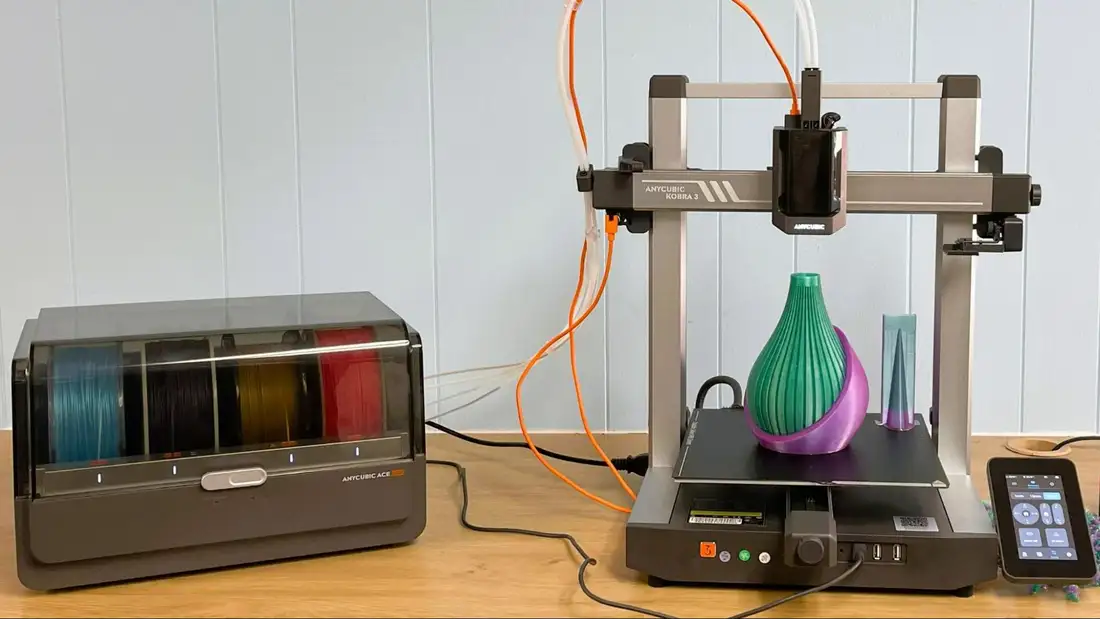
The only technical workaround would be routing every print file through a cloud-based comparison tool, introducing latency, connectivity dependencies, and a continuous stream of user design data flowing to state-monitored servers.
Even New York’s own legislation seems to anticipate this problem. The law includes what amounts to a feasibility escape hatch: the task force must act within nine months of issuing its recommendations “unless the working group reports that it is not technologically feasible” to require the technology, in which case the requirement simply doesn’t take effect until the group later decides otherwise.
According to officials overseeing the New York process, the law deliberately leaves open whether the technology should live in firmware, hardware, or software, precisely because no one has demonstrated that any of the three can do the job reliably.
According to reporting from PBS News, ABC News, and other outlets covering the legislation, the actual mandate that printers come equipped with blocking technology would not begin until 2029 at the earliest, or later, if New York’s working group keeps concluding it isn’t ready.
Evasion, meanwhile, requires minimal effort. Slight modifications to a model or its G-code output defeat detection. Splitting a restricted design into multiple non-flagged components and assembling them after printing bypasses the algorithm entirely. The people these laws are aimed at spend five extra minutes and walk through undetected. Every legitimate hobbyist, engineer, educator, and small manufacturer absorbs the friction instead.
The Open-Source brick wall: Why Klipper and Marlin bypasses render DRM useless
Even setting the geometry detection problem aside, any firmware-level blocking mandate runs directly into the structure of the open-source 3D printing ecosystem. Marlin, first developed in 2011, is the most widely used FDM printer firmware in the world, open-source, freely compiled, and compatible with the vast majority of consumer and prosumer machines.
Klipper, released in 2016 by developer Kevin O’Connor, has rapidly gained ground and is now shipped as the default firmware on printers from several major manufacturers. Both projects are maintained by volunteer communities and distributed as free, compilable source code that anyone can flash onto a compatible mainboard.
California’s AB 2047 and New York’s enacted law both effectively require cryptographic signing of G-code, meaning printers would only accept print jobs authorized by a state-approved slicer, to make firmware-level blocking enforceable.
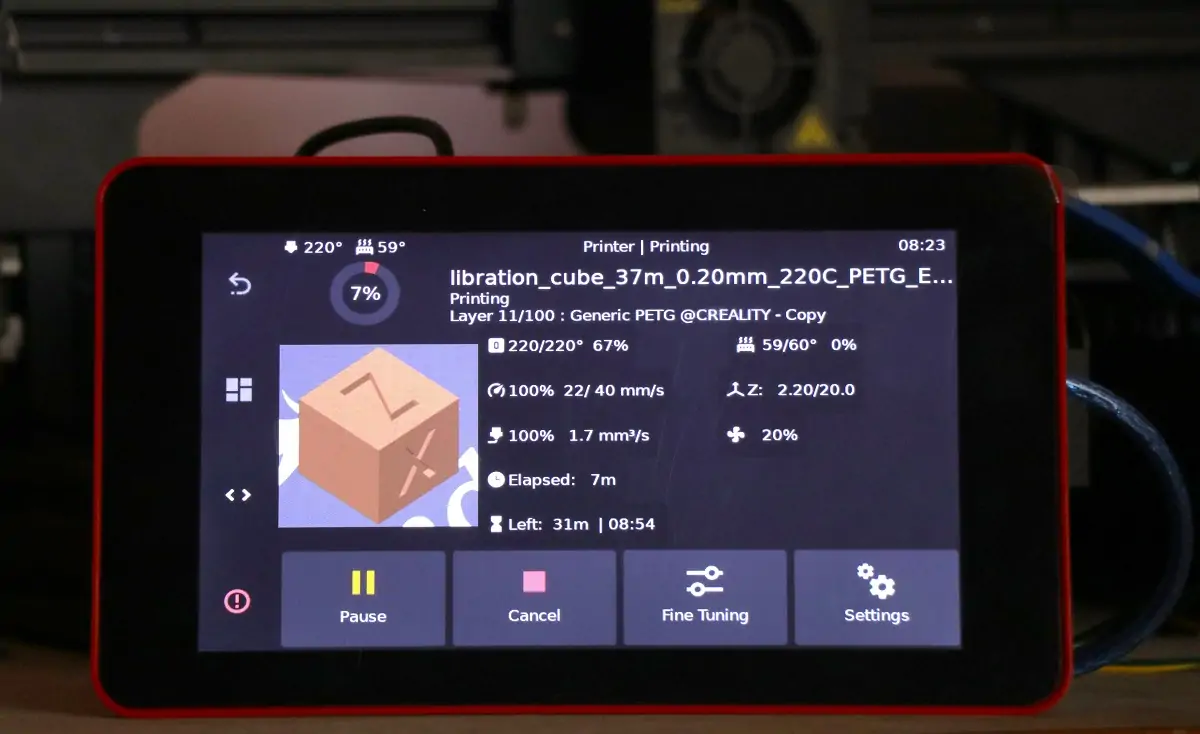
This shuts out Marlin, Klipper, and every other community-maintained alternative, which are generally maintained by volunteers without the resources to pursue state compliance. Under California’s bill, using open-source firmware on your own printer becomes a misdemeanor.
Security researcher Bruce Schneier described the broader approach on his blog in February 2026 as “the same problem as DRM: trying to prevent general-purpose computers from doing specific things.”
Commenters on that same post pointed out the obvious hardware bypass: any printer fitted with mandatory blocking can have its control board removed and replaced with an Arduino running a pair of stepper motor drivers and clean open-source firmware, with no advanced modification required, just a full board swap.
To close that loophole at a regulatory level, governments would need to criminalize the sale of basic microcontrollers and stepper motor drivers, which are commodity electronics components found in thousands of unrelated applications, from home automation to robotics kits.
The Electronic Frontier Foundation also flagged the anti-consumer dimension in its official analyses. Manufacturers standing to benefit from mandatory certified firmware would gain the ability to lock users into first-party slicers, first-party consumables, and first-party upgrade cycles, mirroring the consumable lock-in model that defined 2D inkjet printers for decades.
A printer whose blocking system loses state certification becomes illegal to resell under California’s framework. The EFF compared this directly to planned obsolescence through DRM. Some companies are already selling exactly the kind of filtering these laws envision, a workflow product called 3D GUN’T markets itself as a solution to prevent printing of ghost guns, and prosecutors have pointed to it as a model for printer makers to adopt voluntarily, well ahead of any state mandate forcing the issue.
The collateral damage: Surveillance, privacy, and who actually gets hurt
For a blueprint-blocking database to remain current, the slicing software running on a user’s machine must continuously query state-maintained servers, hashing and comparing every design file against a list of prohibited geometries.
The EFF described this as creating “unacceptable invasions of privacy” in its technical analysis. California’s AB 2047 requires manufacturers to register on a DOJ-approved roster and run DOJ-certified detection software.
New York’s enacted law extends its scope beyond consumer desktop printers to industrial CNC machines, university fabrication labs, repair shops, and small manufacturing businesses, with civil penalties enforced by the Attorney General, a flat $5,000 fine for each qualified product unlawfully sold without the required technology.
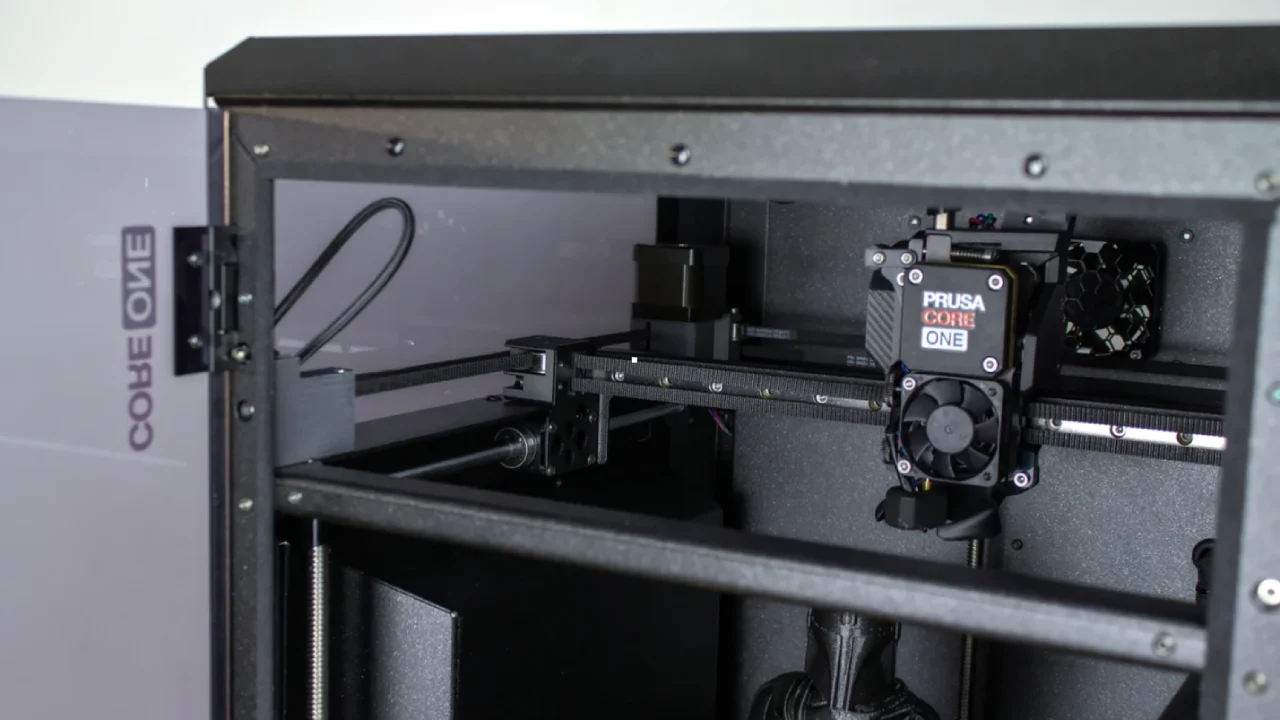
The people who bear the full weight of this infrastructure are not the ones these laws are designed to stop. They are the independent designer prototyping a medical device, the engineering student iterating on a drone frame, the repair technician printing a discontinued automotive bracket, the school library running an after-school fabrication program.
The EFF noted in its California analysis that despite 3D printing of guns already being rare and banned under existing law, the bill may outright criminalize any user who exercises control over their own device.
The legislative momentum is also self-reinforcing. New York’s signed law serves as a model for other states, and Everytown for Gun Safety has already praised the budget as nation-leading action against DIY machine guns and 3D-printed firearms, action it hopes other legislatures replicate.
Manufacturers that have already built compliance infrastructure for one state’s requirements have a direct commercial incentive to lobby for uniform national standards rather than a fragmented patchwork, which means the standards set in Albany and Sacramento could effectively become the national baseline, regardless of what other state legislatures decide.
Additive manufacturing is, at its technical foundation, a combination of raw physics, open-source code, and standard electric motors executing mathematical instructions. A geometry file cannot be regulated away from a machine that runs on open math. The blocking wall these laws are trying to build has a door in it, and that door is made of freely available hardware that anyone with a soldering iron and an internet connection can walk straight through.
The math behind additive manufacturing is inherently free, but the corporate push for compliance is very real. Will the maker movement look entirely different by 2029, or will open-source code route completely around state censorship? Let’s talk in the comments below.