



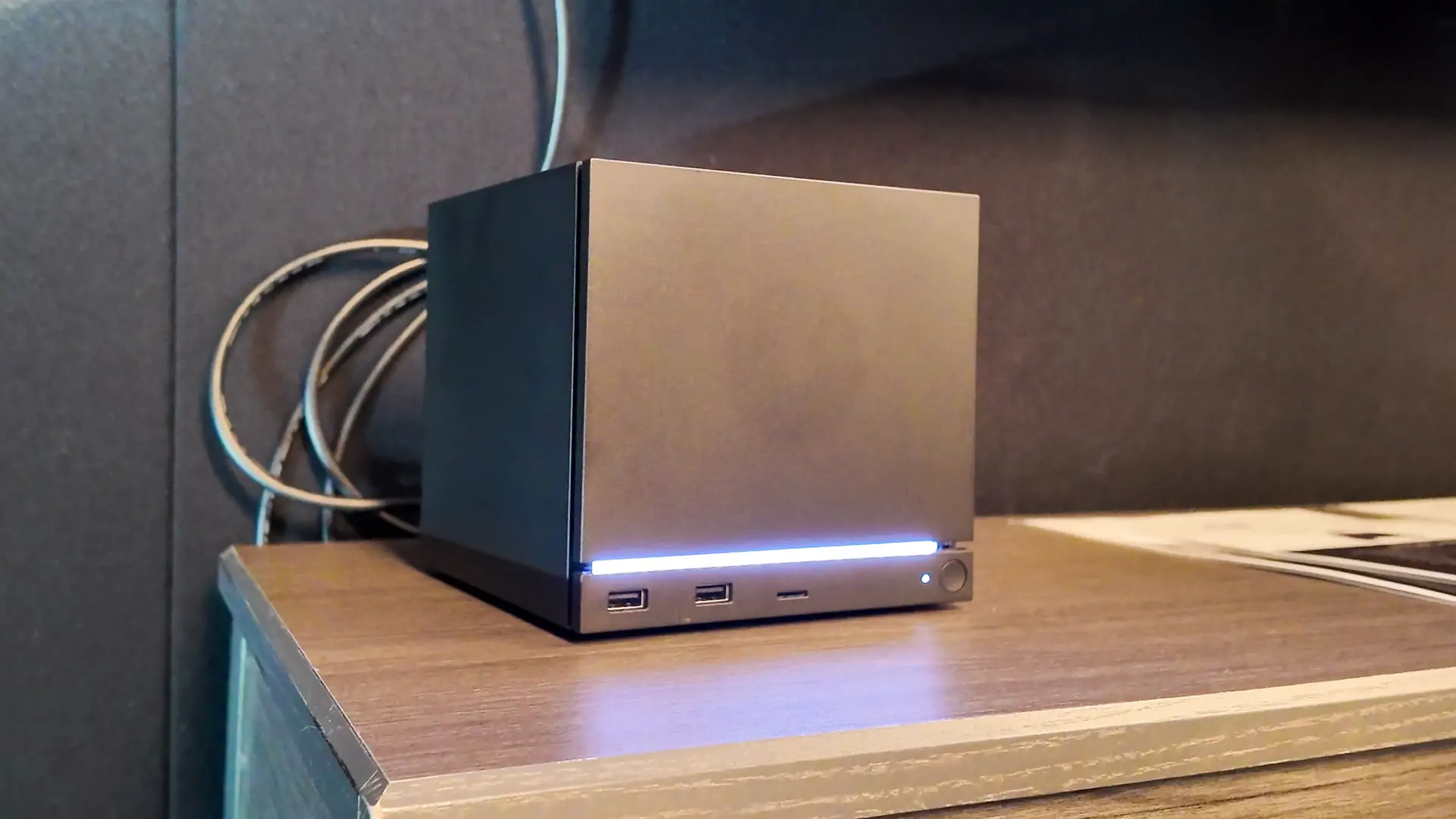
When Valve dropped the news about their latest Steam Machine last week, the gaming community collectively raised an eyebrow. Here was this sleek, compact cube that screamed “console” from every angle, yet Valve insisted it was pure PC gaming DNA wrapped in a deceptively friendly package. Naturally, everyone wanted to know the million-dollar question—or rather, the several-hundred-dollar question: How much is this thing going to cost?
Well, if you were hoping for PlayStation or Xbox pricing, you might want to sit down for this one.
The awkward room where it happened
Linus Sebastian from Linus Tech Tips—a guy who’s basically seen every piece of gaming hardware known to humanity—recently sat down with Valve to talk shop about the Steam Machine. What should have been an exciting conversation apparently turned into one of those meetings where you can practically hear the crickets chirping.
According to Linus, things got uncomfortable fast when the topic of pricing came up. “I can’t tell you what the price will be, because I literally don’t know,” he explained. But here’s where it gets interesting: Linus admitted he was disappointed that Valve wasn’t following the traditional console pricing model—you know, that sweet spot where manufacturers eat some of the hardware costs upfront because they’re banking on that juicy 30% cut from every game sold over the device’s lifetime.
When Linus threw out $500 as what he’d consider “console pricing,” the response from Valve’s team was… well, let’s just say the vibes were off. “Nobody said anything, but the energy in the room wasn’t good,” he recalled. Translation? Five hundred bucks might not even get you in the door.
So what exactly are we paying for?
To be fair to Valve, they’re not exactly skimping on the hardware. This isn’t some budget box with last-gen components slapped together. The Steam Machine is genuinely impressive on paper, designed to push 4K gaming at a smooth 60 frames per second.
Under that compact hood sits an AMD CPU built on Zen 4 architecture, packing 6 cores and 12 threads that can turbo up to 4.8 GHz while sipping a modest 30W of power. Paired with that is an AMD RDNA3 GPU featuring 28 compute units running at a sustained 2.45 GHz—basically, the kind of muscle you need to make demanding games look gorgeous at 4K resolution.
Memory-wise, you’re getting 16GB of DDR5 RAM alongside 8GB of GDDR6 VRAM, which means multitasking and high-demand gaming should feel buttery smooth. Storage comes in two flavors: a 512GB NVMe SSD for the budget-conscious (relatively speaking), or a spacious 2TB option for those who refuse to play the “which games do I uninstall” shuffle. Both versions support expandable storage via high-speed microSD, because let’s be honest, game install sizes these days are absolutely ridiculous.
Connectivity hasn’t been forgotten either. Wi-Fi 6E, Bluetooth 5.3, Gigabit Ethernet, and even a built-in 2.4 GHz wireless adapter for Steam Controllers—Valve clearly wants this thing to play nice with everything in your gaming ecosystem.
The console that isn’t, but kind of is?
Here’s where Valve finds itself in a weird spot. The Steam Machine looks like a console, sits in your entertainment center like a console, and promises the plug-and-play convenience of a console. But it’s priced like a gaming PC—because, well, it basically is one.
This creates an identity crisis of sorts. Console gamers are used to that $400-$500 entry point, knowing they’re getting a standardized experience that’ll last them a good five to seven years. PC gamers, on the other hand, are accustomed to spending anywhere from $800 to several thousand dollars for a custom rig, but they get the flexibility, upgradeability, and performance that comes with it.
The Steam Machine seems to be trying to bridge that gap, offering PC-level performance and flexibility in a console-like form factor. The problem? It might end up being too expensive for console fans and too limited for hardcore PC enthusiasts. It’s the gaming equivalent of being stuck between two worlds.
What this means for gamers
If Valve prices the Steam Machine north of $500—and that awkward silence suggests they might—they’re making a bold bet that there’s a substantial market of gamers willing to pay premium prices for convenience. These would be folks who want the power of PC gaming without the hassle of building or maintaining a traditional desktop, and who don’t mind paying extra for that privilege.
Is that market big enough to sustain the Steam Machine? That’s the real question. Valve’s previous attempt at cracking the living room gaming space with the original Steam Machines back in 2015 didn’t exactly set the world on fire, though to be fair, those were a fragmented mess of different manufacturers with wildly varying specs and prices.
This time around, Valve seems to be taking a more unified approach, but the pricing strategy could make or break the entire venture. Price it too high, and it becomes a niche product for enthusiasts with deep pockets. Price it competitively, and they might actually have a shot at carving out a meaningful space in the market.
The waiting game
For now, we’re all left wondering exactly how much Valve thinks this PC-console hybrid is worth. The specs certainly justify a premium price tag from a pure hardware perspective, but whether consumers will bite at potentially $600, $700, or even higher remains to be seen.
One thing’s for sure: that uncomfortable silence in Valve’s meeting room speaks volumes. When a tech industry veteran like Linus Sebastian mentions $500 and gets nothing but awkward energy in response, you know the actual price tag is going to make some wallets weep.
The Steam Machine might deliver an incredible gaming experience, but if Valve wants this to be more than just another interesting experiment, they’ll need to figure out how to make the value proposition work for more than just the most dedicated PC gaming faithful. Otherwise, this sleek little cube might end up being the most impressive paperweight money can buy.