

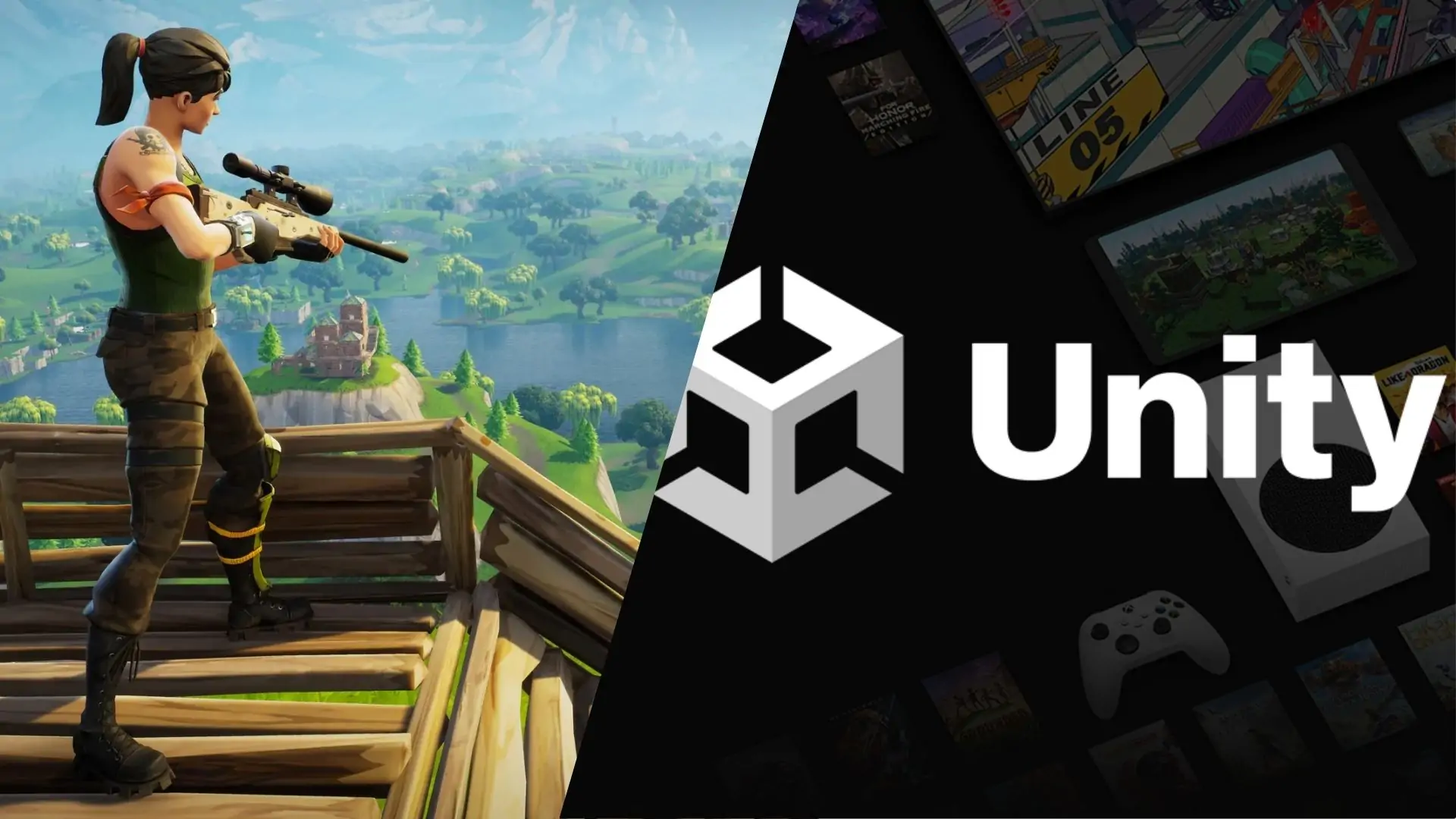

In what might be the most unexpected plot twist in gaming since Sonic appeared in a Nintendo game, Unity and Epic Games have announced a partnership that’s making developers everywhere do a double-take. Starting in 2026, games built with Unity will be able to live inside Fortnite. Yes, you read that right, two rival engines, one massive Playground.
The bombshell dropped at Unite 2025 in Barcelona, and it’s already sending ripples through the development community. Epic’s CEO Tim Sweeney took the stage to explain how Unity’s “truly amazing networking technology” will make this cross-engine magic possible. But here’s where it gets even more interesting: Unity is also integrating Unreal Engine support into its multiplatform commerce platform, giving Unreal creators more flexibility to manage digital catalogs, payment providers, and web stores across PC, mobile, and browsers.
When rivals become allies
The gaming industry has watched Unity and Epic compete for years, each vying for developer loyalty with their respective engines. So what changed? According to Sweeney, it came down to a shared vision. “We recently sat down with Unity and realized we all share a common vision about the need to support fair and open digital platforms,” he explained. “Just like in the early days of the web, we believe companies should work together to build open, interoperable systems.”
Unity’s President and CEO Matt Bromberg echoed the sentiment with equal enthusiasm: “We’re thrilled to partner with Epic Games to create more opportunities for developers worldwide. Choice and open systems generate growth for everyone in the gaming ecosystem.”
Unity 🤝 Epic Games
Epic and @Unity are working together to bring Unity games to Fortnite, and to bring Unity’s cross-platform commerce platform to Unreal Engine. Together with Unity, we’re working to advance the open, interoperable future of video games.
Check out more of the… pic.twitter.com/qLMVYejl3r
— Unreal Engine (@UnrealEngine) November 19, 2025
This isn’t just corporate speak, it’s a fundamental shift in how these platforms operate. Until now, Fortnite has been a walled garden where creators could only build experiences using Epic’s official tools. No importing from other engines, no exceptions. But with experiences ranging from LEGO Fortnite and Fortnite Festival to thousands of user-created islands (some of which have actually outperformed Epic’s own modes), the platform has evolved into something much bigger than a battle royale game.
Now, by opening the doors to Unity developers, Epic is essentially saying: “Bring your best work, no matter where you built it.” It’s a bold move that could transform Fortnite from a game into a genuine metaverse platform, or at least the closest thing we’ve got to one right now.
Both companies promise more details about tools and launch timelines throughout the coming year. For developers who’ve been building in Unity and eyeing Fortnite’s massive audience, 2026 can’t come soon enough.