



Valve just rolled out one of the most requested changes to Steam’s review system in years, and honestly, it’s the kind of update that makes you wonder why it took this long. Starting with the Steam Client Beta update released on February 12, 2026, users can now officially attach their PC hardware specifications to game reviews. Not buried in the text, not copy-pasted manually at the bottom, there’s now a dedicated space for it, built right into the review form.
It sounds simple. It is simple. And that’s exactly why it’s so effective.
If you’ve ever spent 20 minutes reading Steam reviews before buying a game, you know the struggle. Someone gives it a thumbs down, says the performance is a disaster, and you have absolutely no idea whether they’re running an RTX 4090 or a laptop from 2013 that barely runs a browser. Both reviews look identical. Both carry the same weight in the algorithm. And you’re left guessing whether the game is genuinely broken or whether the person just needed a hardware upgrade three years ago.
That ambiguity has been a real problem for a long time, and now Valve is finally doing something about it.
The context that was always missing from performance reviews
Performance complaints are one of the most common reasons games get negative reviews on Steam. That’s not an opinion, it’s a recurring pattern anyone who follows the platform has noticed. The problem is that performance is one of the most hardware-dependent experiences in gaming. A game that runs flawlessly at 120fps on a high-end rig can be an absolute slideshow on a mid-range build from four years ago, and neither of those experiences is necessarily the developer’s fault.
With this new feature, when someone writes a review complaining about stuttering, frame drops, or crashes, other users can now see exactly what hardware they were playing on. Was it an i5 from 2018 with 8GB of RAM? Or a current-gen machine that should have no trouble running the game? That context changes everything about how you interpret the review.
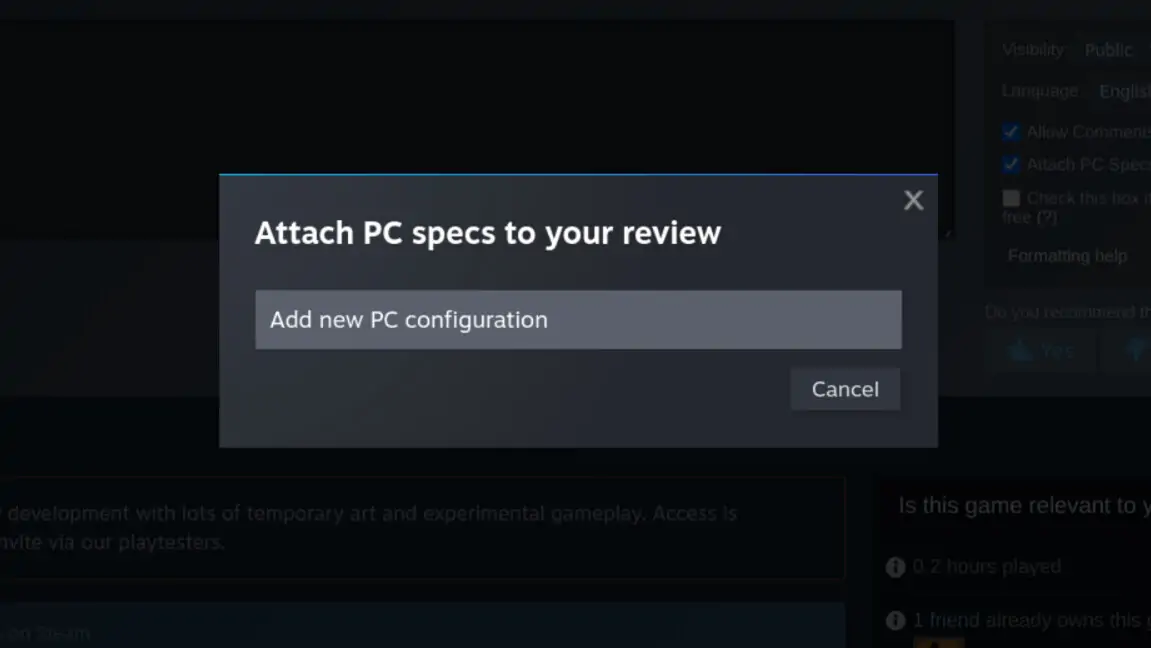
And it works the other way too. If someone says the game runs buttery smooth and their rig is similar to yours, that’s actually useful and reliable information before you spend your money. The feature turns reviews from personal anecdotes into something closer to real data points.
It’s worth noting that attaching specs is completely optional, Valve isn’t forcing anyone to share their hardware. And there’s currently no announced system to verify that the specs a reviewer attaches are actually accurate. Presumably, the cleanest solution would be to auto-detect them the same way Steam already does for its Hardware Survey, but Valve hasn’t confirmed that yet. For now, it relies on good faith, which isn’t perfect, but it’s still a meaningful step forward.
Anonymized framerate data is also coming, and that’s a bigger deal than it sounds
The specs feature gets most of the attention, but tucked into the same February 12 beta update is something that could have even broader long-term implications: an opt-in setting to share anonymized framerate data with Valve.
When enabled, Steam collects gameplay FPS data without tying it to your Steam account, but it does associate it with the type of hardware you’re running. Valve says this information will help them “learn about game compatibility and improve Steam.” Right now, the feature is focused specifically on devices running SteamOS, which means Steam Deck and compatible third-party handhelds.
The practical application here is significant. One of the ongoing challenges with the Steam Deck Verified system is that a game can earn that certification and then quietly degrade with patches and updates, without Valve having any efficient way to catch it at scale. Real-world framerate data tied to hardware types would give Valve an actual feedback loop to monitor that, and keep the Verified label meaningful for users who rely on it.
It also feeds directly into Valve’s work with Proton, the compatibility layer that makes it possible to run Windows games on SteamOS. The more real usage data they have on how specific games behave on specific hardware, the better they can target improvements.
How to try it now before it goes live for everyone
Both features, the hardware specs attachment and the framerate data sharing, are currently in beta, which means they haven’t rolled out to the full Steam client yet. But getting access is straightforward. You just need to open Steam, go to Settings, head to the Interface tab, and select Client Beta Participation. From there, join the Steam Beta Update channel, restart the client, and you’ll have access as it rolls out.
It’s not a massive overhaul, and it won’t fix every problem with Steam’s review ecosystem. Review bombing, low-effort posts, and bad faith reviews are still very much a thing, and this update doesn’t address any of that. What it does is add a layer of transparency that makes honest, detailed reviews significantly more useful, both for buyers trying to make an informed decision and for developers who want to understand whether negative performance feedback is a hardware issue or a genuine optimization problem.
The PC gaming community has been debating “is this game suffering from optimization issues or is just your PC badly optimized?” since basically forever. This feature won’t end that debate, but it gives people something concrete to point to instead of just arguing in circles. And sometimes, that’s exactly what a community needs.
Valve didn’t make a big announcement about this. No blog post, no press release. Just a beta changelog that quietly shipped something genuinely useful. Classic Valve.
What do you think, will attaching PC specs to reviews actually make Steam reviews more trustworthy, or do you think people will just lie about their hardware anyway? Drop your take below, we want to know!