

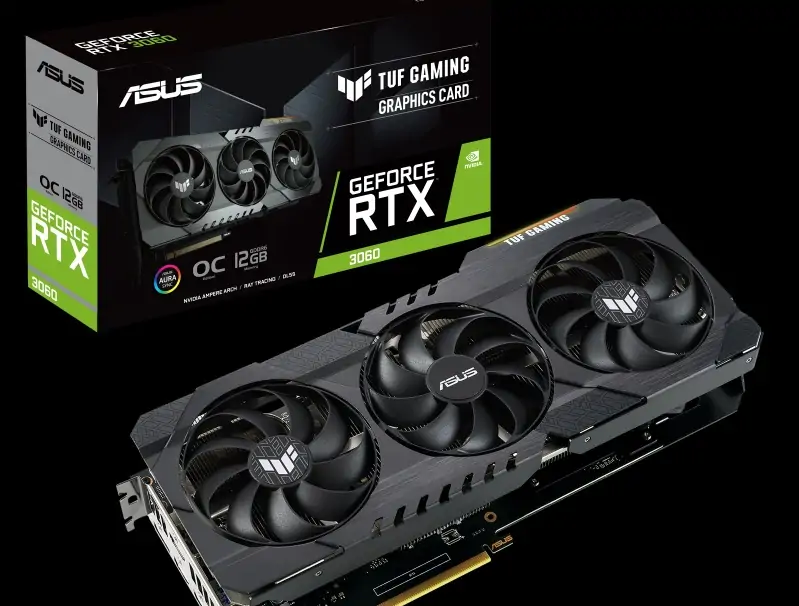

Hardware leaker MEGAsizeGPU dropped a bombshell on April 17, 2026, revealing that NVIDIA is planning to re-release the GeForce RTX 3060 12GB, with a target window of June 2026. The same leak confirmed that the rumored RTX 5050 9GB, a card that had been generating buzz as the next entry-level option for the Blackwell generation, has been delayed, with its release timeline now described as “pretty uncertain.” NVIDIA was reached out to for comment and declined to respond.
To put this in perspective: NVIDIA is reportedly jumping back two full generations to restart production of a card that originally launched in January 2021. This is something the company has never done before in its history, and the fact that it’s happening now says a great deal about the state of the consumer GPU market heading into mid-2026.
The RTX 3060 12GB launched at $329 and features 3,584 CUDA cores, 12GB of GDDR6 memory on a 192-bit memory bus, and boost clocks of up to 1,777 MHz. It was built on Samsung’s 8nm process node, older, cheaper to manufacture, and far less contested than the TSMC 4N 5nm process used by the RTX 40 and RTX 50 series. That manufacturing detail is not a small footnote. It is the entire reason this revival makes sense for NVIDIA right now.
The GPU market is in crisis
The root of everything happening right now is a global memory shortage that analysts have started calling “RAMageddon.” The GDDR7 memory used in the RTX 50 series Blackwell cards is produced on the same manufacturing lines as the HBM3e memory used in NVIDIA’s enterprise AI accelerators. A single AI chip can sell for upwards of $40,000. With that kind of margin on the table, NVIDIA has every financial incentive to redirect its memory supply toward the data center and away from gaming GPUs.
The result has been painful for consumers. RTX 50 series cards are scarce, increasingly expensive, and in some cases being cut from production plans entirely. NVIDIA’s data center business now accounts for over 90% of the company’s total revenue, which tells you where the priorities lie. Gamers, for the first time in a long time, are not the primary customer.
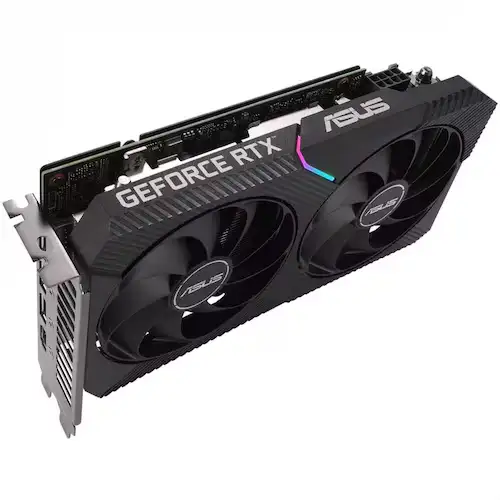
This is the context in which the RTX 5050 9GB was supposed to arrive. The card was already a strange proposition, rather than offering a clean generational step, it was reportedly going to use three 3GB GDDR7 modules on a narrow 96-bit memory bus, delivering a total bandwidth increase of just 16GB/s over the standard 8GB model. It was widely interpreted as a supply workaround dressed up as a product refresh, not a genuine upgrade. Now even that has been shelved, and NVIDIA is filling the gap with a card from 2021.
The logic behind the RTX 3060 comeback is straightforward. GDDR6 memory is significantly cheaper and easier to source right now than GDDR7. Samsung’s 8nm production line is in lower demand than TSMC’s advanced nodes. The card costs less to make, and the supply chain for it is far more manageable given current conditions.
The 12GB advantage that won’t go away
Here is the part that will surprise some people: the RTX 3060 12GB is genuinely not a bad answer for budget gamers in 2026, depending entirely on how NVIDIA prices it.
Modern games are increasingly VRAM-hungry, and the 12GB buffer on the RTX 3060 continues to hold up better than many expected, especially when compared to newer budget options that ship with just 8GB. The RTX 5050 desktop, the official Blackwell entry-level card, uses 2,560 CUDA cores and 8GB of GDDR6. A relaunched RTX 3060 12GB would have more memory than that card, even while coming from an older generation architecture.
The trade-offs are real and worth knowing. The RTX 3060 will not support DLSS Frame Generation, which requires the newer Tensor core capabilities found in the RTX 40 and RTX 50 series. It will support DLSS upscaling, including updated AI models that were made available to all GeForce cards in January 2026, so it is not completely left behind by NVIDIA’s AI feature rollout, but it is not getting the full package either. Ray tracing performance and video encoding capabilities also lag behind current-generation options.
What the card does have going for it is the 12GB of VRAM and a proven track record in real-world gaming workloads. At the right price, analysts and hardware outlets are pointing to around $200 as the number that makes this relevant, the RTX 3060 12GB could be a genuinely smart buy for anyone gaming at 1080p or 1440p who does not need cutting-edge features. At anything significantly above that, the value case falls apart fast.
Currently, used RTX 3060 12GB cards are available on eBay for $150 to $200, and new old stock on Amazon ranges from $350 to $400. NVIDIA would need to land well below that Amazon price to make a newly manufactured unit competitive and credible in the current market.
It is also worth noting that NVIDIA recently unveiled Neural Texture Compression at GTC 2026, an AI-driven technology that could reduce VRAM demands in supported games by up to 80% in some scene configurations. A beta is already available on GitHub for developers. If that technology gets adopted at scale, it could extend the useful life of cards like the RTX 3060 even further, though real-world game integration is not expected to arrive broadly until late 2026 or mid-2027.
For now, the RTX 3060 12GB revival is a practical response to a market that is broken at the entry level. It is not a gift to budget gamers, it is NVIDIA buying time while the supply chain sorts itself out and the Blackwell lineup stabilizes. Whether it turns into a genuine win for consumers depends on the price tag that shows up on store shelves in June.
What do you think, is the RTX 3060 12GB comeback actually good news for budget gamers, or is NVIDIA just recycling old hardware to dodge a bigger problem? Let us know in the comments!