



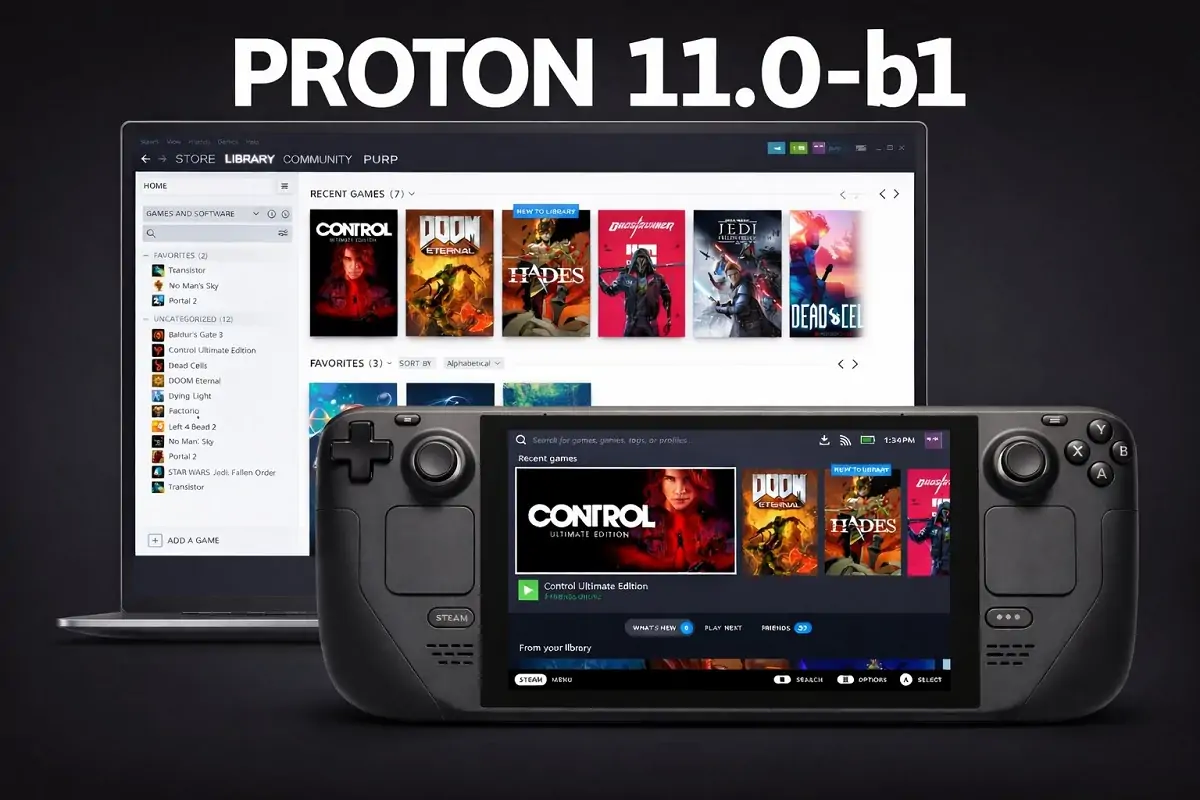
Valve released the first beta of Proton 11.0 on April 16 and it’s easily one of the most important updates the compatibility layer has received in years. If you’ve been gaming on Linux, or thinking about making the switch, this is the release that changes the conversation.
The first thing everyone noticed when the changelog dropped was the EA fix. For weeks, a large number of EA games had simply stopped working on Linux after an update to the EA Desktop client broke compatibility with Proton. Titles like Apex Legends and Battlefield became impossible to launch, leaving Linux players either stuck or forced to dual boot into Windows just to play.
Valve addressed it directly in this beta, fixing the Steam Overlay integration and resolving the launch crashes that had been driving people crazy. It’s the kind of fix that doesn’t sound glamorous until it’s your weekend gaming sessions that get saved by it.
The Rockstar Launcher and REDLauncher also got attention. The REDLauncher, the one you’ll recognize from Cyberpunk 2077 and The Witcher 3, was taking an unreasonably long time to exit, and that’s now sorted. Rockstar Launcher popup rendering was also improved. Launcher problems are one of those things that don’t break the game itself but make the whole experience feel unpolished, so getting these fixed matters more than people give it credit for.
A game library that just got a lot bigger
One of the strongest arguments for sticking with Linux gaming has always been how much of the Steam catalog actually runs, and Proton 11 pushes that number forward in a meaningful way. Five titles are now playable for the first time under Proton and Steam Play: Unknown Faces, Gothic 1 Classic, X-Plane 12, Breath of Fire IV, and Deadly Premonition. That last one in particular is a cult classic that fans have been waiting to see work properly for a long time.
Beyond the newcomers, a solid batch of games that previously only ran through Proton Experimental, the more unstable, less reliable branch, now work under standard Proton. That list includes Resident Evil (1996), Resident Evil 2 (1998), Dino Crisis, Dino Crisis 2, SHOGUN: Total War, Metal Gear Survive, Warhammer: Vermintide 2, DCS World Steam Edition, and From Dust. Moving a game out of Experimental and into standard support means fewer manual tweaks, less configuration headache, and a much more reliable experience overall. For retro survival horror fans specifically, this update is basically a gift.
And the fixes for classic titles keep going. Chrono Trigger’s flickering in windowed mode is fixed. Metal Gear Solid 2 no longer hangs after the end credits. Call of Duty 2 got a mouse movement behavior fix. There’s something genuinely satisfying about watching a compatibility layer mature to the point where a 1998 game and a modern title both get dedicated attention in the same release.
The crash and stability fixes also deserve a callout. A crash in HELLDIVERS 2 that triggered specifically during high enemy-count missions has been patched, which, if you’ve played that game on a bug-infested difficulty setting, you know exactly how much that matters. Killer Inn got multiple fixes too: random hangs are gone, a launch failure affecting Steam Decks and machines with /tmp sizes under 10GB is resolved, and a connection issue with Square Enix accounts is also fixed.
The engine underneath got a serious overhaul
Here’s where the update gets technically interesting, and it’s worth understanding because it explains why so many things are suddenly working better at once. Proton 11 is fully rebased on Wine 11.0, which brings support for NTSync, a kernel driver that moves parts of the Windows NT synchronization model directly into the Linux kernel. In plain terms, this means Proton can run Windows software more reliably, with less CPU overhead and better frame rate consistency. Games that previously stuttered or had erratic frame pacing should feel noticeably smoother, and that improvement applies across the board, not just for specific titles.
DXVK has been updated to version 2.7.1, and vkd3d-proton received a specific update for better DirectX 12 translation on NVIDIA cards. These are the components responsible for converting DirectX calls, the graphics language Windows games speak, into Vulkan, which is what Linux understands. Better translation means fewer graphical glitches, improved GPU utilization, and an overall experience that feels less like a workaround and more like the game just running the way it should.
Controller support also saw real improvements. The 8BitDo Ultimate 2C and other controllers that expose multiple HID devices now hotplug correctly, meaning you can plug them in mid-session without issues. Xalia was updated to version 0.4.8, bringing better gamepad support inside launchers and installers so you can navigate them without reaching for a keyboard or mouse. That’s a big quality-of-life win for couch gaming setups and Steam Deck users.
VR didn’t get left out either. No Man’s Sky VR mode is playable again after being broken by a recent update, and VR controller tracking in Microsoft Flight Simulator has been fixed. Video playback across multiple games was also cleaned up, She Sees Red, Crimson Desert, Satisfactory, and BlazeBlue Centralfiction all got specific fixes. Even a small memory leak in The King of Fighters XIII Global Match video playback was tracked down and patched.
One last thing buried in the changelog that’s worth paying attention to: this beta includes a Proton 11.0 ARM64 build using FEX-2604. GamingOnLinux noted this is almost certainly work being done toward the Steam Frame, Valve’s upcoming VR headset. Nothing is officially confirmed, but the groundwork is clearly being laid.
Proton 11 is available right now through Steam settings on any Linux or SteamOS system. Search for it in your Steam Library, install it, and you can set it on individual games through their Properties menu under the Compatibility section. Give it a spin and report anything unexpected back to Valve, that’s how betas get better.
Are you already gaming on Linux or has Proton 11 finally convinced you to make the jump? Tell us in the comments, we want to know!