


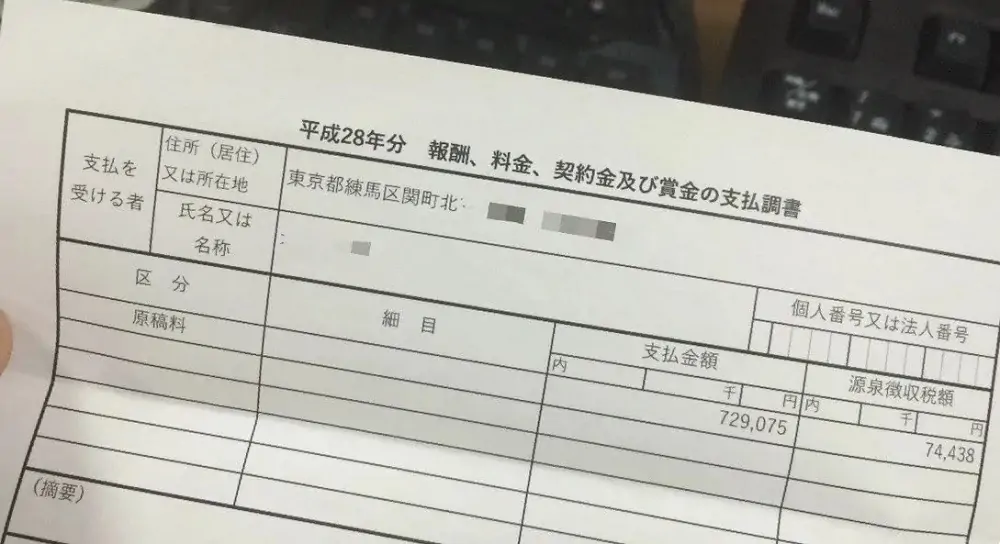
On April 16 a Japanese animator decided to share something the industry rarely makes public: his official payment document from his very first year on the job. The number left the international community speechless, just 729,075 yen for an entire year of continuous work. At current exchange rates, that translates to roughly $4,600 dollars. Not per month. For the whole year.
The animator, who has since founded his own manga publishing house, explained that he decided to expose this reality after watching the ongoing debate among foreign fans about whether piracy is the main cause of low animator salaries. His document confirmed what industry reports have pointed out for years, that entry-level animators in Japan typically survive on between 30,000 and 50,000 yen per month, roughly $200 to $350, in one of the most expensive cities in the world.
The post quickly went viral, reigniting a long-standing conversation about labor conditions behind one of Japan’s most profitable cultural exports.
The numbers behind your favorite anime are shocking
The anime industry generates billions of dollars annually through streaming deals, merchandise, international licensing, and theatrical releases. The money exists. What doesn’t exist, for the people actually drawing the frames, is a fair slice of it.
Most entry-level animators in Japan are not salaried employees. They work as freelancers paid per frame or per cut delivered. For a typical TV anime series, a single drawing pays less than $2. Drawing 300 frames in a month is considered a challenging output for someone new to the craft, which puts a realistic monthly income for a beginner somewhere around $400 to $550, before expenses.
In March 2024, an in-between animator went viral on X after posting their monthly invoices publicly. Their first month on the job earned them 19,844 yen, around $132. Their second month, after increasing their output significantly, brought in 35,640 yen, or roughly $237. Those invoices were dated 2023. This is not a relic of a different era.
According to surveys by the Japan Animation Creators Association (JAniCA), the average yearly income for entry-level in-between animators sits around 1.1 million yen, under $10,000 annually. For context, that figure is lower than the yearly earnings of someone working the overnight shift at a convenience store in Tokyo. JAniCA has also noted that 80 to 90 percent of prospective talent eventually abandons animation entirely because they cannot afford to sustain themselves on those wages.
Adding to the problem, laws in Japan have historically treated animator unit prices differently from standard minimum wage protections, leaving freelancers with almost no legal floor for what they can be paid per drawing.
A broken system, and one person trying to build a better one
The structural reasons behind this situation are well documented. Japan’s anime production operates through a committee model in which funding and intellectual property rights are held by investors, distributors, and TV stations, not by the studios doing the actual animation work. Studios receive fixed, often thin budgets from these committees, and the financial pressure trickles all the way down to the newest animators at the bottom of the production chain.
There is also a labor supply problem that works against animators. The passion surrounding anime creates an enormous pool of young people willing to endure poverty-level wages for the chance to work on the shows they love. With that many candidates available, studios have little financial incentive to raise rates on their own. As veteran industry figures have noted, without collective bargaining power or strong union representation, individual animators have almost no leverage.
Japan attempted to address freelance worker conditions with its Freelance Act, enacted in 2024, but the legislation skirted the question of fair compensation and left the social insurance gap between in-house employees and independent contractors largely intact. Conditions have improved somewhat since JAniCA’s landmark 2009 white paper first shocked the public with its findings on long hours and poverty-level pay, but those improvements have been concentrated mostly among directors and senior staff, not the in-betweeners carrying the heaviest workload for the least pay.
The animator behind the April 2026 post represents a different kind of response to the problem. Rather than simply leaving the industry or venting online, he stayed long enough to build something new. He founded his own manga publishing company, Tatsunoji Shobo, with one stated goal: creating a work environment where artists are paid fairly for their contributions. It’s a small operation in the context of an industry this large, but it points toward the kind of structural alternatives, creator-owned, ethically run, that advocates have argued are the only real path forward.
What fans need to understand
The debate about piracy and its impact on animator wages is not new. But this animator’s document puts a number to the argument that is hard to dismiss. When someone draws frames for shows watched by millions of people across the world and walks away from their first year with $4,600 in total, the problem is clearly not just piracy.
The anime industry is a $25 billion global business. The talent sustaining it often cannot afford rent in the cities where the studios are located. Organizations like the Animator Dormitory Project in Tokyo exist specifically to provide housing for new animators because the wages they earn are not enough to cover basic living costs in the market where they are required to work.
This is the reality behind the shows that generate billions in streaming revenue, sell out merchandise in minutes, and pack theaters worldwide. The people drawing those frames deserve better, and increasingly, some of them are deciding to build the structures that might actually deliver it.
Do you think anime studios should be held more accountable for how they pay their animators? Drop your thoughts below, we’d love to know what you think!