

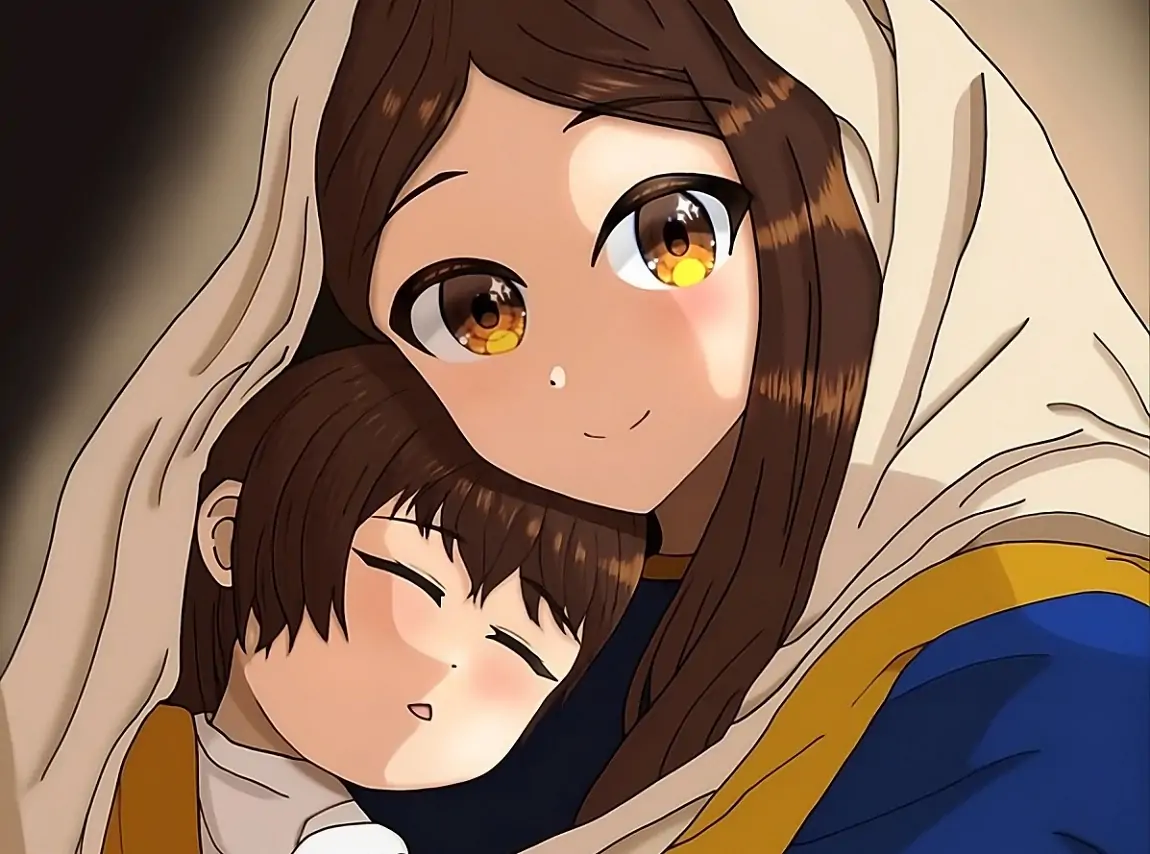

Haruhi Aisaka was born in Tokyo in the year 2000, grew up in a home where religion wasn’t really a topic, and spent most of her early life identifying as agnostic. Today she’s a Catholic convert living in Tokyo, drawing the Virgin Mary in manga style and showing her work at one of the biggest fan conventions in the world. The path between those two points involves an anime series, a university in the United States, and a decision to take a leap of faith she wasn’t even fully sure about at the time.
Her story is making waves in Catholic media this week, and honestly, it deserves attention in the geek world too.
Aisaka’s background growing up wasn’t particularly religious. Her mother is spiritual but not religious, and her father is a nominal Catholic who doesn’t actually practice. She spent years not giving Christianity much serious thought, until her time at university in the United States changed everything.
When she converted for the first time, she’s upfront that she wasn’t completely certain. “I can’t honestly say I was 100% sure that Christianity was true,” she has said. “But I was deeply moved by the story of Jesus Christ, and I realized that if it was true, I didn’t want to miss the opportunity to know Him.” That honesty alone is pretty disarming.
What makes her conversion story particularly interesting for the geek community is what actually helped push her toward faith: an anime. Specifically, The Melancholy of Haruhi Suzumiya. Not a Christian series by any means, but Aisaka connected its themes to her own situation, and she credits it as genuinely playing a role in her decision to become a Christian. “Without that series, I might never have taken Christianity seriously,” she explained. “This may be one of the reasons I feel so strongly that Christ can work through anime.”
After returning to Japan and studying the faith more deeply, she was drawn to Catholicism in particular, its theological continuity with early Christianity, its sacramental life, and its actual historical presence in Japan all resonated with her. She eventually entered the Church and now attends a parish near the center of Tokyo, where she says she’s grateful for a congregation that mixes local parishioners with tourists.
Drawing Virgin Mary as an anime character
Aisaka’s path into art started simply and without any grand plan. She was already a big anime fan in university, decided it would be fun to try drawing in that style, and one day attempted to draw the Blessed Virgin Mary as an anime girl. Everything, she says, grew from there.
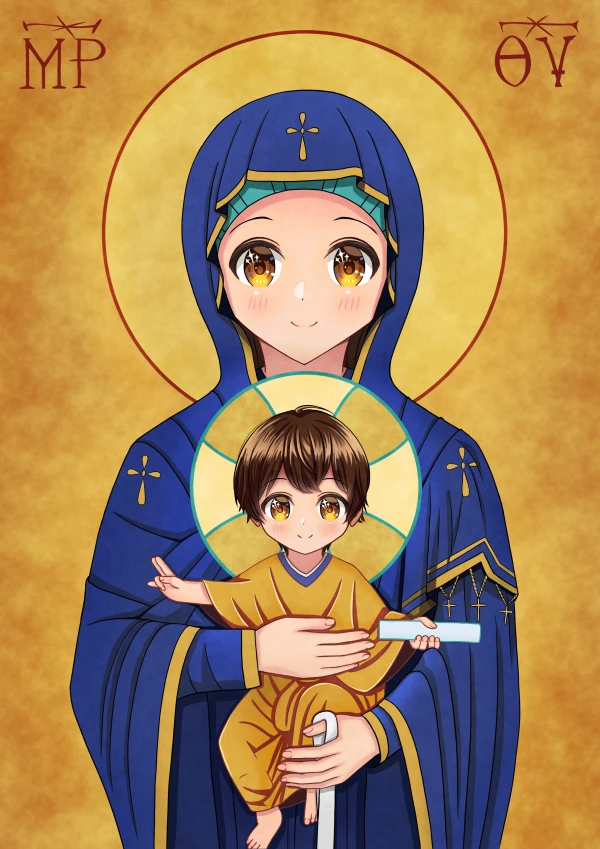
Her work now includes manga-style takes on some of the most iconic images in Catholic art, the Virgin of Fatima, the Vladimir Madonna, the Comnenus Mosaic, reimagined with the visual language of Japanese illustration: large expressive eyes, soft features, and vibrant detail. And despite the growing recognition her art has received, she stays remarkably grounded about it. “I never thought of myself as an artist. I still have a lot to learn and improve. Having so many people call me an ‘artist’ is something I’m still getting used to,” she says.
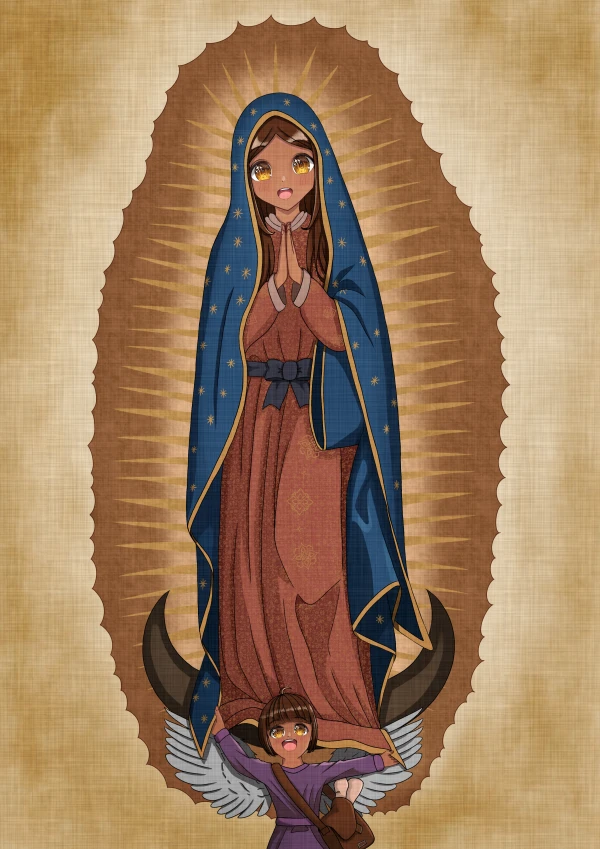
Her choice of the manga style isn’t just a personal preference, it’s also a cultural and evangelistic statement. “I want to show that Catholicism can be and is part of Japanese culture. I don’t want to give the impression that it’s something completely foreign,” she explains. She also believes the expressive visual vocabulary of anime brings something to sacred art that traditional Western religious imagery doesn’t always capture. “The big eyes, the colorful expressions, the adorable faces of anime can tell us something that isn’t always stressed about God and the saints in heaven.”
She has an active presence on social media and participates in art conventions in Japan, including Comiket, the massive fan convention held twice a year in Tokyo.
Evangelizing in a country where most people don’t know who Mary is
Japan presents a very specific challenge for Catholic evangelization. Christianity has always been a minority religion there, and the visual references that feel universal in the West simply don’t register for most Japanese people. Aisaka experiences this directly. “When I show my drawings of Mary or the Baby Jesus to Japanese people, they often don’t know who they are,” she notes. Unlike in Western countries, where Christian imagery is woven into everyday culture, in Japan these figures are largely unknown outside of church communities.
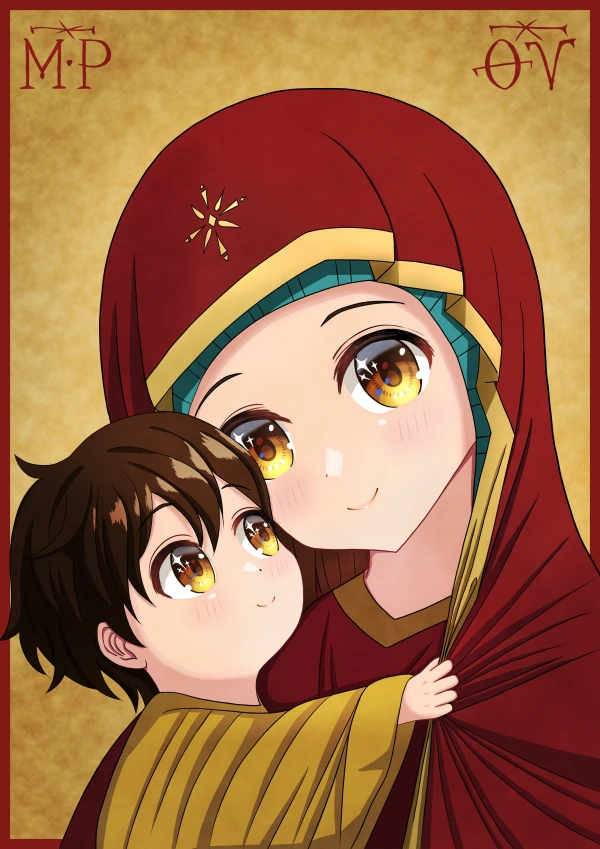
Her goal, then, isn’t just to create art for Catholics, it’s to create work that non-Catholics can also appreciate and connect with. And it seems to be working. “Many non-Christians react positively to my art. I’m surprised to see what kind of people appreciate it. It has taught me not to be so judgmental, people who seem furthest from God may be more open than we imagine,” she says.
Among Catholic audiences, the reception has been overwhelmingly positive. She’s received messages from people telling her that her art brought them closer to God, something she describes as making her incredibly grateful.
Her current project is a series dedicated to Saint Mary Magdalene, and she says the process of drawing her has deepened her own connection to the saint. “As I draw her, I feel I am drawing closer to her. I obsessively read the passages where she appears and the traditional stories. I now pray to her regularly and ask for her intercession.” It’s a telling detail, for Aisaka, drawing isn’t just output. It’s also a form of prayer.
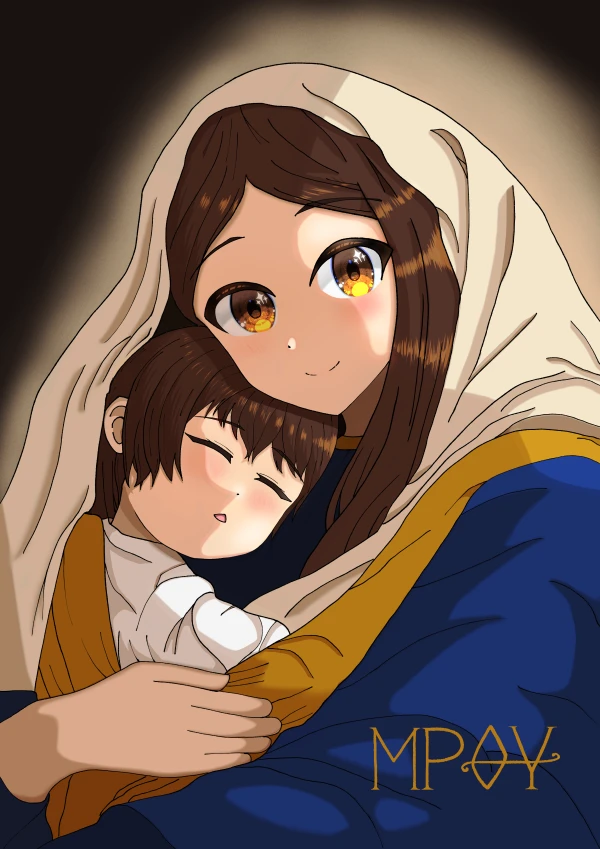
The broader message of her story is hard to ignore: a young Japanese woman who grew up agnostic, found a thread of faith through a secular anime, converted to Catholicism, and is now using one of Japan’s most beloved art forms to bring the faith back to the culture it came from. That’s a full circle worth paying attention to.
Her hope is straightforward. “I hope my art brings people closer to Jesus Christ and the Blessed Virgin Mary.”
Do you think manga and anime can be a real bridge between geek culture and faith? We want to hear your take, drop it in the comments!