



NVIDIA can’t seem to catch a break with its latest drivers. Just days after pulling Game Ready Driver 595.59 from its download page, a release that broke fan detection and caused stability issues across multiple systems, the company pushed out a replacement on March 2nd: Game Ready Driver 595.71 WHQL.
The fan problems are gone, but a new issue has taken their place, and the overclocking community is not happy about it. Users are reporting that 595.71 is artificially capping core voltages and clock speeds on RTX 50-series GPUs, even when manual overclocks are applied through tools like MSI Afterburner. NVIDIA has said nothing about it.
The issue was first caught by tech YouTuber Bang4BuckPC Gamer, who noticed after installing 595.71 that their RTX 5090 was no longer clearing 3 GHz and appeared locked below 1V under load, numbers that were noticeably different from what the same card was doing on the previous driver just days earlier. The video sparked immediate reaction from the community, and independent outlets moved quickly to reproduce the results.
WCCFTech ran their own tests on an MSI GeForce RTX 5090 SUPRIM X and confirmed the behavior. With GRD 591.86 and a manual overclock applied, the card recorded voltages between 1.020 and 1.030V with clocks between 3,015 and 3,030 MHz under FurMark.
After switching to 595.71 with the exact same settings, voltages dropped to between 1.005 and 1.010V, occasionally touching 1.00V, and boost clocks fell below 3 GHz. Same card, same overclock, different driver, different results.
Benchmark numbers confirm the performance hit
The drop is not just visible in voltage and clock readings, it shows up in framerates too. In back-to-back runs of the Unigine Heaven benchmark using Bang4BuckPC Gamer’s RTX 5090, the older driver 591.74 hit 171 fps at one point in the test while 595.71 landed at just 144 fps, with a 143 MHz gap in clock speed between the two runs. That is a measurable real-world difference, not noise.
The complaints go beyond the RTX 5090. RTX 40-series owners have also joined the thread on NVIDIA’s support forums reporting similar behavior. One RTX 4090 user described the situation clearly: they had MSI Afterburner set to lock the card at 1.1V, but 595.71 ignored it and pushed the GPU down to around 1.095V, with the average workload frequency dropping and the card locking itself at 2,880 MHz regardless of overclock settings.
Other users on the same thread echoed the same pattern, lower voltage under load, lower sustained clocks, and lower power draw than expected.
The majority of the impact appears concentrated on cards using manual overclocking tools, with users running stock settings reporting little to no noticeable difference in everyday gaming. But for enthusiasts who invested in high-end hardware specifically to push it, the results are frustrating.
NVIDIA is silent, and nobody knows if this is intentional
Here is what makes this situation particularly strange: the official 595.71 release notes mention nothing about any voltage or boost policy change. The document lists the fan fixes from 595.59 and explicitly states there are no open issues with the release. Whether the voltage cap is an intentional decision or an unintended bug introduced during the rush to fix 595.59 remains unknown, because NVIDIA has not addressed it publicly.
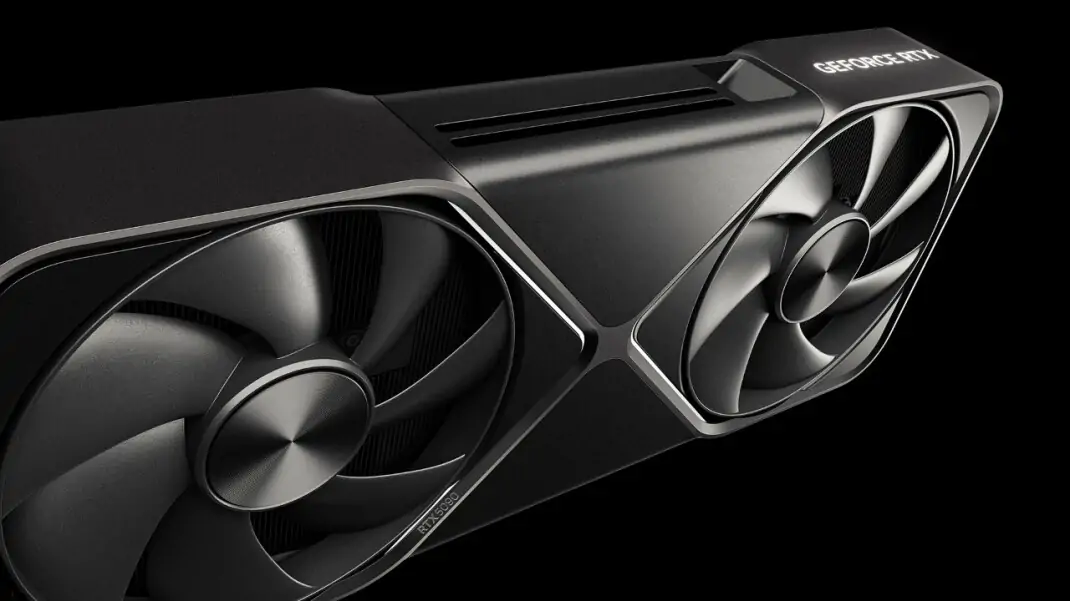
The theory getting the most traction in the community is that NVIDIA may have implemented the voltage restrictions as a response to the ongoing 16-pin connector problem. Melted connectors have been a documented issue with RTX 40-series cards since launch, and the RTX 50-series has seen its own incidents as well. Capping voltage through the driver would theoretically reduce power draw and limit the stress on the connector, but if that is the plan, NVIDIA is carrying it out without telling anyone.
For now, the most reliable fix is a rollback. Both driver versions 591.74 and 591.86 have been confirmed to restore expected voltage behavior and performance. Searching “NVIDIA driver” followed by either version number on Google will take you directly to the download page. For users running stock settings with no overclocking, 595.71 appears stable and Resident Evil Requiem performs normally. But until NVIDIA officially responds and issues a proper fix, overclockers are better off staying on the 591 branch.
Do you think NVIDIA did this on purpose to protect connectors, or is this just another driver blunder? Drop your take in the comments, we want to hear from you!