



Japan‘s government is putting real money behind its indie game developers. The country’s Ministry of Economy, Trade and Industry, known as METI, recently launched IP360, a new funding program designed to boost the global reach of Japanese content, and for the first time, independent developers and solo creators are directly eligible to apply.
The program will provide grants of up to 10 million yen, roughly $62,000 USD, to support the creation and international expansion of new game IPs. The initiative has been generating significant buzz across Japan’s development community since it was announced, and it’s easy to see why.
No need for a company, solo devs are welcome
One of the biggest barriers indie developers face when applying for government funding is the requirement to be a registered business. IP360 eliminates that obstacle entirely. The startup support program is open to individuals and unincorporated entities, which makes it one of the most accessible government grants the Japanese game industry has ever seen.
The grant covers up to 50% of eligible costs, with a maximum of 10 million yen per project. That funding can be applied across multiple stages of development: pre-production, production, post-production including localization, and promotion. Eligible expenses include hiring artists or composers, traveling to overseas conventions, and communication costs related to the project.
To qualify, developers must submit a prototype and a business plan that explicitly includes international distribution, such as releasing the game in overseas markets with proper localization. The program is strictly for new IPs, sequels, remakes, or projects based on existing properties are not eligible. On the creative side, METI has made it clear it will not interfere with the content or artistic direction of any funded project, reiterating existing government policy on that front.
The program’s full name is “New IP Creation Support (Startup Support),” an unofficial translation, and it has been nicknamed “sanrokumaru” in Japan. It sits within the broader IP360 initiative, which covers multiple content categories including anime and film alongside games.

Japan has a clear goal: 20 trillion yen in content exports
IP360 isn’t just a goodwill gesture toward indie developers. It’s part of a much larger national strategy. METI has set a target of increasing annual overseas revenue from Japanese content to 20 trillion yen, approximately $125.5 billion USD. In 2025, that goal was elevated to an official national policy through a cabinet decision.
The reasoning is straightforward. Japan has seen its cultural exports, anime, manga, and video games, grow into massive global industries, and the government wants to capitalize on that momentum more aggressively. Indie games, which have been producing surprising international hits in recent years, are now seen as a meaningful part of that equation.
The clearest example is The Exit 8, a solo-developed walking simulator set in a looping subway corridor that became one of the most talked-about indie releases of 2023. The game eventually spawned a live-action film adaptation that broke records in Japan, earning the highest opening three-day gross for any live-action film in the country in 2025. That kind of cross-media trajectory, from a small indie game to a cultural phenomenon, is exactly what METI is hoping to replicate through IP360.
A real opportunity for Japan’s Indie scene
Japan has a long history of producing deeply original games that rarely made it outside the country’s borders. Titles with distinct cultural DNA, unconventional mechanics, and visual styles that don’t fit neatly into Western market expectations have often stayed local simply because the path to international distribution was too expensive or complicated for small teams to navigate on their own.
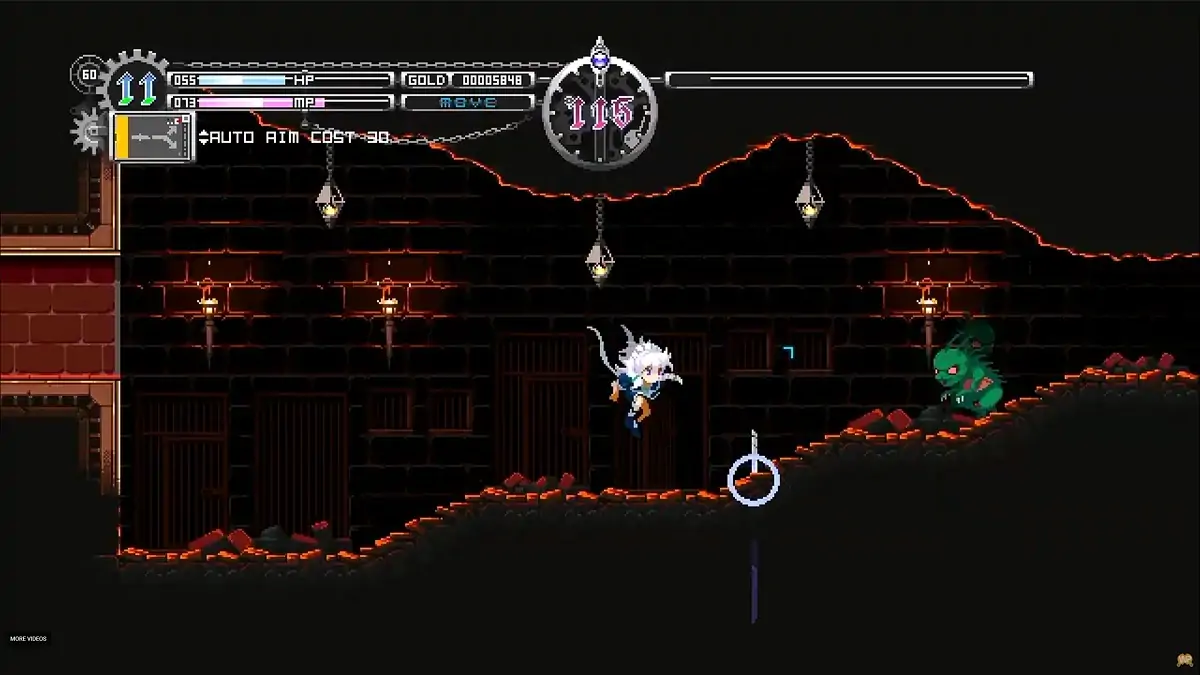
IP360 directly targets that problem. By covering localization costs, overseas convention travel, and promotional expenses, the program addresses the specific financial obstacles that have kept promising Japanese indie titles from reaching global audiences. The fact that individuals can apply, not just studios, opens the door even wider.
The reaction from Japan’s development community has been notably enthusiastic. The startup support component of IP360 was already a topic of active discussion among Japanese developers before the formal announcement, which signals genuine interest rather than polite acknowledgment.
For developers outside Japan, the program is a reminder that cultural export strategies backed by government funding can take many forms, and that indie games are increasingly being treated as serious economic and cultural assets rather than a niche category. Canada, the UK, and several European countries have long had mechanisms to support game developers at the national level. Japan, with IP360, is now building its own version of that infrastructure, and doing so with a clear international ambition attached to it.
Whether or not IP360 produces the next Exit 8 remains to be seen. But for solo developers in Japan sitting on a strong concept and a working prototype, the timing couldn’t be better.
What do you think, should more governments be funding indie game developers like this? Let us know in the comments!