



Before selling Lucasfilm to Disney in 2012, George Lucas had already developed a detailed outline for a sequel trilogy that would have closed out the Skywalker Saga on his own terms. The story he envisioned was significantly different from what ended up on screen between 2015 and 2019, and the more details that have surfaced over the years, primarily through The Star Wars Archives: 1999-2005, a book by author Paul Duncan featuring new interviews with Lucas, the clearer it becomes just how different his vision was.
Lucas began thinking about sequels as early as 1976, before A New Hope even hit theaters. According to Mark Hamill, during breaks on the desert set in Tunisia, Lucas casually told him he was planning 12 films total and that by the time Episode IX rolled around, around 2011, Hamill would be old enough to play a Jedi mentor figure. Hamill found it hard to believe at the time, since they hadn’t even wrapped Episode IV yet. Lucas was completely serious.
After finishing the original trilogy, Lucas stepped away from directing entirely. The experience had worn him out. He shifted his focus toward producing Indiana Jones, a franchise born, famously, from a conversation with Steven Spielberg while the two were building a sand castle on a beach in Hawaii in 1977.
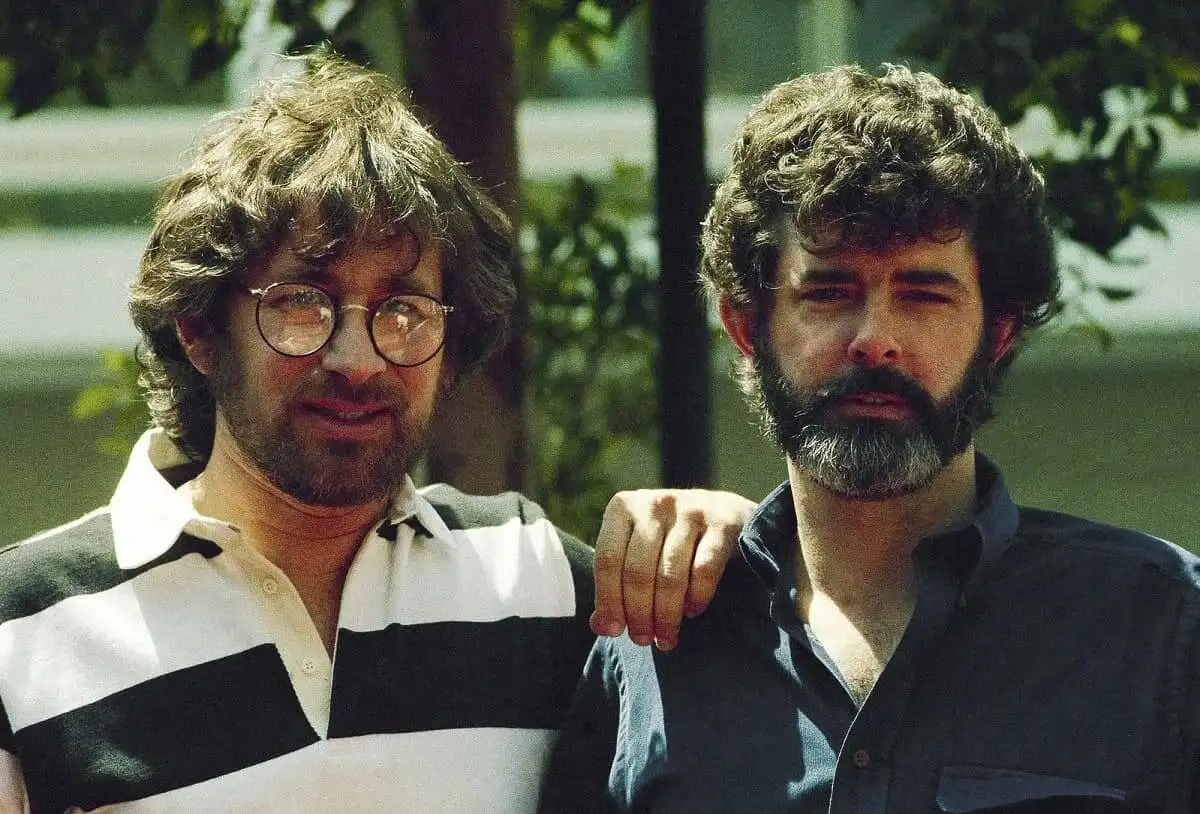
Through the late ’80s and early ’90s, Lucas also spent considerable energy securing full ownership of the Star Wars rights from 20th Century Fox, which had originally held them. He had given up most of his upfront salary in exchange for retaining those rights, a deal Fox accepted because they had no confidence in the films’ commercial potential.
Once the rights situation was fully resolved, Lucas turned his attention to the prequel trilogy rather than the sequels. Telling the story of Anakin Skywalker’s fall took priority. Meanwhile, in the early ’90s, Bantam Books editor Lou Aronica approached Lucasfilm about continuing the Star Wars story in novel form.
Lucas was skeptical at first but eventually agreed, and Bantam brought in author Timothy Zahn to write what became the Heir to the Empire trilogy, introducing Grand Admiral Thrawn as its central villain. The first novel hit number one on the New York Times bestseller list in 1991 and sparked a full renaissance of Star Wars content throughout the decade, novels, comics, video games that kept the franchise alive between films.
Darth Maul, Darth Talon, and a galaxy in chaos: Lucas’ real vision
After the prequel trilogy wrapped, Lucas began actively developing the sequel trilogy himself. His plan, according to the Archives, was to start completely from scratch, wiping the Expanded Universe slate clean, just as Disney would later do, and tell an entirely original story.
At the 2015 Tribeca Film Festival, speaking with Stephen Colbert, Lucas described the structure of his overall saga: “The original saga was about the father, the children, and the grandchildren.” His sequel trilogy was meant to be that final generational chapter.
The story would have featured two young protagonists alongside the returning original cast. The first was a young woman, a Jedi in training whose name went through several iterations in Lucas’ outlines, eventually landing on Kira during early production.
Lucas stated in the Archives that the new characters were in their twenties. She was the direct prototype for Rey, though Lucas intended her to be harder and more determined than the character that Disney ultimately put on screen. The second was a young man named Sam, usually depicted with a blaster and apparently lacking Force sensitivity, who became the prototype for Finn.
The central political premise of Lucas’ trilogy was bold and genuinely complex. After the Rebel victory in Return of the Jedi, the surviving Stormtroopers refuse to accept defeat. They retreat to the far edge of the galaxy, form their own independent state, and continue fighting. Lucas wanted to show that winning a war doesn’t automatically create a better world. The galaxy falls back into chaos, and the New Republic struggles to take hold.
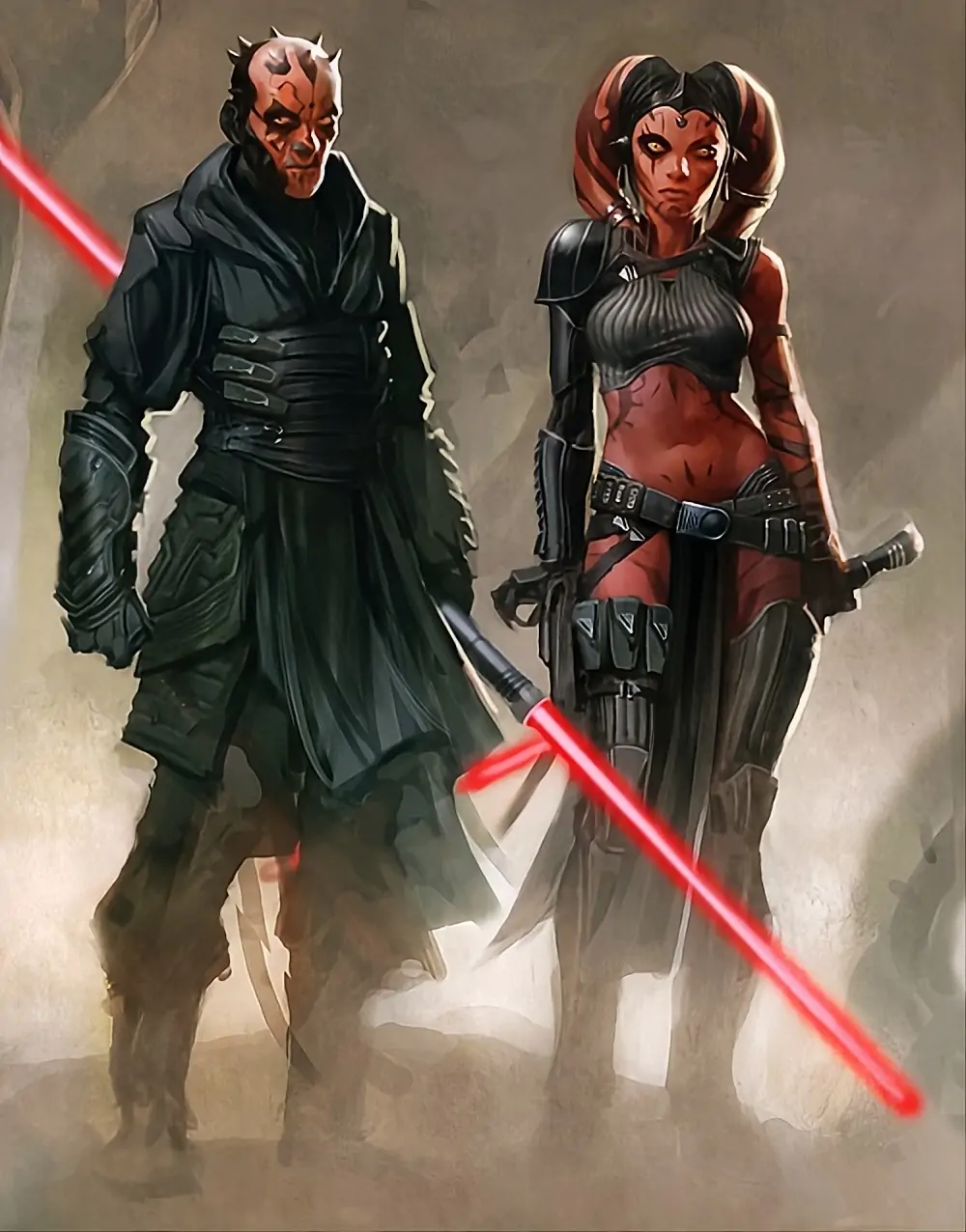
Into that chaos steps Darth Maul, and this is where Lucas’ vision gets truly interesting. His revival in The Clone Wars animated series was always part of a longer plan. In Lucas’ sequel trilogy, Maul rises from the criminal underworld, uniting all the galaxy’s criminal syndicates under his control and becoming their shadow leader.
At his side is Darth Talon, a character originally from the Star Wars Legacy comic series, reimagined here as Maul’s apprentice and the primary face of evil throughout the trilogy, the role equivalent to Darth Vader in the original trilogy. Lucas even greenlighted a video game developed by Red Fly Studio, titled Battle of the Sith Lords, that would have served as a prequel to the films showing how Maul and Talon consolidated power. The game was cancelled in June 2011.
What Maul and Talon were after wasn’t political power or a new Empire. Their goal was to access what Lucas called the microbiotic world, the living dimension of the Force where midi-chlorians exist, and to unlock its deepest secrets. Lucas had introduced midi-chlorians in The Phantom Menace and always intended to go deeper into the science and metaphysics of the Force in the sequels. The person they needed to get there was Luke Skywalker, the one who had come closest to understanding it.
Luke wasn’t broken, and Leia was going to be the Chosen One
Luke’s exile in Lucas’ version exists for a completely different reason than what The Last Jedi depicted. Lucas’ Luke had not failed, had not lost his faith, had not given up on the Jedi. He had chosen solitude deliberately, to study the Force at its deepest level and protect that knowledge from those who would misuse it.
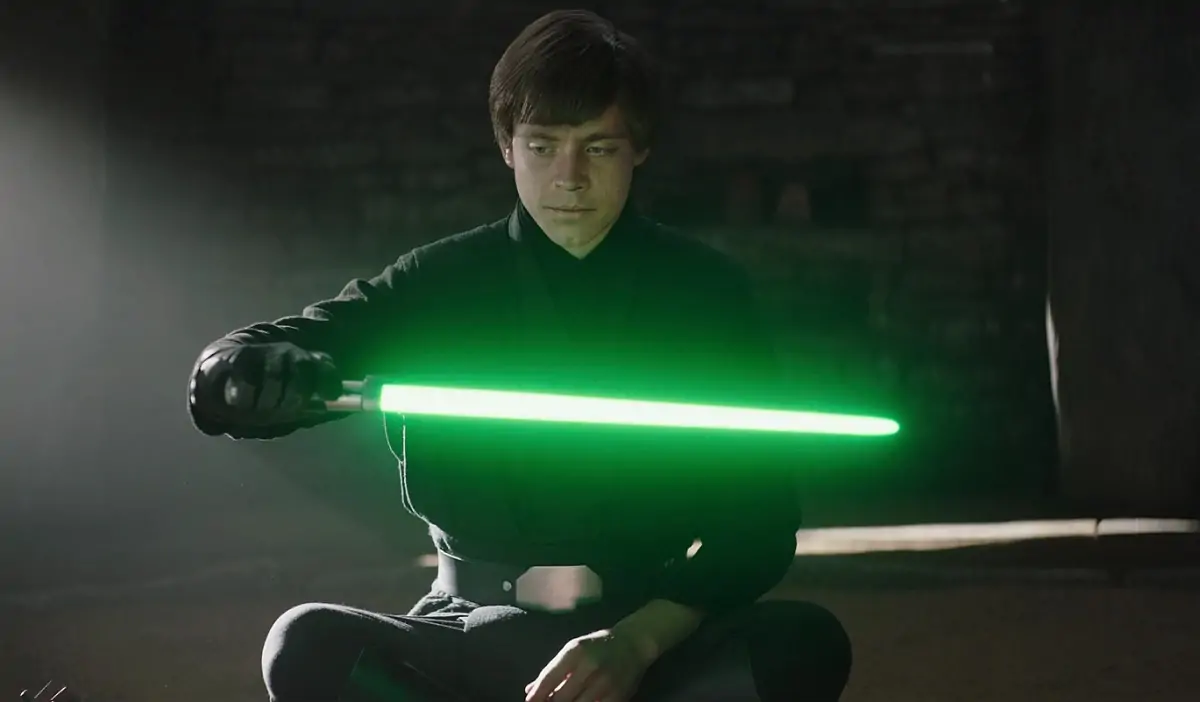
In 2018, concept artist Christian Alzmann posted on Instagram a painting he had created in January 2013 during early production, which received Lucas’ personal stamp of approval. The image depicted a world-weary Luke dressed in classic Jedi robes, described internally during development as a “Col. Kurtz type hiding from the world in a cave”, a reference to Marlon Brando’s character in Apocalypse Now.
At some point during the trilogy, Luke breaks his exile and returns. His first student would be Kira. The Jedi would be rebuilt slowly and deliberately, with the likely endgame being Luke confronting Maul and Kira confronting Talon.
On the political side, Leia was always at the center of the story. Lucas described her role in the Archives: the trilogy would follow her efforts to rebuild the Republic and wrest control of it back from the criminal underworld. By the end of the third film, Leia would have become Supreme Chancellor of a fully renewed Republic.
And then Lucas planned to pose a question to the audience, one that reframes the entire nine-film saga. In his own words from the Archives: “By the end of the trilogy Luke would have rebuilt much of the Jedi, and we would have the renewal of the New Republic, with Leia, Senator Organa, becoming the Supreme Chancellor in charge of everything. So she ended up being the Chosen One.”
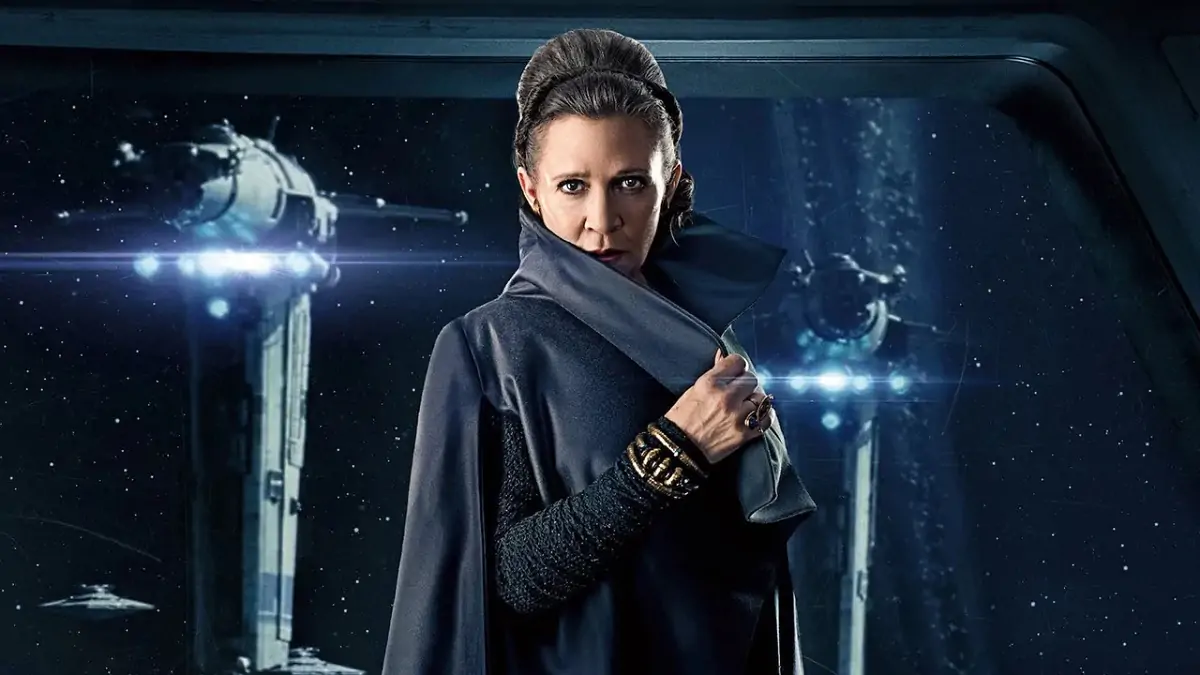
Not Anakin. Not Luke. Leia, the one who restored lasting peace to the galaxy through political will, diplomacy, and leadership rather than lightsaber combat.
The final scene of the trilogy would have brought back the Force ghosts of Obi-Wan, Yoda, and Anakin to offer words of gratitude to Luke and Leia, closing out all nine films in a single, unified moment.
Lucas himself acknowledged in the James Cameron Story of Science Fiction interview that fans probably wouldn’t have loved it initially, the same way they reacted to The Phantom Menace. He wasn’t going to compromise anyway.
Disney did retain fragments of his outline after the 2012 sale. Kira became Rey, Sam became Finn, Luke’s exile made it into the films. But the depth of the Force mythology, the complexity of the villains’ motivation, the political arc, and the meaning behind all of it were set aside.
Director Colin Trevorrow, originally hired for Episode IX alongside writer Derek Connolly, reportedly attempted to develop something closer to Lucas’ spirit before creative disagreements with Disney led to his departure. J.J. Abrams took over and finished the trilogy from scratch.
What Lucas had outlined was a saga designed to grow in every direction, deeper mythology, more complex heroes, a galaxy that didn’t have easy answers. Whether fans would have embraced it or not is a debate that will never have a definitive answer.
It’s hard not to feel like Disney robbed us of the Star Wars finale we actually deserved. What do you think, would Lucas’ trilogy have been worth it? Sound off in the comments!