


The conversation around gaming performance used to be dead simple: more FPS, bigger GPU. But AI upscaling has quietly rewritten those rules, and in 2026, three technologies are fighting for dominance, NVIDIA‘s DLSS, AMD‘s FSR, and Sony‘s PSSR. Each one takes a different approach, and the race between them is moving faster than ever.
So let’s break down what each of these technologies actually does, how they each got to where they are today, and why the gap between them is getting a whole lot more interesting.
DLSS: NVIDIA’s AI bet that paid off big
NVIDIA introduced DLSS, Deep Learning Super Sampling, back in 2018 alongside its RTX 20-series GPUs. The idea was to render games at a lower internal resolution, then use AI to reconstruct the image to look close to native quality while running at higher frame rates. Early versions had clear limitations, but the technology evolved steadily, and by 2026 it’s in a completely different league.
DLSS 4.5, announced at CES 2026, replaces the previous convolutional neural network with what NVIDIA calls Transformer Gen 2, a heavier, more advanced model built to better predict what each pixel should look like. Transformer-style architectures can process richer context, meaning the model doesn’t just analyze the current frame; it understands movement over time, which results in better reconstruction of fine details like foliage, wires, distant signs, and subtle textures.
The raw computational cost of this new model is roughly five times that of DLSS 4. NVIDIA manages it through FP8 support on RTX 4000 and 5000 series cards, keeping frame rates viable despite the heavier workload.
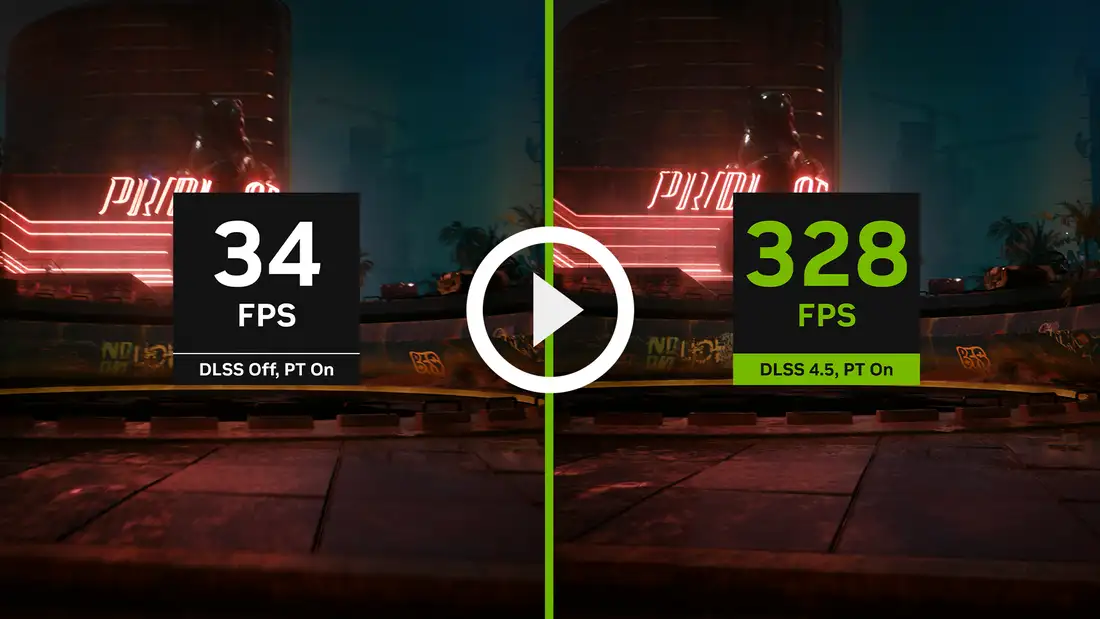
The results speak for themselves. In a blind test conducted by German publication ComputerBase across 6,747 total votes in six games, DLSS 4.5 was selected most often at 48.2%. Native rendering with TAA came second at 24.0%, FSR 4 at 15.0%, and 12.8% saw no visible difference. That’s not just beating the competition, that’s beating native rendering.
In Cyberpunk 2077, an RTX 5080 goes from 30 FPS native to 71 FPS using DLSS 4 Performance mode. In Assassin’s Creed Shadows, both DLSS and FSR nearly double FPS, with frame generation pushing close to 95 FPS.
The limitation hasn’t changed though: DLSS requires an RTX GPU with dedicated Tensor Cores. No green team card, no DLSS. That hardware exclusivity is its biggest constraint, but given where image quality currently sits, NVIDIA clearly hasn’t felt pressure to change that.
FSR: AMD makes its biggest pivot yet
AMD’s FidelityFX Super Resolution launched in 2021 with a philosophy built around openness. No machine learning, no hardware requirements, just smart spatial and temporal algorithms that ran on practically any GPU. That accessibility made FSR wildly popular with developers, and FSR 3.1 still runs on NVIDIA, Intel, and AMD cards without restriction.
FSR 4 changes the strategy entirely. For years, FSR’s core selling point was that it ran on almost any GPU, even NVIDIA hardware, using shader code instead of dedicated AI blocks. FSR 4 breaks from that tradition, now relying on dedicated AI accelerators built into AMD’s RDNA 4 architecture, found in the Radeon RX 9000 series. The universal compatibility is gone, at least at the highest tier.
In exchange, image quality took a significant leap. Analysts note that FSR 4 finally reaches a level broadly comparable to mid-generation DLSS, sitting somewhere between DLSS 3 and DLSS 4 in many tests.
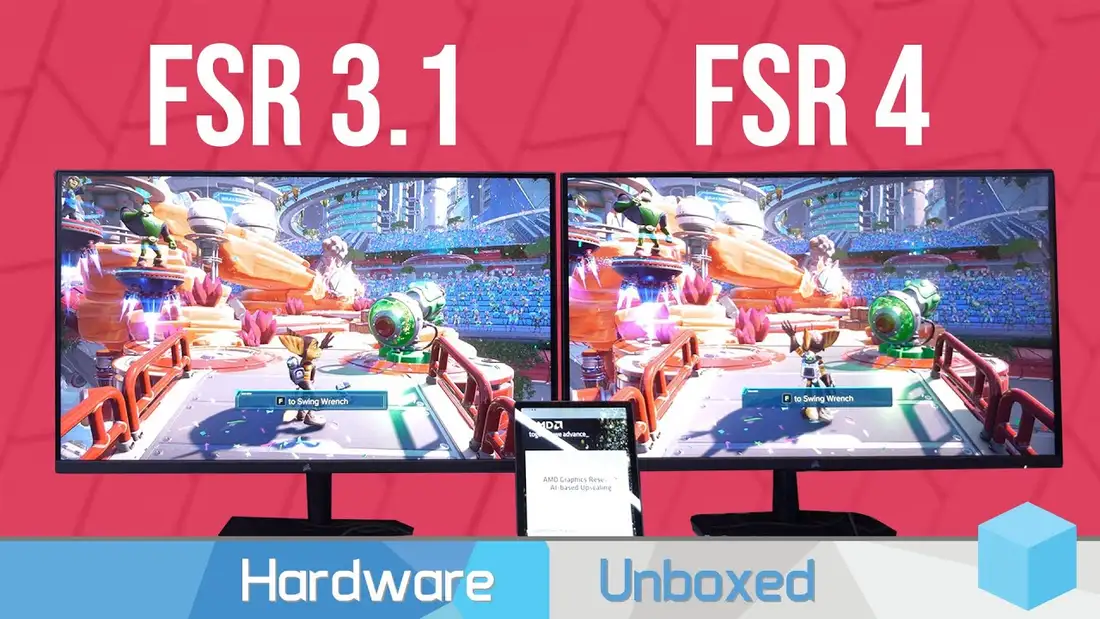
The two upscalers have genuinely different visual signatures. FSR 4 does not suffer from TAA blur and maintains clarity both when stationary and in motion. However, it produces a softer image overall compared to DLSS 4.5, an inherent characteristic of the upscaler that doesn’t change much across quality modes. That softness isn’t always a disadvantage. In Horizon Zero Dawn, FSR 4 produces smoother grass detail without the pixelation that DLSS 4.5 shows in Performance mode, and it can sometimes be more resilient to certain texture artifacts.
Where FSR 4 consistently falls behind is in motion and ray tracing. In Monster Hunter town scenes, FSR sometimes reconstructs inconsistent geometry, like uneven spinning wheel teeth, while DLSS preserves structural integrity more reliably. Slow-motion analysis in Cyberpunk 2077 also reveals micro-tears on AMD hardware, where objects visually split for a frame.
There’s also a growing frustration in the community. Despite modders successfully running FSR 4 on RDNA 2 and RDNA 3 hardware with solid results, AMD still hasn’t released official support for RX 6000 and RX 7000 series owners. The argument is that all these GPUs share very similar parts and features, so if one can handle AI upscaling, why can’t they all? AMD has stayed quiet on the matter, and users with older cards remain on FSR 3.1 for now.
PSSR: Sony just made a very loud statement
PlayStation Spectral Super Resolution launched alongside the PS5 Pro in November 2024, and its debut wasn’t clean. Early implementations struggled to meet expectations. The original version frequently produced soft image reconstruction, instability during motion, and visible artifacts in demanding scenes. In several high-profile releases, the output compared unfavorably not only to DLSS and FSR on PC, but even to simpler analytical upscalers.
That changed on February 27. Sony announced through the PlayStation Blog that an upgraded version of PSSR is rolling out globally to PS5 Pro players, with Resident Evil Requiem, which launched that same day, becoming the first title to use the more advanced technology. The new version takes a completely different approach to both the neural network and the overall algorithm.
The connection to AMD is central to this upgrade. The new PSSR is the result of Sony and AMD’s partnership on Project Amethyst, the same project that led to FSR 4 for the Radeon RX 9000 series on PC. Mark Cerny confirmed that the updated PSSR delivers the very latest of this co-developed technology, with an additional six months of refinement specifically for PS5 Pro hardware.
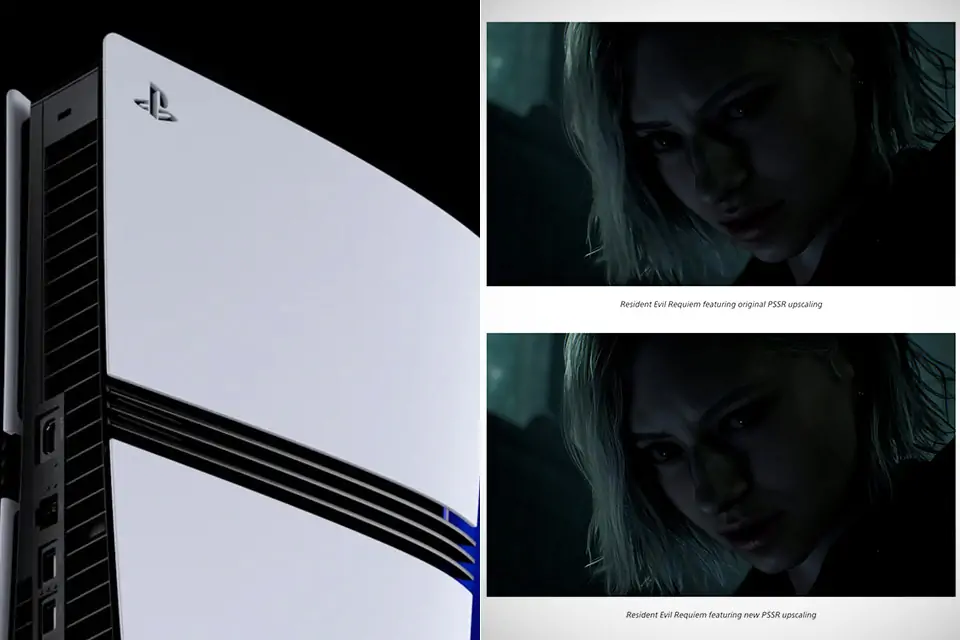
Capcom’s implementation in Resident Evil Requiem shows exactly what the upgraded PSSR enables. Each individual strand of hair and beard is rendered as a polygon, reacting to body movement and wind, with lighting changing depending on how strands overlap. Capcom noted that this kind of fine detail is traditionally difficult to upscale cleanly because of its intricacy.
According to Digital Foundry’s testing, the most immediate improvement is clarity. Even when reconstructing from a base resolution slightly above 1080p, the resulting 4K image presents with far greater sharpness and definition. Fine detail, fabric stitching, strands of hair, small environmental text, resolves with noticeably improved precision, and the overall softness that defined earlier builds has largely been reduced.
Digital Foundry called the upgraded PSSR “the real deal.” In Resident Evil Requiem’s RT mode, upscaling to 4K from a base slightly higher than 1080p, edge clarity is substantially improved and the image presents as legitimately high-quality 4K output at 60fps, aligning with the original promise of PSSR.
The rollout strategy is also smart. A system software update arriving in March will add an “Enhance PSSR Image Quality” option in PS5 Pro settings, allowing players to apply the upgraded upscaling to any game that currently supports the original PSSR, without requiring publishers to release individual patches. That’s over 50 titles getting a retroactive visual upgrade in one shot.
There remain scenarios where DLSS 4.5 and FSR 4 retain a technical edge, particularly in complex backgrounds featuring chain link fences or thin power lines. But the difference is meaningfully narrower than before. PSSR is no longer calling attention to itself, which is exactly what a great upscaler should do.
The bigger shift: AI is replacing raw GPU power
After looking at all three technologies individually, a clear pattern emerges that goes beyond which upscaler wins a benchmark: the entire premise of how gaming performance is delivered is changing.
For years, chasing 4K native rendering was the holy grail, the cleaner the pixel count, the better. That thinking is being replaced fast. Upscalers are no longer a crutch that trades visual fidelity for a large performance boost, as they once were. With DLSS 4.5, we are closer than ever to one of the few unconditional wins of the AI era: free performance, lower fixed resource usage, and better-than-native image quality. When upscaled footage is actively beating native rendering in blind tests, the argument for brute-forcing 4K starts to fall apart.
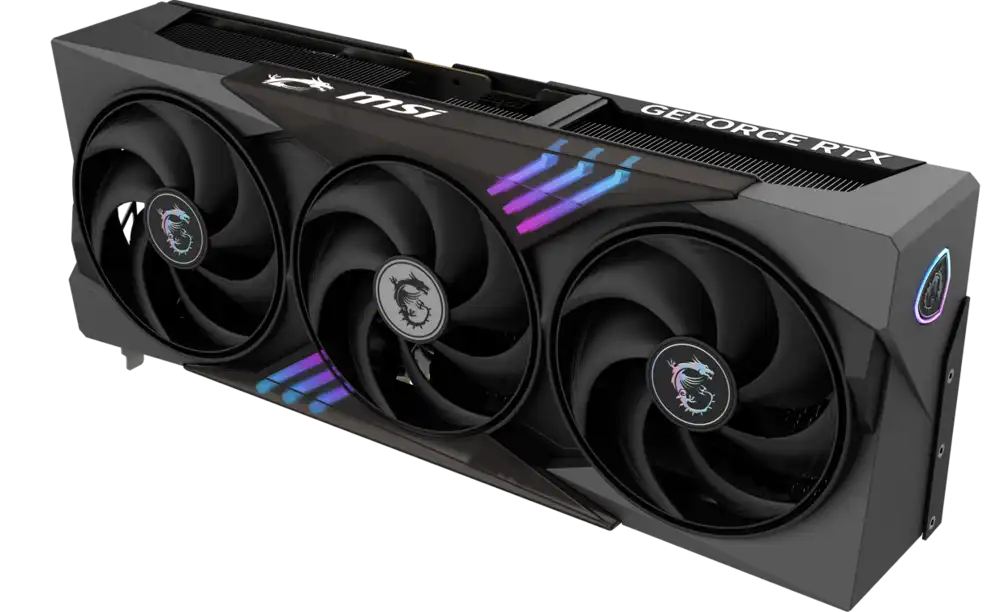
But this shift comes with a catch that’s easy to overlook: not all three technologies work the same way under the hood, and each one has its own hardware passport. DLSS runs exclusively on NVIDIA RTX cards and depends entirely on dedicated Tensor Cores, the specialized AI accelerator units built into every RTX GPU since the 20-series. Without them, the transformer model simply can’t run. DLSS 4.5 is available on GPUs going back to the RTX 20 series from 2018, over seven years of continued feature expansion, though FP8 acceleration, which keeps the heavier model performant, is limited to RTX 40 and 50 series cards.
FSR 4 tells a different story. RDNA 4 has native support for stacked 8-bit floating point instructions, which are needed for fast FSR 4 support. RDNA 3 does not, and RDNA 2 requires further emulation with higher performance cost and additional artifacts. That’s the technical reason AMD hasn’t brought FSR 4 officially to older cards, and it also explains why, unlike NVIDIA’s approach with DLSS, AMD drew a harder line at the RDNA 4 generation. PSSR, meanwhile, runs on the dedicated upscaling hardware built into the PS5 Pro’s custom chip, a fixed silicon solution that Sony and AMD co-designed specifically for that console, which is part of why retroactively updating it via a firmware toggle is possible at all.
What this means practically is that the GPU you own now determines not just how fast your games run, but which generation of AI technology you have access to. GPU prices are back to being difficult, with the surge of interest in AI from the market at large dictating a shift in memory manufacturing, and unfortunately, gamers are at the bottom of that totem pole. In that context, AI upscaling isn’t just a nice-to-have feature, it’s quietly becoming the mechanism that keeps older hardware relevant and makes newer mid-range cards feel like flagships.
The industry has noticed. Developers are building games around these technologies from the ground up rather than adding them as an afterthought. Frame rates that would have required the next hardware generation are accessible today through software intelligence. And the competition between NVIDIA, AMD, and Sony is pushing all three to iterate faster than any single hardware cycle ever could.
The era of “just buy a bigger GPU” isn’t over. But it’s sharing the stage with something a lot smarter.
Are you using any of these upscaling technologies right now, and have you actually noticed the difference in your games? Drop your thoughts in the comments, we’d love to know your take!