

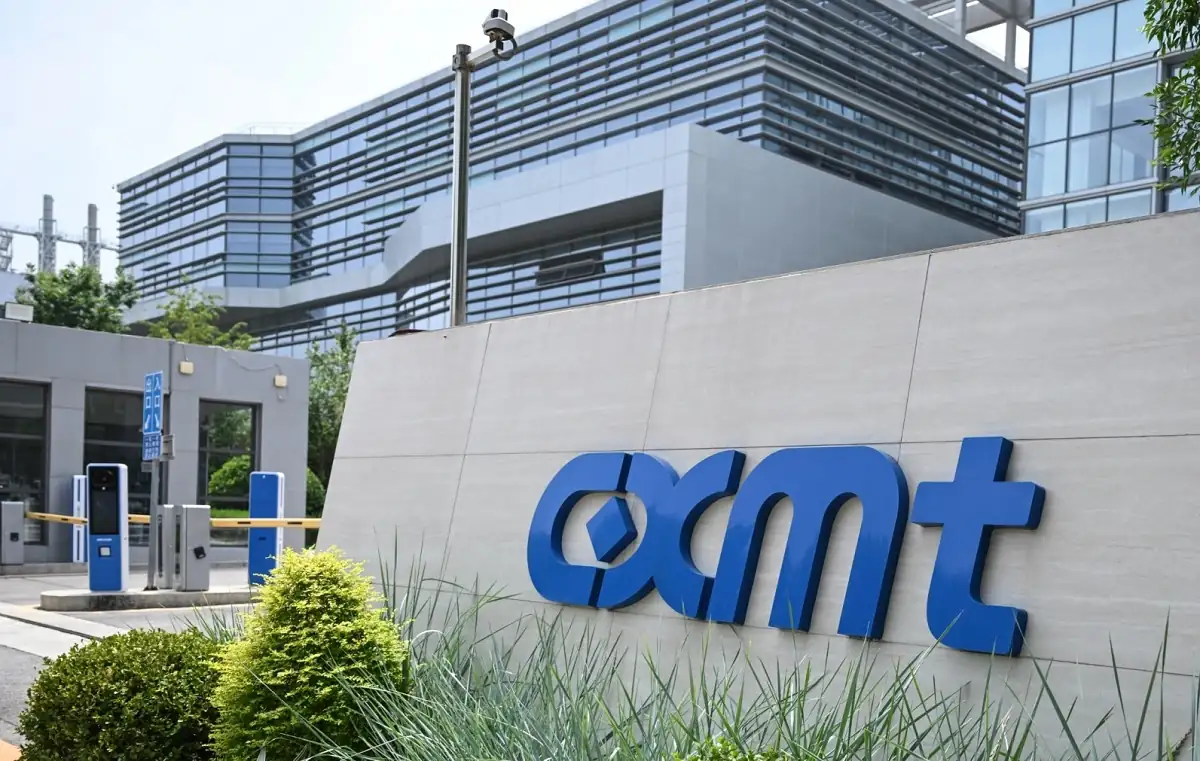

ChangXin Memory Technologies (CXMT) shook global markets on July 27, when its shares surged 466% on their trading debut on Shanghai’s STAR Market, closing at 49 yuan against an IPO price of 8.66 yuan.
The single-day rally pushed the company’s valuation to roughly 3.3 trillion yuan, or about $488 billion, making CXMT the most valuable company listed on mainland China, overtaking Industrial and Commercial Bank of China. The stock briefly surpassed Hong Kong-listed Tencent to become the most valuable Chinese company anywhere, before Tencent reclaimed the top spot by the close of trading.
Shares touched an intraday gain as high as 535% before settling at 466% above the offer price. Trading volume topped 140 billion yuan, the first time any mainland-listed stock has crossed the 100 billion yuan mark in a single session.
CXMT is the company behind the DRAM chips found in smartphones, servers, PCs, and increasingly, gaming hardware. Its record-breaking debut is being read across the tech industry as a signal that China now has a serious fourth competitor in a market that, until now, has been run by three companies.
The end of a three-way monopoly
Samsung, SK Hynix, and Micron together control close to 90% of the global DRAM market. That concentration has let the three companies effectively move prices in tandem for years, without needing to coordinate directly, simply by watching and matching each other’s output decisions.
CXMT currently holds an estimated 8% to 10% of the global DRAM market, according to its IPO prospectus and outside estimates from Counterpoint Research, with the prospectus itself citing a 7.67% share based on fourth-quarter 2025 shipment data. The company reported first-quarter 2026 revenue of roughly $7.5 billion, a jump of more than 700% year over year, and is forecasting first-half 2026 revenue of between $16 billion and $17.7 billion.

Founded in 2016 in Hefei with heavy backing from the Chinese state, CXMT has scaled from basic DDR4 production to a full DDR5 and LPDDR5X lineup, including chips rated up to DDR5-8000 and LPDDR5X-10667, and its modules are now validated by all three major motherboard makers, MSI, ASUS, and GIGABYTE.
Apple has reportedly sought assurances that CXMT will not be added to a U.S. trade blacklist, a sign of how central the company has become to global supply chains.
An $8.6 billion bet, backed by a precedent
CXMT’s IPO ultimately raised roughly $8.6 billion in July 2026, well above the roughly $4.2 billion the company was reportedly targeting when early IPO plans surfaced back in January 2026, a sign of how much investor appetite built up in the months leading to the listing. The company says the proceeds will go primarily toward scaling up mass production of memory wafers.
Its current capacity sits at around 200,000 wafers per month, with a target of 300,000 by the end of 2026. Two new fabs under construction in Shanghai and Hefei could eventually push total output to 600,000 wafers per month, a scale that would let CXMT match Micron’s DRAM manufacturing capacity by the end of this year and, according to some industry estimates, overtake Micron in volume production by 2030.
This would not be the first time CXMT has used a capacity surge to move the market. The DDR4 price slide traces back to around May 2024, when CXMT’s expanding output first began outpacing demand, dragging prices down in sync with its market entry. CXMT was not alone: Fujian Jinhua, a Chinese chipmaker already under U.S. sanctions, also ramped into DDR4 mass production around the same period, adding to the oversupply.

By late 2024, Chinese DDR4 quotes had fallen to roughly 5% below the price of used, pulled chips already circulating in the secondhand market, and to nearly half the going rate charged by Samsung, SK Hynix, and Micron. The pressure was severe enough to cut into the margins of all three established players, before the cycle abruptly reversed: Chinese authorities directed CXMT and Jinhua to halt DDR4 production in 2025 to redirect capacity toward DDR5 and AI memory, which then helped trigger the current DDR4 supply crunch and a price spike of more than 2,000% over the following twelve months.
The market’s reaction to CXMT’s debut reflected those same fears applied to the present. Micron shares fell around 5% in New York trading, SanDisk dropped more than 12%, and U.S.-listed shares of SK Hynix slid 8.5%, all in a single session, on concern that a newly cash-flush CXMT could eventually do to DDR5 pricing what it once did to DDR4.
The debut has also drawn scrutiny in Washington: a bipartisan group of at least half a dozen members of Congress is reportedly preparing to press the Trump administration for a formal national security review of CXMT, on suspicion that Beijing helped orchestrate the scale of the IPO.
A senior federal official told the New York Post there was “a real suspicion” of Chinese Communist Party involvement in the stock’s price action. The Pentagon has already listed CXMT as a Chinese military company, and U.S. officials had reportedly been weighing whether to add the firm to the Commerce Department’s Entity List before pausing that recommendation in June 2026.
The impact on console and PC prices
The current numbers complicate the idea that cheaper memory is imminent. DDR5 prices have climbed more than 120% in 2026 alone, driven by AI infrastructure demand that is consuming DRAM supply faster than manufacturers can produce it. Micron’s AI-related memory revenue alone reportedly quadrupled to around $41 billion in its most recent fiscal year, and SK Hynix has forecast tight memory supply lasting through 2028. A 32GB DDR5 kit that cost $80 to $120 in mid-2025 now runs $400 to $470. Some 64GB DDR5 kits currently cost more than a PlayStation 5, whose 16GB of GDDR6 system memory is a fraction of that kit’s capacity.
CXMT’s pricing behavior on DDR5 has been mixed rather than a straightforward repeat of the DDR4 undercutting. Its 64GB server-grade DDR5 modules have reportedly been priced at or above Samsung’s equivalent product, which lists around $1,240, undercutting the narrative that CXMT is flooding the enterprise market with cheap supply.

On the consumer side, though, DDR5 kits built on CXMT chips from brands like KingBank have reportedly sold for roughly 7% to 10% less than equivalent Samsung, SK Hynix, or Micron-based kits, a modest but real discount. Analysts tracking the sector have nonetheless said plainly that CXMT’s expansion will not bring meaningful short-term relief to consumers.
The longer-term picture is where CXMT’s IPO becomes relevant to gamers. Its planned 600,000-wafer-per-month capacity is not yet online, and a buildout of that scale is precisely the kind of supply surge that triggered the 2024 DDR4 price collapse. If CXMT applies the same market-share strategy to DDR5 once its new fabs are running, the DDR5 market would have four serious producers instead of three moving in lockstep, which historically tends to bring prices down rather than up.
That shift depends on several unresolved factors, including how U.S. export controls, the paused Entity List decision, and the new Congressional review play out. But the elements that produced a price war once before, a well-capitalized new entrant, proven willingness to undercut on price, and a factory expansion already underway, are all in place again.

For now, DDR5 remains at record prices, and there is no indication that the next PlayStation, Xbox, or PC memory upgrade will get cheaper in the immediate future. CXMT’s fab construction over the next one to two years, along with how Washington ultimately responds to it, are the details worth watching, since they will determine whether this IPO ends up being remembered as the moment RAM prices started coming back down to earth.
What’s your take: will CXMT actually be the one to break the memory price spiral, or is this just more noise in an already chaotic market? Let us know in the comments!