



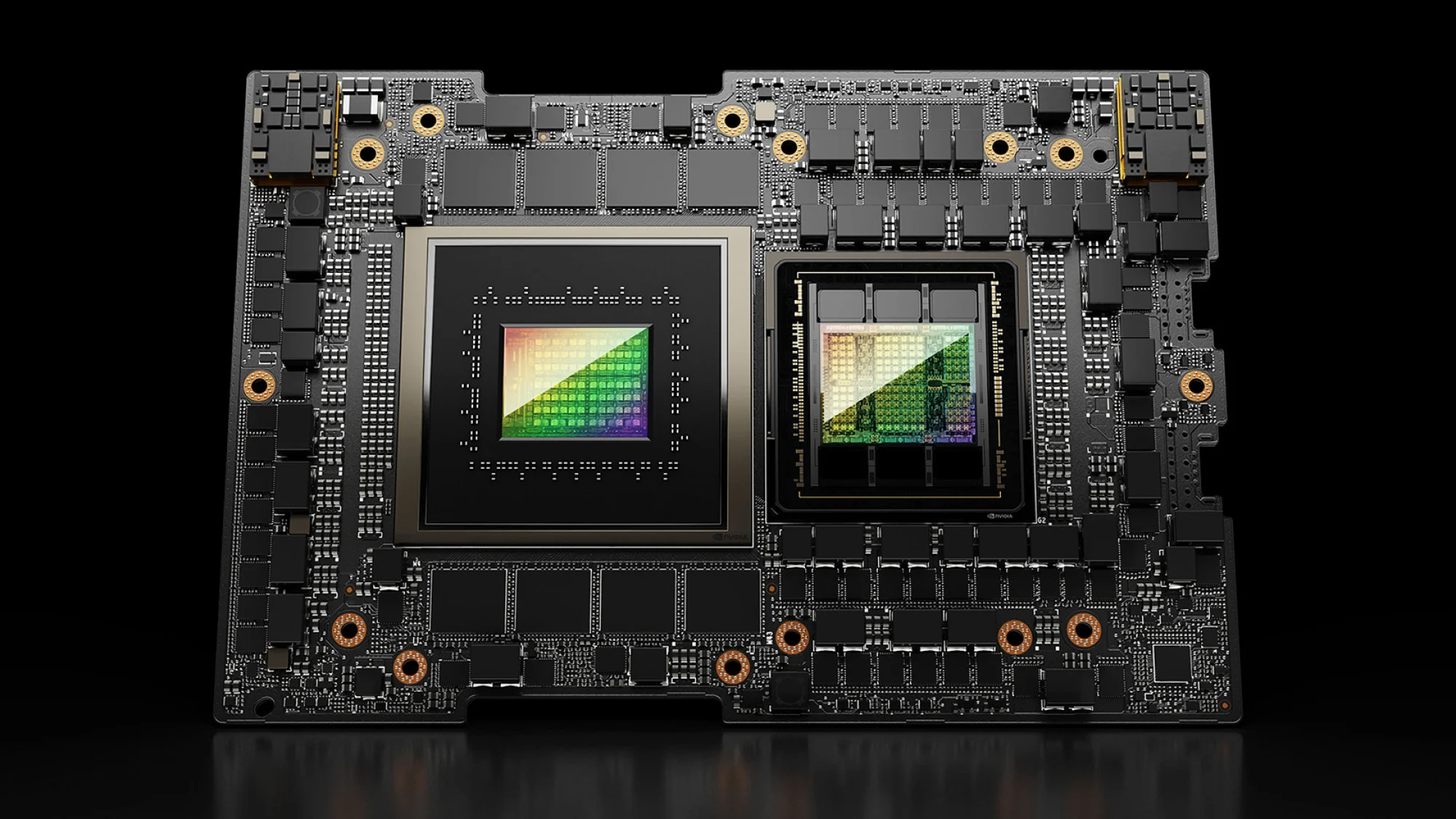
The AI chip race just got a whole lot more interesting. Chinese researchers from Shanghai Jiao Tong University have unveiled LightGen, a photonic chip that’s leaving NVIDIA’s GPUs in the dust for certain generative AI tasks, we’re talking 100 times faster with a fraction of the power consumption. The study, published in Science journal just days ago, represents a genuine breakthrough in how we think about AI computing.
Light speed computing, literally
Here’s where it gets fascinating. While NVIDIA’s GPUs push electrons through transistors to crunch numbers, LightGen uses photons, actual light particles, to perform calculations through optical interference. The chip packs over 2 million photonic neurons onto a single piece of silicon, enabling it to handle complex generative tasks like high-resolution image synthesis, 3D scene generation, video manipulation, and style transfer with remarkable efficiency.
Professor Chen Yitong’s team tackled three major technical hurdles that have plagued photonic computing for years: scaling up integration, achieving all-optical dimensional transformation, and developing training algorithms that don’t require ground truth data. Getting all three working simultaneously is no small feat, and it’s what makes LightGen capable of running complete generative AI workflows entirely in the optical domain.
The Catch: Specialized, not universal
Before we crown a new GPU king, there’s an important caveat. LightGen isn’t a drop-in replacement for your gaming rig or general-purpose AI training. These photonic chips are specialized analog machines designed for specific vision and generative tasks. Think of NVIDIA’s GPUs as programmable calculators that can handle anything you throw at them, while LightGen is more like a purpose-built speed demon optimized for particular workloads.
The chip can be manufactured using older fabrication processes, which is actually advantageous for China given U.S. export restrictions on cutting-edge semiconductor equipment. Other Chinese photonic projects like ACCEL from Tsinghua University have demonstrated similar specialized performance gains, achieving 4.6 petaFLOPS while sipping power.
In testing, LightGen matched the generation quality of established models like Stable Diffusion and NeRF while achieving efficiency improvements of two orders of magnitude compared to top digital chips. With advanced input devices, the theoretical performance improvements could reach seven orders of magnitude for computational power and eight for energy efficiency, numbers that sound almost absurd until you remember we’re literally computing at the speed of light.
This development signals that the future of AI computing might not be about making one universal chip better, but rather developing specialized hardware architectures for different AI tasks. For video generation, image synthesis, and visual AI applications, photonic computing could become the new standard while traditional GPUs continue dominating general-purpose workloads.
Want more cutting-edge tech news and deep dives into the future of computing? Follow Geek Realm Hub on Facebook for daily updates on everything that matters in the tech world!