



The chip war between the U.S. and China keeps getting messier. Since October 2022, American export regulations have blocked NVIDIA from selling its most advanced AI accelerators directly to Chinese companies, putting giants like ByteDance at a serious disadvantage while their U.S. rivals, Google, OpenAI, Microsoft, Anthropic, access top-tier computing power without any restrictions.
The rules have been tightened several times since then, and every time Washington turns the screw, Chinese companies scramble for a workaround. ByteDance wasn’t about to sit back and accept the disadvantage quietly. So they went looking for a way around it. And they found one hiding in plain sight.
The answer wasn’t smuggling. It wasn’t hacking. It was geography.
Malaysia: The loophole nobody bothered to close
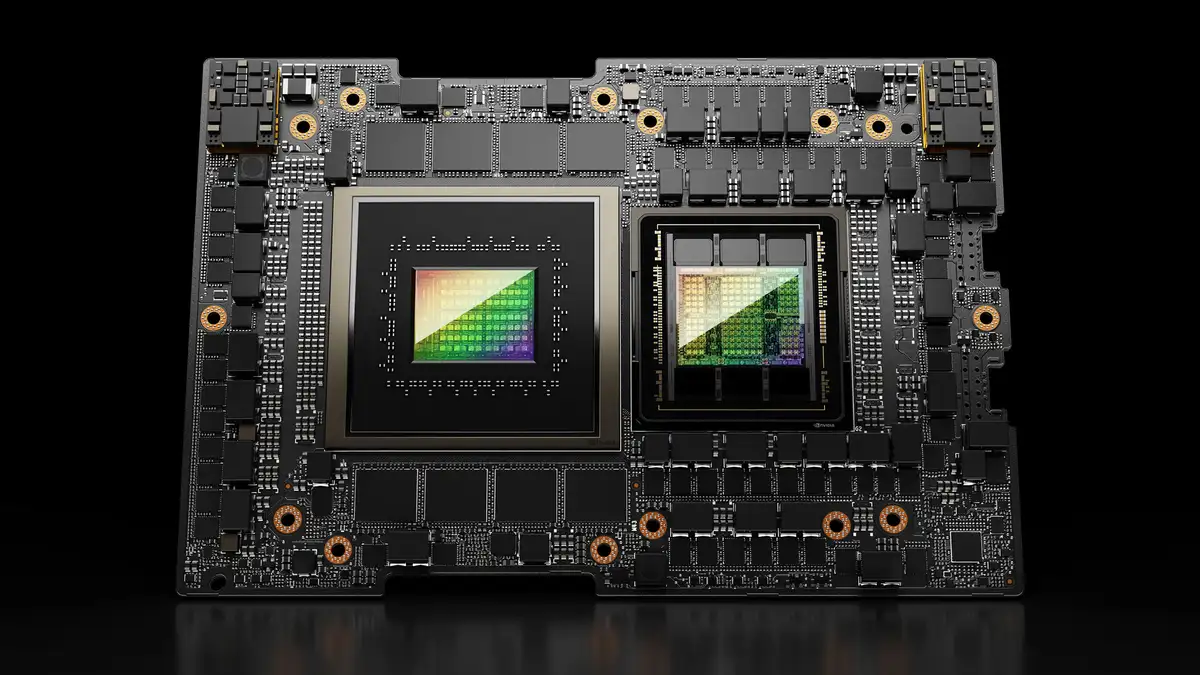
According to a Wall Street Journal report, ByteDance is working with a Southeast Asian company called Aolani Cloud to deploy a cluster of approximately 500 computing systems powered by NVIDIA Blackwell hardware in Malaysia. We’re talking about roughly 36,000 B200 chips, with an estimated total cost that exceeds $2.5 billion dollars.
The servers are assembled by Aivres, a company that specializes in building hardware with NVIDIA chips. Aolani was created in late 2023 under a holding structure in the Cayman Islands, backed by capital from Singapore venture capital firms, and had already been renting ByteDance servers loaded with H100 chips in Malaysia since February.

Here’s the key: ByteDance isn’t buying the chips or the servers. They’re renting them. Aolani owns and physically operates all the hardware, and it does so in Malaysia, a country that falls completely outside U.S. export restrictions. The current rules regulate where hardware physically lands, not who accesses it remotely through the cloud.
An NVIDIA spokesperson confirmed it to the WSJ: by design, the export rules allow companies to build and operate cloud infrastructure outside of restricted countries. NVIDIA also noted that all customers using their chips go through internal compliance reviews before receiving any products.
On top of that, ByteDance doesn’t appear on any restricted entity list maintained by the U.S. Department of Commerce. No automatic red flags. No violations. Entirely legal, just politically uncomfortable.
It’s worth noting this isn’t a completely new playbook either. ByteDance and other Chinese tech firms have been training AI models in Southeast Asian data centers for a while now, leasing compute from operators in Singapore and Malaysia to stay within the rules. What makes this particular move stand out is the sheer scale of it, $2.5 billion worth of the most advanced chips NVIDIA makes, sitting in a Malaysian data center, fully accessible to one of China’s biggest AI companies.
Washington isn’t going to like this
Legal doesn’t mean politically smooth, and everyone involved seems to know it. Aolani acknowledged in an internal investor presentation that they’re already working with a U.S. law firm to ensure regulatory compliance, and that they’re keeping a close eye on potential future regulatory changes, ones they believe would likely be prospective, not retroactive. In plain English: they know Washington might try to close this door eventually, and they’ve positioned themselves to be protected when that happens.
The timing makes things even more interesting. Reuters reported last month that the U.S. was open to allowing ByteDance to purchase H200 chips from NVIDIA directly, though the chipmaker hadn’t yet agreed to the proposed conditions. That conversation happening in parallel with the Malaysia arrangement paints a clear picture: ByteDance is pursuing every single available avenue to stay competitive in the AI race, simultaneously and without hesitation.
And they have every reason to push hard. According to the most recent data from Andreessen Horowitz, ByteDance has four apps among the 50 most popular consumer AI products in the world by monthly active users: CapCut, which alone boasts 736 million monthly active users and relies heavily on AI for its most popular features; Doubao, their general AI assistant that became China’s most popular AI chatbot; Gauth, an educational tool that has become a hit with Gen Z; and Hypic, a photo and video editor.
Then there’s Seedance, their AI video generation engine that went massively viral in early 2026, so viral that Disney, Paramount, Netflix, Warner Bros. and the Motion Picture Association all sent cease and desist letters over copyright concerns after realistic AI-generated clips flooded social media.
ByteDance also has research teams in Singapore, San José, and Seattle, and is actively hiring nearly 100 AI roles in the United States. Their CEO, Liang Rubo, set the company’s keyword for 2026 as “Scaling New Heights”, and he clearly meant it.
What this really tells us about the AI chip war
What ByteDance pulled off here isn’t really a loophole in the sneaky sense, it’s more like exploiting a gap in the rules that nobody thought to close. The regulations were written to control where hardware physically lands. In a world where everything runs through the cloud, that creates a hole you can drive a $2.5 billion data center through.
This is exactly the kind of move that tends to trigger regulatory responses. The U.S. has tightened chip export rules multiple times since 2022, and every time a new gap appears, someone finds it fast. There have even been congressional efforts to close the overseas cloud rental loophole specifically, though none have made it into law yet.
Whether Washington decides to patch this one, potentially by restricting how Chinese companies access cloud hardware deployed in third countries, is still an open question. Aolani is betting the answer is “not retroactively.” For now, the chips are already running in Malaysia.
The broader message is hard to miss: in the race to build the most powerful AI, the companies with the most at stake will keep finding creative paths forward. ByteDance just reminded everyone they’re very much still in the race.
What do you think about this move by ByteDance? Smart strategy or does it feel like it goes against the spirit of the rules? Tell us in the comments!