



If you’ve ever put together a PC, you know the real headache isn’t picking the GPU or the processor, it’s figuring out how everything talks to each other. The motherboard, the connections, the bandwidth between components. Get that wrong and it doesn’t matter how powerful your hardware is. You’ve bottlenecked yourself before you even boot up.
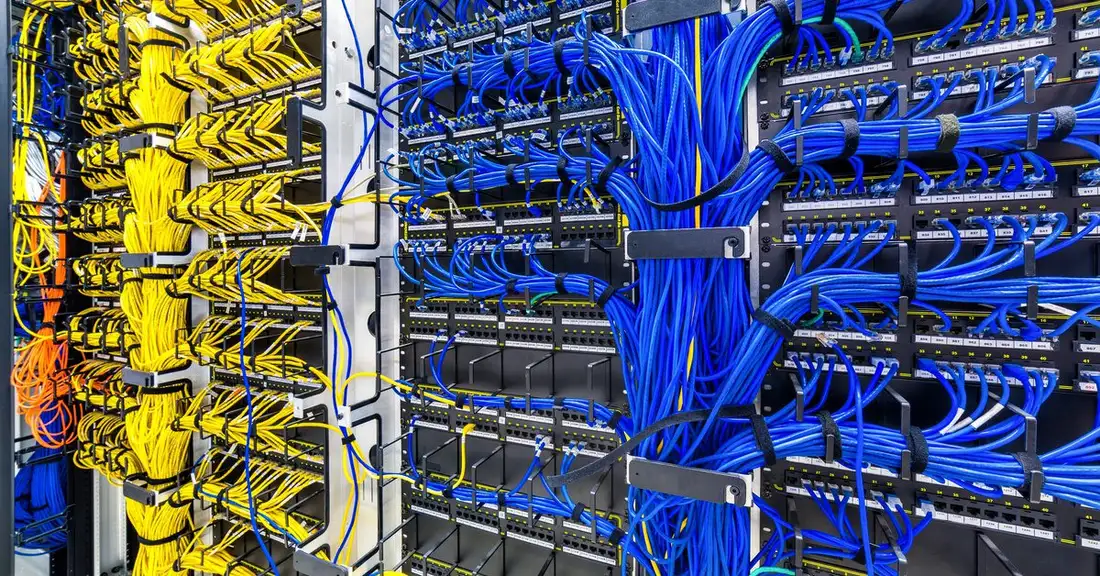
Now scale that problem up to a data center running thousands of AI chips around the clock, and you start to understand why some of the biggest names in tech are losing sleep over interconnects. Copper cables have done the job for decades, but they’re running out of road. The physics just don’t stretch forever, and the AI boom has made that wall very, very visible, very fast.
The solution a French startup is betting everything on? Ditch the cables. Connect the chips with light.
NVIDIA is opening its wallet, and it’s not for more copper
NVIDIA isn’t waiting around to see how this plays out. The company already has its next-generation platform, Vera Rubin, in full production, a rack-scale system designed to link dozens of chips together and scale massively. That kind of architecture only holds up if the connections between chips can keep up with the workload. Right now, they’re becoming the bottleneck.
So earlier this month, NVIDIA announced a combined $4 billion investment split equally between two photonics companies: Lumentum and Coherent, $2 billion each. The move signals that co-packaged optics, the technology that integrates optical components directly alongside chips, is no longer a research experiment. It’s becoming infrastructure.
But there’s a third player in this story that deserves just as much attention, and it’s based in Grenoble, France.
Scintil Photonics was founded in 2018 by Sylvie Menezo, who serves today as CTO, after spinning out technology developed over more than 15 years at CEA-Leti, one of France’s top semiconductor research institutes. In September 2025, the company closed a $58 million Series B funding round, with NVIDIA among the investors. That’s not a coincidence.
What Scintil has built is called SHIP, Scintil Heterogeneous Integrated Photonics, and their product is the LEAF Light chip. It’s what the company describes as the industry’s first single-chip DWDM light engine: a device that combines multi-wavelength lasers with silicon photonics on a single chip, moving data using light pulses instead of electrical signals over copper.
The chip delivers 6.4 Tbps per millimeter of edge bandwidth density, and because light doesn’t generate heat the way electrical signals do, the energy savings are significant. CEO Matt Crowley has said the technology reduces both operating costs and the carbon footprint of AI infrastructure.
As of this week, Scintil has started shipping prototypes to select customers for real-world testing. Not demos. Actual chips, in actual hands.
The part nobody talks about: Supply is the real problem
Here’s where it gets complicated, because even if the technology works exactly as promised, none of it matters if you can’t make enough of it.
Optical systems like the ones Scintil is building require laser chips made from indium phosphide. And right now, the global supply of that material is nowhere near enough to meet what AI data centers will demand. That’s the real reason NVIDIA dropped $4 billion on Lumentum and Coherent, those are two of the biggest producers of the components needed to make all-optical interconnects work at scale.
Without enough raw material in the pipeline, the best photonic chip in the world becomes a bottleneck of a different kind.
Scintil is working around this by partnering with Israel-based Tower Semiconductor for manufacturing, packaging indium phosphide lasers alongside the rest of the optical elements into that single chip.
It’s a smart move, Tower has the foundry experience to potentially scale production in a way a small startup alone couldn’t. The goal is to reach hundreds of thousands of chips per month by 2028.
Crowley has said the company is currently in discussions with six to seven companies that want to implement the technology by that same year. He won’t say who they are, NDAs, naturally, but the interest is there.
The transition won’t happen overnight. Data center racks are engineered around copper as the default. Rethinking how they’re built, cooled, and maintained for optical interconnects is a years-long process. But the direction the industry is moving is hard to ignore. Copper has hit its ceiling in bandwidth density, latency, power, and heat. Light hasn’t.
And somewhere in Grenoble, a 2018 startup with NVIDIA’s backing is quietly trying to prove it can carry the data centers of tomorrow, one laser pulse at a time.
What do you think, are laser-connected chips the future of data centers, or does it still feel too far off? Tell us in the comments!