



Final Fantasy VII Remake Intergrade officially hit Xbox Series X/S and Nintendo Switch 2 on January 22, 2026, and the technical results have left more than a few people stunned.
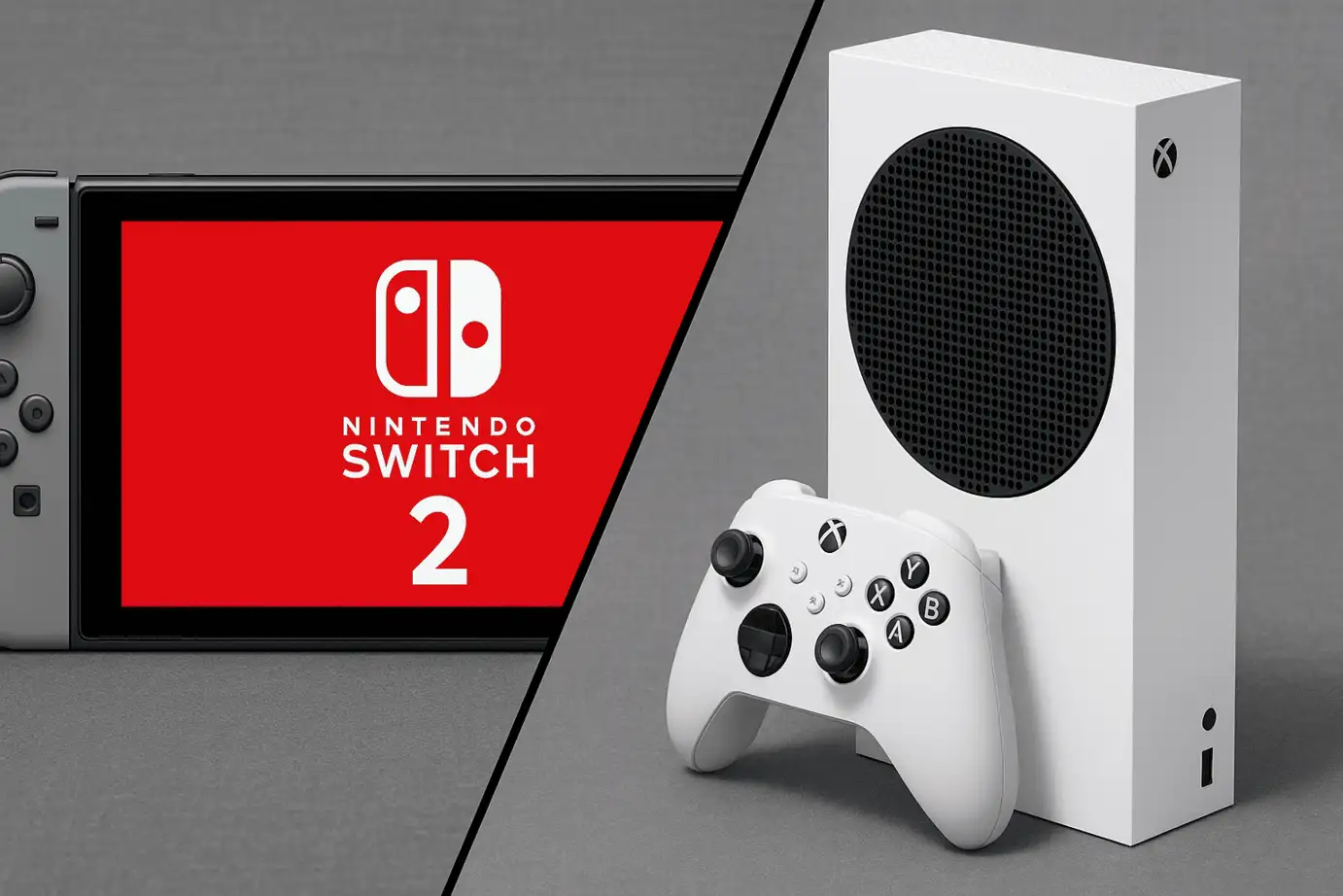
Digital Foundry published their full analysis comparing all available versions, and the conclusion is crystal clear: Xbox Series S delivers superior texture quality compared to Switch 2, despite having less RAM available for games.
A result nobody expected that puts into perspective how hardware works beyond simple specification numbers.
Microsoft’s budget console has been constantly criticized throughout this generation for its hardware limitations, especially when it comes to RAM. Xbox Series S has approximately 8 GB of RAM dedicated to games, while Nintendo Switch 2 has around 9 GB available.
On paper, Switch 2 should have the advantage in this department, but reality proved different when both consoles started loading the streets of Midgar.

Series S loads maximum quality textures
Digital Foundry’s analysis revealed that Xbox Series S uses the same high-quality assets as Xbox Series X and PlayStation 5, loading the complete texture package without cutbacks.
On the other hand, Switch 2 frequently resorts to lower resolution textures, similar to the PlayStation 4 versions, resulting in a more inconsistent image in direct comparison. This is particularly noticeable in environmental objects, floors during close-ups, and architectural elements that are constantly visible during gameplay.
The difference isn’t so much in the total amount of memory, but in how it’s managed. Digital Foundry suggests that Series S achieves this result thanks to its texture streaming system, backed by its 8-core AMD Zen 2 processor, practically identical to the Series X chip but with a slightly lower clock frequency.
This processor works in conjunction with the console’s SSD to efficiently load and unload high-quality textures, compensating for the RAM limitation.
In contrast, Nintendo Switch 2 features an ARM Cortex-A78C processor, noticeably less powerful in comparison, though it has the advantage of NVIDIA DLSS on its GPU to improve image quality through artificial intelligence. However, in this particular case, DLSS wasn’t enough to compensate for the difference in texture handling.
Performance modes and resolutions
In terms of graphical options, Xbox Series S offers performance mode at 1080p with 60 FPS, and quality mode at 1440p with 30 FPS, both with very consistent stability. Shadow quality and draw distance clearly surpass the PS4 version, and load times are fast without penalizing the experience.
Digital Foundry even noted that in some still captures, the 1440p output on Series S doesn’t look as sharp as Switch 2 at 1080p, possibly due to differences in Unreal Engine 4’s TAA anti-aliasing versus Nintendo’s DLSS, but this only applies to static images.
Xbox Series X, meanwhile, stands at PS5’s level with 1512p at 60 FPS in performance mode, or native 4K at 30 FPS in quality mode, with no noticeable differences between both platforms. The Series X version has an identical visual composition to PS5 in both modes.
Switch 2 runs the game at a stable 30 FPS as confirmed by Square Enix, with 720p resolution in portable mode scaled to 1080p via DLSS, though with Dynamic Resolution Scaling that can make some textures appear softer.
The biggest drawback of the Switch 2 version, according to the analysis, is excessive dithering that results in less defined shadows compared to other consoles.
Square Enix’s port shows strong optimization
Naoki Hamaguchi, director of Final Fantasy VII Remake Intergrade, revealed in previous interviews that the team had specific problems with Xbox Series S’s available memory.
“We had to work right up to the line to optimize the memory, all the way to the end of development“, he stated, adding that it wasn’t the same level of adjustment as with Switch 2, where they rebuilt the entire rendering pipeline. Despite these difficulties, the final result on Series S is impressive.
It’s worth mentioning that the original Final Fantasy VII Remake on PS4 had notorious problems with low-resolution textures at launch in 2020, something the PS5 Intergrade version largely corrected.
Seeing that the modest Series S manages to load those improved textures while the more recent Switch 2 doesn’t always achieve this speaks to the excellent optimization work from Square Enix’s team on the Xbox port.
This case demonstrates that raw specifications don’t always tell the complete story. Architecture, storage system design, and software optimization play crucial roles in a game’s final performance.
Stay locked into Geek Realm Hub for more gaming tech breakdowns and follow us on Facebook to never miss the latest news!