



When The Legend of Zelda: Tears of the Kingdom launched, players were captivated by its sprawling narrative and the way it expanded on Breath of the Wild’s foundation. But one element left fans scratching their heads: the original Sages from the Imprisoning War. These masked figures played a crucial role in Hyrule’s history, yet we barely got to know them. Turns out, that was entirely by design.
In a recent interview with Japanese outlet 4Gamer, game director Hidemaro Fujibayashi finally shed light on why Nintendo chose to keep these characters shrouded in mystery. The decision wasn’t an oversight or a cut feature, it was a deliberate narrative choice meant to keep the story focused and balanced.
Keeping the story contained
Fujibayashi explained that the Sages were intentionally designed with masks and without visible names or detailed personalities. The team knew that diving deeper into who these characters were, showing their faces, exploring their backstories, or developing their individual arcs, would have caused the narrative to balloon out of control.
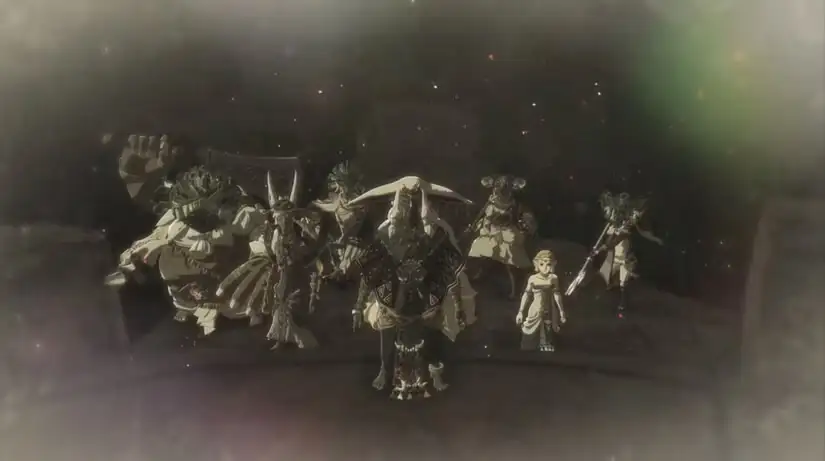
“There were many elements we consciously chose to ‘contain,'” Fujibayashi noted. The priority was always Link and Zelda’s journey and the core conflict at hand. Opening up too many narrative threads about the past would have pulled focus away from what mattered most in the present.
Legends rather than characters
Within the game, we meet Ardi of the Gerudo, Qia of the Zora, Raphica of the Rito, and Agraston of the Gorons, but only in brief memory sequences. They appear as symbols rather than fully realized characters, reinforcing the idea that the Imprisoning War is a distant historical event, almost mythical in nature.
This approach actually strengthens the game’s atmosphere. By keeping these Sages enigmatic, Nintendo transformed them into legendary figures representing sacrifice and unity across Hyrule’s diverse peoples. They’re not meant to be protagonists in their own right, they’re echoes of a bygone era that add weight to the present-day adventure.
Fujibayashi also mentioned he’s pleased that subsequent materials, like Hyrule Warriors: Age of Imprisonment, have given fans the opportunity to explore these characters more deeply without compromising the original game’s narrative structure.
A choice that still sparks debate
While Nintendo’s explanation clarifies the creative intent, many fans still wish they could have learned more about these Sages during their playthrough. The good news? That content exists now through spinoff games like Hyrule Warriors: Age of Imprisonment and supplementary materials for those hungry for more lore.
Want more gaming news and geeky deep dives? Follow Geek Realm Hub on X and stay in the loop with everything happening in the gaming universe!