



The biggest driver of PC hardware innovation in 2026 has nothing to do with gamers. It’s happening inside massive warehouses across the U.S., where companies like Microsoft, Amazon, Google, and Meta are spending historic amounts of money to build AI infrastructure at a scale the world has never seen. And whether you know it or not, every dollar they spend is quietly reshaping the hardware inside your next rig.
In 2025 alone, tech giants poured an estimated $580 billion into data centers, turning empty fields and abandoned factories into what are essentially AI factories packed with GPUs, cooling systems, and fiber networks. Amazon is projecting $200 billion in data center spending for 2026.
Google is right behind with up to $185 billion. Meta’s CEO Mark Zuckerberg has committed to $600 billion in U.S. infrastructure through the end of 2028. These aren’t rounding errors. This is the largest coordinated hardware investment in computing history, and it is changing everything downstream, including what ends up in your PC.
The AI memory war is hitting your wallet right now
Here’s the part nobody warned you about. The same memory technology that goes into AI servers is the same technology in your RAM sticks and GPU. And right now, there is an all-out war for that supply, and consumers are losing.
DRAM prices rose 172% throughout 2025. Samsung halted new orders for DDR5 modules to reassess pricing. Micron shut down its entire Crucial consumer brand to free up supply for AI contracts. The culprit is High Bandwidth Memory, HBM, a specialty memory type stacked directly next to AI chips to feed them data fast enough to run massive language models. Samsung, SK Hynix, and Micron have all aggressively reallocated their production lines toward HBM, leaving a massive deficit in the regular RAM used in desktops, laptops, and gaming PCs.
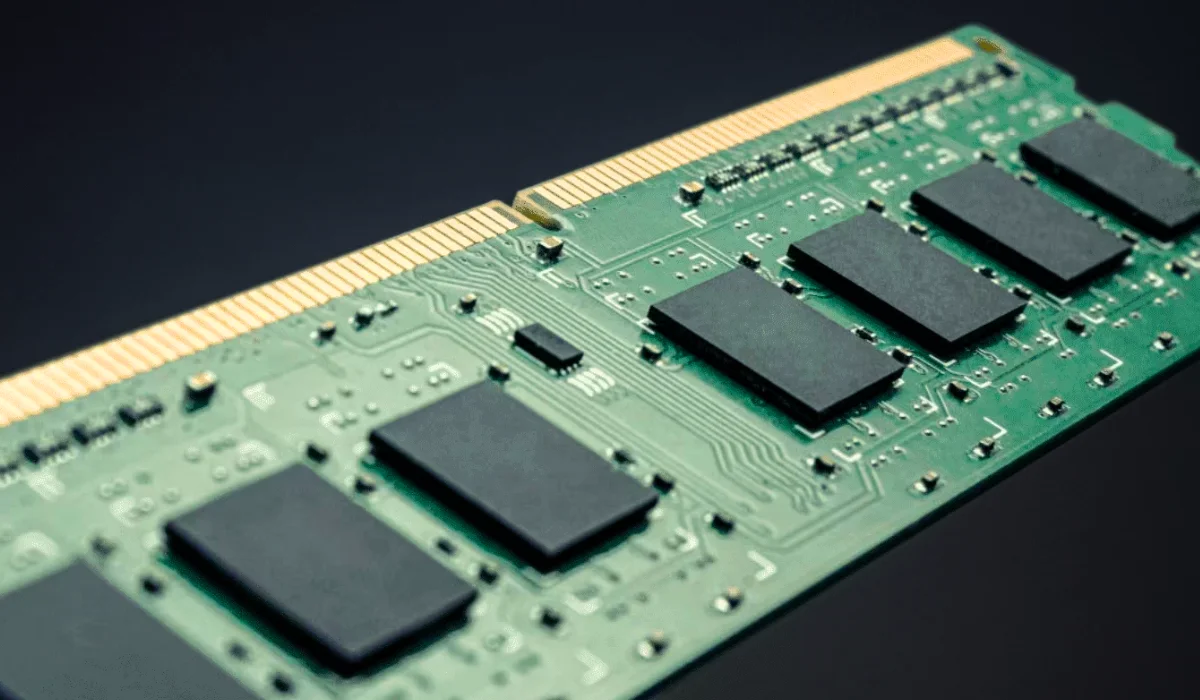
It gets worse. HBM capacity is fully sold out through 2026 across all three major suppliers, and Nvidia has been forced to cut gaming GPU production by 30 to 40 percent in the first half of 2026 because of GDDR7 shortages.
AI is expected to consume 20% of total DRAM production in 2026, a figure that could grow as the buildout scales further. MAINGEAR CEO Wallace Santos said it plainly: consumers interested in a new PC or GPU upgrade should shop now, because the situation is expected to get worse, not better, throughout the year.
The short-term reality is painful. But it is not the whole story.
The technology being built for AI is your next GPU
This is where it gets genuinely exciting for anyone who cares about PC hardware. Everything being engineered under the extreme demands of AI data centers eventually finds its way into consumer products. That has always been how this industry works, and the current AI buildout is accelerating that cycle dramatically.
Take liquid cooling. Data centers cooling AI racks today handle up to 1,600 watts per component, several times more than any consumer GPU produces. Microsoft’s Fairwater data center in Wisconsin, which covers 315 acres and houses three buildings with a combined 1.2 million square feet, runs 90% of its facility on a closed-loop liquid cooling system, with components supported by 46.6 miles of deep foundation piles and 26.5 million pounds of structural steel.
The cooling engineering happening at that scale, more efficient, quieter, and capable of handling extreme heat densities, is the same engineering that trickles into the consumer AIO coolers and custom loop components you’ll be buying in two or three years. Cooling already accounts for roughly 40% of total energy use in data centers, so the financial incentive to solve it better is enormous, and that research benefits everyone.
Then there’s AMD’s UDNA architecture, one of the clearest examples of data center investment directly reshaping gaming hardware. AMD confirmed it is combining its RDNA gaming architecture and its CDNA data center architecture into a single unified platform called UDNA. In AMD’s own words, the goal is one architecture for both Instinct data center accelerators and consumer Radeon GPUs, no more split development.

When the billions being poured into data center GPU research feed directly into the same architecture powering your gaming PC, the performance gains compound in ways that simply weren’t possible when the two worlds were separate. Early reports point to around 20% higher rasterization performance and up to double the ray tracing and AI efficiency compared to RDNA 4.
Nvidia’s roadmap tells the same story. The technology developed for its next-generation Rubin AI chips, currently being stress-tested inside the world’s most demanding data center environments, is expected to make its way into the consumer RTX 60-series cards.
HBM4, the memory standard being battle-hardened in today’s AI accelerators, will eventually arrive in consumer GPUs, bringing bandwidth improvements that will make current-gen gaming performance look slow by comparison. Industry analysts point to late 2027 as when meaningful supply stabilization arrives and that next wave of consumer hardware becomes widely available.
The paradox of this moment is real: the same forces making it expensive and frustrating to build a gaming PC in 2026 are also funding the most aggressive era of hardware innovation in decades. The AI buildout is setting a performance floor and a technological ceiling that the entire PC industry has to meet.
Server engineers designing chips that survive in racks pulling 200 kilowatts have to make those chips extraordinarily efficient at the transistor level, and that efficiency shows up in your next processor, your next GPU, your next laptop that runs cooler and longer.
Data centers are not just storing the internet anymore. They are building the hardware your next gaming PC will run on. It is just taking a detour through a very large warehouse first.
Are you feeling the memory price hike when shopping for PC parts, or are you holding off on upgrades until things stabilize? Tell us in the comments, we want to hear how this is hitting you!