

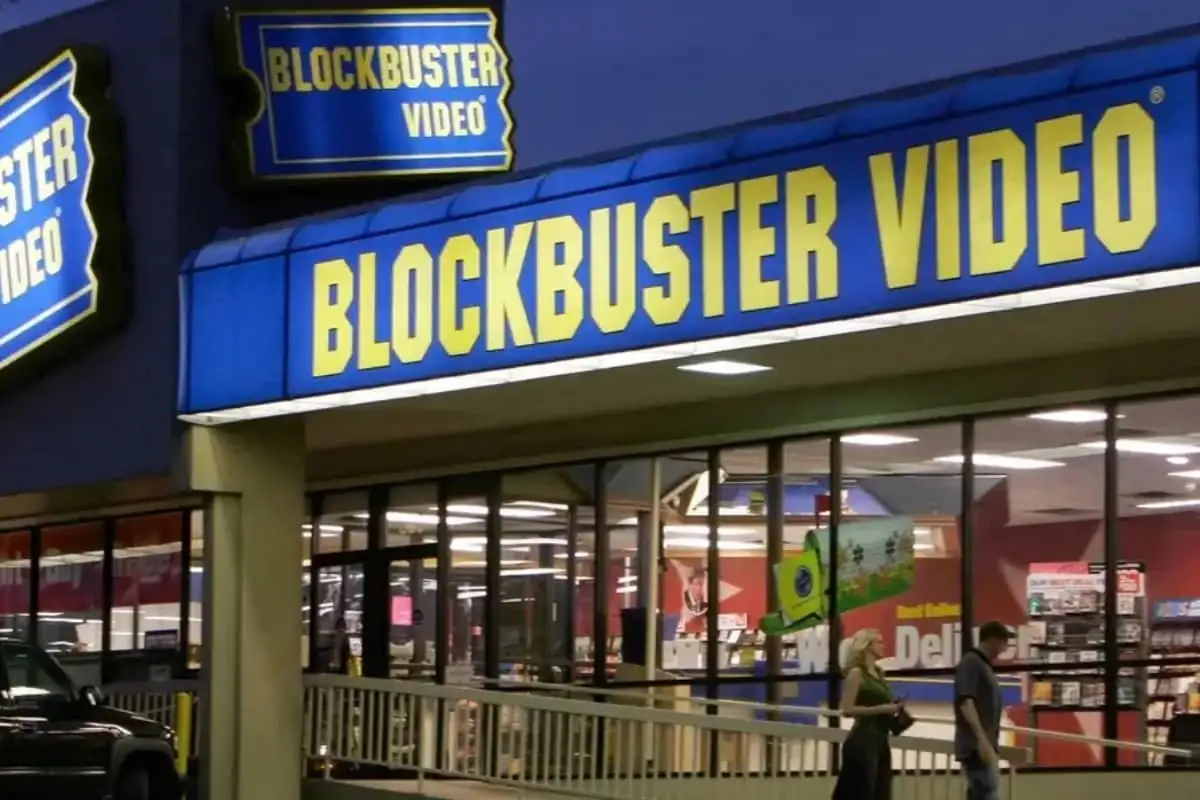

For decades, renting a movie was an experience in itself. Long before video streaming or on-demand entertainment, going to the video rental store was a family tradition, a Friday-night ritual, and something of an adventure.
So… what happened?
The birth of the video rental industry (1970s)
The origins of the video rental business began with the invention of the videocassette recorder (VCR) during the 1970s. Although early VCRs were expensive and primarily marketed as devices for recording television programs, they introduced consumers to an entirely new possibility: that of home media.
Initially, purchasing prerecorded movies was prohibitively expensive for many consumers. Movie studios frequently charged substantial prices for individual videocassettes, making ownership impractical for people who wanted to watch a variety of films. Video rental stores emerged to fill this gap, allowing customers to enjoy movies without purchasing them outright.
One of the earliest video rental businesses was established in Los Angeles in 1977 by entrepreneur George Atkinson. His store, located on Wilshire Boulevard, offered customers access to a collection of movies for a rental fee. The concept proved enormously successful, inspiring similar businesses across the country. Within less than two years, Atkinson had established dozens of affiliated stores.
By the end of the 1970s, the foundations of an entirely new entertainment industry had been established.
The golden age of video stores (1980s)
The 1980s represented the beginning of the video rental industry’s explosive growth. As VCR prices declined and more households purchased machines, demand for pre-recorded movies increased dramatically. There was also the introduction of the VHS player, which while lacking the VCR’s ability to record live TV could still play movies at a lower purchase price.
Independent video rental stores began appearing in communities throughout the United States. These businesses offered customers an alternative to movie theaters and traditional television programming. Initially, this new industry was dominated by these independently owned businesses. Many were relatively small operations, often located in shopping plazas, strip malls, and neighborhood storefronts.
However, the business was becoming increasingly profitable, attracting larger companies interested in establishing national rental chains.
One of the most important developments came in 1985, when David Cook opened the first Blockbuster Video store in Dallas, Texas. Unlike many smaller competitors, Blockbuster emphasized large inventories, organized shelving, computerized inventory management, and a consistent retail experience.
Its stores offered thousands of movies, making it possible for customers to browse a much larger selection than they would typically find at a neighborhood rental shop.
Blockbuster’s business model proved extraordinarily successful. Through aggressive expansion and corporate investment, the company rapidly established itself as the dominant name in video rentals.
By the end of the decade, video rental had become a multibillion-dollar industry, fundamentally changing the economics of Hollywood filmmaking and home entertainment.
The expansion of the industry (1990s)
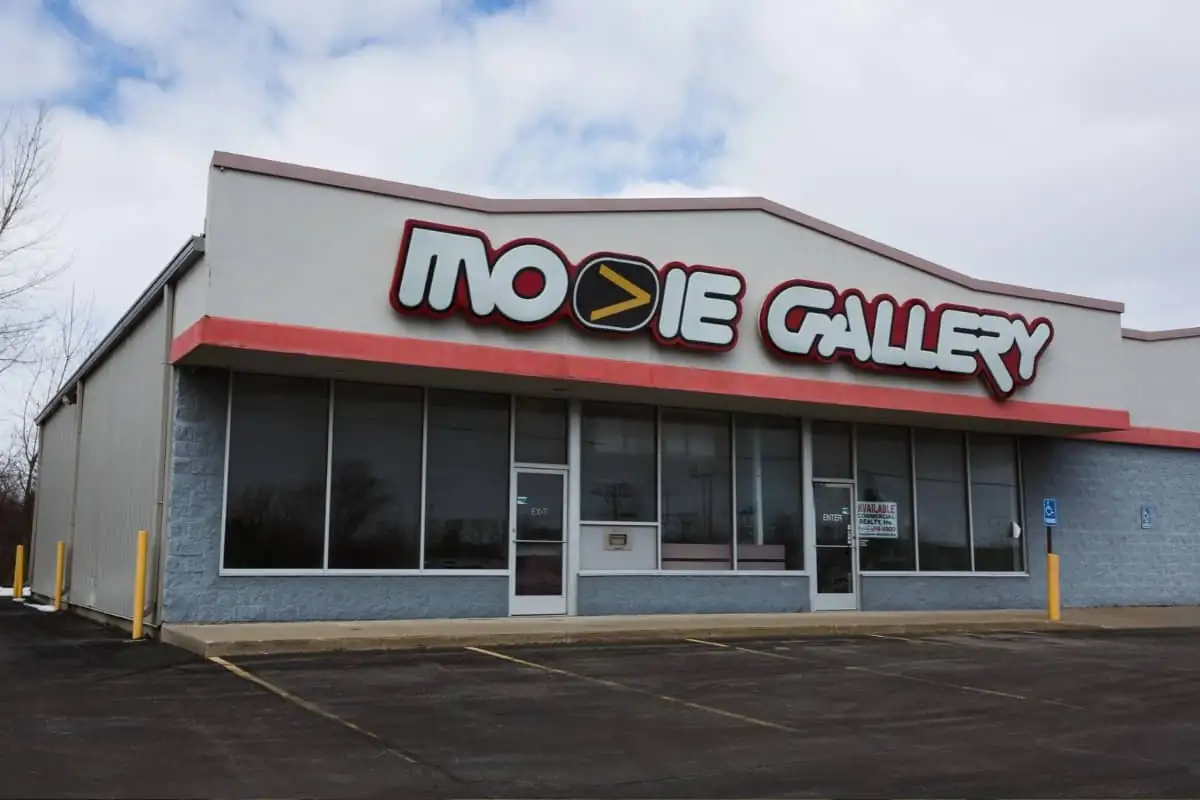
During the 1990s companies such as Blockbuster, Hollywood Video, & Movie Gallery became mainstays of our culture. Their bright signs and brightly lit interiors were unmistakeable, and they spent the decade continuing to expand.
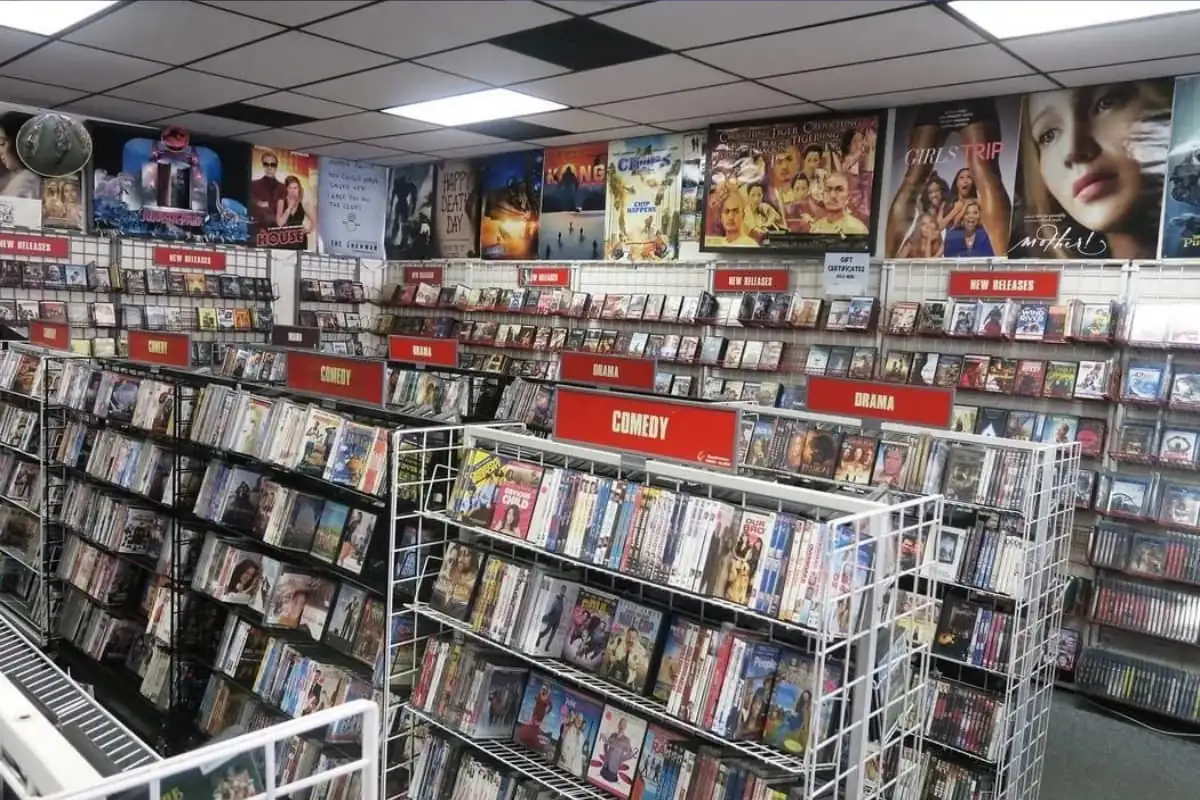
The experience of visiting a video store became a familiar weekly ritual. Customers wandered through aisles searching for the latest releases, browsing horror movies, comedies, science fiction, and action films.
New releases were particularly important to the business. Stores often purchased numerous copies of highly anticipated movies, hoping to satisfy demand during the first few weeks after release.
The rental industry also developed a recognizable business model involving membership accounts, rental periods, late fees, and promotional discounts.
Late fees became an important source of revenue for major chains, although they were frequently unpopular with customers. Returning a movie even one day late could result in additional charges.
Despite these frustrations, the industry remained enormously popular.
DVDs, the beginning of the end
A significant technological development arrived in the late 1990s: the DVD. When compared with VHS, DVDs offered better picture quality, smaller physical packaging, & interesting bonus features.
However, there was a serious problem. The plastic shell of a VHS tape by its very design protected the magnetic tape within. DVDs on the other hand store their data on a reflective surface which is completely exposed.
Proper handling & storage does an excellent job of preventing damage to DVDs. However, sadly many people don’t take good care of things…especially when they don’t own them.
Scratches on a DVD can interfere with the laser’s ability to read the microscopic data stored on the disc. This led to everything from picture freezing to the movie becoming completely unplayable.
This meant that the aggravation of a movie being interrupted by a return trip to the video store went from rare to fairly common. That’s assuming that the store even had another copy of the movie you wanted, or that you could make it back before they closed!
Nevertheless, DVDs gradually replaced VHS tapes.
The rise of Netflix and the changing rental market
The next major challenge to video stores emerged in 1997 with the founding of Netflix by Reed Hastings and Marc Randolph.
Initially, Netflix operated as an online DVD rental business. Instead of visiting a physical store, customers could browse movies through the company’s website and have DVDs delivered directly to their homes. Customers paid a monthly fee to rent DVDs without worrying about late fees. They could keep movies as long as they wanted and return them using prepaid envelopes.
Netflix also offered something that physical stores struggled to match: an enormous movie catalog. While neighborhood stores were limited by shelf space, Netflix could maintain a much broader selection of titles in centralized distribution facilities.
Another competitor appeared in 2002 when Redbox began introducing automated DVD rental kiosks. Located in grocery stores, convenience stores, and other retail locations, these machines offered inexpensive rentals with convenient access.
Customers could rent movies without entering a dedicated video store, making Redbox particularly attractive to people interested in inexpensive, straightforward rentals.
Meanwhile Blockbuster attempted to compete by introducing its own online rental service, and numerous video rental stores would begin forgiving and eventually eliminating late fees.
Unfortunately, these changes came as the industry was already undergoing a fundamental transformation.
The decline of traditional video stores
By the mid-2000s, the video rental industry was facing increasing competition from several directions.
DVD ownership had become more affordable, allowing consumers to purchase movies they previously would have rented. Cable television companies were expanding their video-on-demand offerings, giving customers another way to watch movies without leaving home.
Netflix continued growing, and Redbox continually expanded its network of rental kiosks.
The biggest transformation, however, came from internet streaming.
In 2007, Netflix introduced its streaming service, allowing subscribers to watch selected movies and television programs directly over the internet. This represented a major shift away from physical media.
Rather than waiting for a DVD to arrive or driving to a rental store, customers could begin watching content almost immediately.
Blockbuster struggled to adapt to these changes. The company was burdened by its extensive network of physical stores, operating expenses, and an increasingly outdated business model.
In September 2010, Blockbuster filed for bankruptcy protection. Although the company continued operating for a time, its retail presence rapidly diminished. Dish Network subsequently acquired Blockbuster’s remaining business assets.
Hollywood Video and Movie Gallery also disappeared, while thousands of independent video rental stores closed their doors.
By the early 2010s, the traditional video rental industry had largely collapsed.
The survivors
However, believe it or not, some video rental stores still exist today!
Although streaming services have dramatically changed how people watch movies, a small number of traditional video rental stores have survived. Some have even become beloved destinations for movie lovers, collectors, and people who miss the experience of browsing physical movies.
Today’s surviving video stores are a fascinating combination of old-fashioned movie rental shops, independent film libraries, and nostalgic community hangouts.
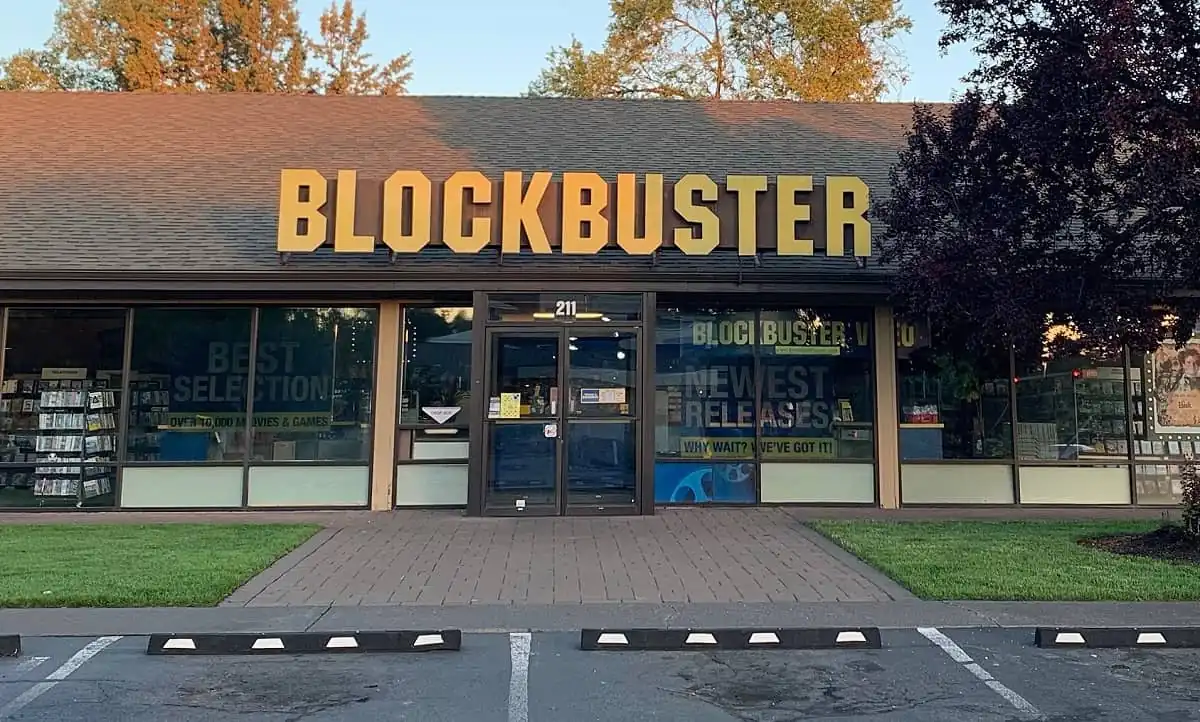
Among them is of course “The Last Blockbuster” in Bend, Oregon. Still retaining the familiar blue and yellow branding, and welcoming thousands of visitors per year.
The legacy of video rental
Although the golden age of video rental stores has passed, their influence on modern entertainment remains significant.
The industry helped establish the concept of watching movies whenever audiences wanted, rather than following television schedules or visiting theaters. It also helped create the economic foundation for the modern home entertainment market.
Streaming services such as Netflix, Amazon Prime Video, and Disney+ ultimately inherited the convenience that video rental stores helped popularize.
Nevertheless, something was lost when physical rental stores disappeared.
For many people, visiting a video store was a way of “going out” all on its own. You browsed, you ran into friends & chatted, you discovered old gems you’d long forgotten about, as well as something new to fall in love with.
Customers could discover unfamiliar films, read the descriptions on VHS and DVD cases, ask employees for recommendations, and browse entire genres they might never have encountered otherwise.
Independent video stores also frequently maintained collections of obscure, foreign, independent, and older films that were difficult to find elsewhere.
That experience may largely belong to the past, but the video rental industry’s contribution to modern entertainment is undeniable. It helped make movies more accessible, gave audiences greater control over what they watched, and paved the way for the on-demand entertainment culture that exists today.