



It’s hard to believe it’s been two decades since Microsoft dropped what would become one of the most influential gaming consoles in history. The Xbox 360 didn’t just arrive on store shelves in November 2005, it crashed through the door, redefined what online gaming could be, and left an indelible mark on an entire generation of players. For many of us, the startup sound of that console isn’t just a memory; it’s a feeling.
The Xbox 360 wasn’t perfect. It had its infamous Red Ring of Death, its loud disc drive, and its share of controversies. But damn, did it have soul. It was the console that made online gaming feel essential, that turned achievements into an obsession, and that proved Microsoft wasn’t just playing in the console wars, they were here to win.
The beast under the hood
When the Xbox 360 launched, it was packing some serious heat for its time. At its core was a custom IBM PowerPC tri-core Xenon processor running at 3.2 GHz, a beast that could handle the increasingly complex games developers were dreaming up. Paired with a custom ATI Xenos GPU capable of 500 MHz, the console could push graphics that felt genuinely next-gen, especially when you saw games like Gears of War running in all their gritty, chainsaw-bayonet glory.
The system came with 512 MB of GDDR3 RAM shared between the CPU and GPU, which was a bold architectural choice that gave developers flexibility. Sure, by today’s standards that sounds quaint, but back then? It was enough to render sprawling open worlds, detailed character models, and lighting effects that made us stop and stare.
Storage was handled through detachable hard drives ranging from 20GB in the original models up to 250GB in later iterations, though the Core and Arcade models initially shipped without hard drives at all, a decision that still baffles some of us. The console supported HD output up to 1080p, though most games targeted 720p, which was still a massive leap from the standard definition era we were leaving behind.
The evolution of the Xbox 360 hardware
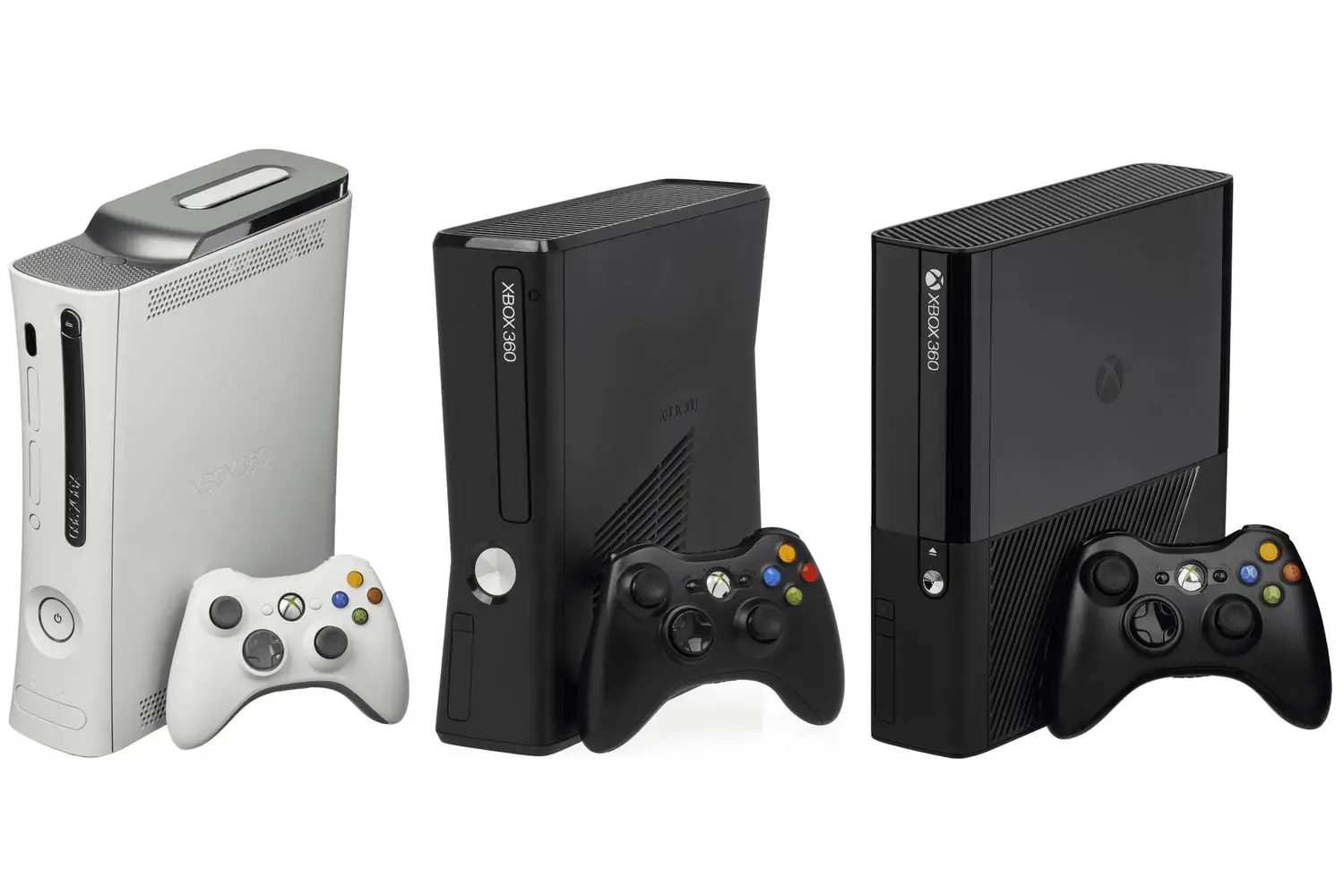
The Xbox 360 went through several iterations during its lifespan, each addressing issues or adding features that kept the console relevant. The original “Premium” model launched with that iconic white chassis, chrome accents, and a detachable 20GB hard drive. It looked futuristic sitting in your entertainment center, even if it did sound like a jet engine when spinning up a disc.
In 2010, Microsoft released the Xbox 360 S (Slim), which was a complete redesign. Sleeker, quieter, and with built-in Wi-Fi, something the original models desperately needed, the S model also addressed the Red Ring of Death issues that had plagued earlier units. It featured a matte black finish, touch-sensitive buttons, and a 250GB hard drive. This was the Xbox 360 that finally felt refined.
The final revision came in 2013 with the Xbox 360 E, which borrowed design cues from the then-upcoming Xbox One. It was smaller, more angular, and honestly felt like Microsoft was ready to move on. But for budget-conscious gamers, it was a solid entry point into the ecosystem.
Special editions were everywhere, Halo 3 green, Resident Evil 5 red, Modern Warfare 2 with custom artwork. These weren’t just consoles; they were collector’s items that showed how deeply gaming culture had embedded itself into our lives.
The games that defined a generation
Let’s be real: a console is only as good as its games, and the Xbox 360 had an embarrassment of riches. Choosing just five is almost painful, but these titles didn’t just launch on the 360, they were born from it, shaped by it, and in many ways, defined what the console stood for.
Gears of War (2006) – Epic Games and Microsoft created something visceral and unforgettable with Gears. The cover-based shooting, the grotesque Locust enemies, the bromance between Marcus Fenix and Dom Santiago, it all came together in a package that felt brutal and beautiful. The active reload system became iconic, and the multiplayer was intense in ways that made your palms sweat. This was the game that showed what the 360 could really do graphically, and it became the poster child for the console’s mature, gritty aesthetic.
Halo 3 (2007) – “Finish the fight.” Those three words carried so much weight. Bungie’s conclusion to the original Halo trilogy was a cultural phenomenon. The campaign was epic, the multiplayer was endlessly replayable, and Forge mode let players become creators. Halo 3 wasn’t just a game; it was an event. Midnight launches, LAN parties, and countless hours spent in custom games with friends, this was Xbox 360 at its social peak.
Fable II (2008) – Peter Molyneux might have over-promised, but Lionhead Studios delivered something magical with Fable II. The game let you be a hero or a villain, get married, buy property, and watch your choices ripple through the world of Albion. Your dog companion became one of gaming’s most beloved sidekicks, and the co-op, while flawed, was ambitious. Fable II captured that uniquely British sense of humor and fantasy that made it feel unlike anything else on the console.
Alan Wake (2010) – Remedy Entertainment’s psychological thriller was a love letter to Stephen King and Twin Peaks, wrapped in a gameplay loop that used light as a weapon. The episodic structure, the moody Pacific Northwest setting, and the genuinely unsettling atmosphere made Alan Wake a cult classic. It was weird, ambitious, and proof that the 360 could host experiences that were more than just shooters and sports games.
Forza Motorsport 3 (2009) – Turn 10 Studios turned the Forza series into the definitive racing simulation on consoles with this entry. Over 400 cars, customization that bordered on obsessive, and a physics model that felt authentic without being punishing. Forza 3 was where car enthusiasts and casual racers could meet, and it established Xbox as the home for serious racing games. The livery editor alone consumed hundreds of hours of players’ time, turning the game into a creative outlet as much as a racing sim.
A digital identity, the avatar system
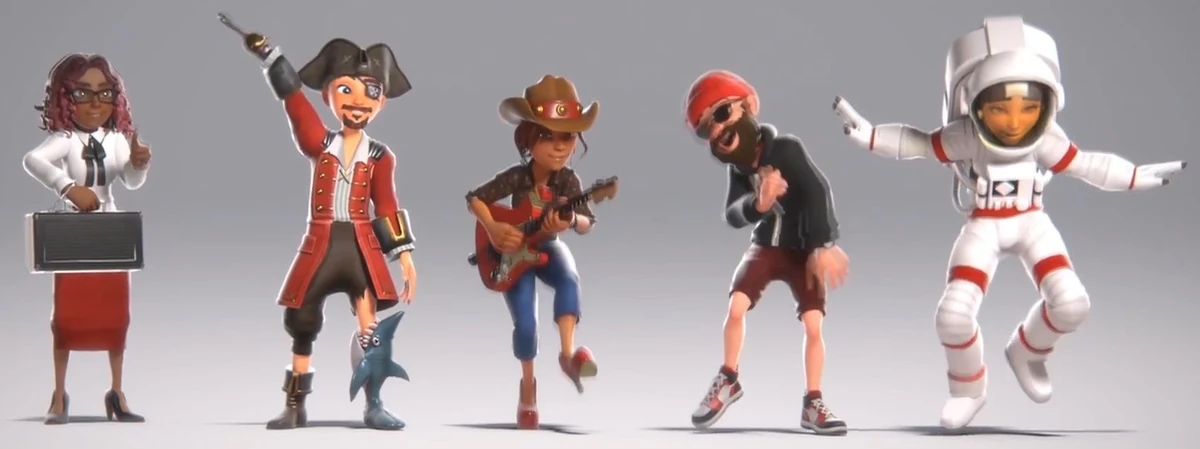
In 2008, Microsoft introduced the New Xbox Experience (NXE), and with it came Avatars, customizable digital representations of yourself that populated the dashboard. Inspired by Nintendo’s Miis but with more detail and customization options, Avatars became your identity in the Xbox ecosystem.
You could dress your Avatar in everything from casual clothes to game-themed costumes. Beat Halo 3? Get Master Chief armor for your Avatar. Love Gears? Dress up as Marcus Fenix. These weren’t just cosmetic trinkets; they were badges of honor, ways to express your gaming personality.
Some games even integrated Avatars directly into gameplay. Titles like Doritos Crash Course, Avatar Legends, and 1 vs 100 used your Avatar as your in-game character, creating a sense of continuity between the dashboard and the games themselves. It was a small touch, but it made the Xbox 360 feel more personal, more yours.
The Avatar system also fueled a marketplace where you could buy clothing, props, and accessories with Microsoft Points. It was an early glimpse into the microtransaction economy that would come to dominate gaming, but back then, it felt fun and optional rather than predatory.
The homebrew scene
Beyond the official ecosystem, the Xbox 360 had a thriving homebrew scene that pushed the console in directions Microsoft never intended. Through methods like JTAG and RGH (Reset Glitch Hack), dedicated modders found ways to run unsigned code on the console, opening up a world of possibilities.
Homebrew enthusiasts created custom dashboards, emulators for classic systems, and even ported indie games that would never see official releases. The scene was a testament to the passion of the gaming community, people who loved the hardware so much they wanted to explore every corner of what it could do.
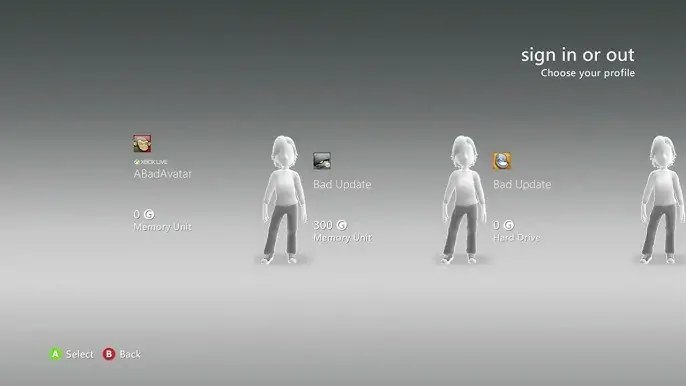
Fast forward to 2025, and the homebrew scene is still alive and evolving. Enter ABadAvatar, a software-only hypervisor exploit that’s breathing new life into the modding community. Built upon the foundation of the “BadUpdate” exploit, ABadAvatar leverages a vulnerability in the Avatar system, yes, those customizable digital characters we all dressed up, to achieve code execution on unmodified consoles running the latest dashboard version (17559).
What makes ABadAvatar particularly fascinating is its accessibility. Unlike JTAG or RGH, which required opening your console and soldering skills that could make your hands shake, ABadAvatar is entirely software-based. You need a USB stick and a specially crafted profile with a corrupted Avatar item. The exploit triggers through the profile selection screen, using the Avatar data to execute unsigned code without ever touching a screwdriver.
The catch? It’s non-persistent. Once you power off your console, you’re back to stock firmware and need to run the exploit again. It’s not as convenient as a permanent hardware mod, but for preservation enthusiasts, researchers, or anyone curious about what their 360 can really do, it’s a remarkable achievement. The fact that twenty years later, people are still finding new ways to crack open this console speaks volumes about the dedication of the community.
Of course, this came with risks. Modified consoles were banned from Xbox Live, and Microsoft actively fought against the modding community. But for those willing to take the plunge, a modified 360 became a Swiss Army knife of gaming, capable of playing backups, running Linux, and preserving games that might otherwise be lost to time.
The homebrew scene also played a crucial role in game preservation. As digital storefronts close and physical media degrades, the work of these communities ensures that the Xbox 360’s library won’t be forgotten. It’s a controversial topic, but there’s no denying the cultural and historical value of what they’ve accomplished.
Happy 20th birthday Xbox 360! pic.twitter.com/kt2rW6lzNC
— Geek Realm Hub (@geekrealmhub) November 22, 2025
The legacy lives on
The Xbox 360 sold over 84 million units worldwide and proved that Microsoft belonged in the console conversation. It popularized achievements, made Xbox Live the gold standard for online gaming, and hosted some of the most memorable gaming experiences of the 2000s and early 2010s.
More than that, it was the console that brought people together. Whether you were coordinating raids in Halo, trash-talking in Call of Duty lobbies, or just hanging out in party chat while playing different games, the 360 made gaming feel social in ways that hadn’t quite existed before.
Twenty years later, we can look back and see the Xbox 360 for what it truly was: a revolution. It wasn’t just about the hardware or the games, it was about the community, the memories, and the feeling that we were all part of something bigger.
Want more deep dives into gaming history, tech breakdowns, and nostalgic retrospectives? Follow us and never miss a story that celebrates the culture we love.