



It took guts to call yourself an anime fan in the nineties. VHS tapes circulated like forbidden material, with poorly translated subtitles and questionable image quality. Conventions were clandestine gatherings in hotel conference rooms where a handful of enthusiasts tried to decipher what the hell “otaku” meant and why that yellow spiky-haired guy screamed so much.
Japan, mired in economic crisis, produced these stories without suspecting it was gestating an industry comparable in influence to Toyota or Nintendo. While economists spoke of the “lost decade,” anime was quietly building a cultural empire that would soon reach every corner of the planet.
What made it different wasn’t the animation itself, but its complete ecosystem. Anime was never just “cartoons”: it was music, video games, merchandise, and tourist destinations. While Hollywood avoided death, moral dilemmas, or dark futures, anime embraced them with emotionally complex and visually daring narratives. This thematic boldness, combined with a unique aesthetic, transformed the medium into an art form that engaged with philosophy, explored science fiction, and connected with human emotions viscerally.

2023: The year Tokyo lost control
The rupture came in 2023. For the first time in history, more than half of the anime industry’s revenue came from outside Japan. The United States, Mexico, Brazil, and other international markets surpassed local audiences. That moment marked an irreversible shift: the industry stopped thinking exclusively in Japanese and began operating with a global mindset.
The way content was written, dubbed, and distributed was reinvented for a worldwide audience united by nostalgia and digital platforms. Giants like Toei Animation, Kadokawa, and Bandai Namco understood that their true customer no longer lived in Tokyo, but anywhere in the world with internet access and hunger for cultural identity.
When corporations stopped ignoring anime
For decades, major companies treated anime as a minor product, a strange niche without real potential. Today it appears prominently in their annual reports as a growth catalyst and innovation driver. The change was radical: anime went from secondary content to becoming core narrative infrastructure.
Sony exemplifies this transformation. By integrating specialized streaming platforms, the corporation connected production, distribution, and rights monetization into a single cohesive system. With over 130 million users across 200 countries, Sony captures value at every link: from creation to the sale of experiences and products. It’s no longer simply distributing anime; it’s building entire ecosystems around each story. Every series is a gateway to new audiences and an opportunity to consolidate its dominance of global entertainment.
Netflix saw the same opportunity. With dozens of original and exclusive titles, it uses anime as a retention tool. Producing anime costs less than live-action drama but generates far more stable fanatic loyalty. In a business where keeping subscribers is the ultimate battle, anime offers something scarce: genuine emotional engagement. Viewers don’t just passively watch; they participate, comment, collect, and evangelize.
Japanese veterans also evolved. Companies with decades of history transformed their franchises into constant revenue-generating machines. Today they earn as much from licensing, international collaborations, and video games as from television broadcasts or theatrical releases. Each successful story triggers a complete cycle: content, product, and community. This vertical integration allows a single series to fuel multiple value-added industries.
The competition is no longer exclusively Japanese. Chinese, Korean, and American companies create their own versions inspired by anime aesthetics. The battle isn’t just about accumulating content, but about dominating the next great transmedia franchise with global reach. In this dispute, anime has become a battlefield where creativity, technology, and international capital converge. Just as Disney built its empire on superheroes, anime emerges as the new expansive universe of 21st-century entertainment: a global language that fuses emotion, technology, and intellectual property.

The perpetual monetization machine
Anime transcended the screen long ago. Its true power lies in transforming stories into complete economic ecosystems. The Japanese call this media mix: an expansion model where each story unfolds in every imaginable direction, manga, video games, fashion, concerts, immersive experiences, tourism. It’s culture converted into business architecture, a monetization system that transforms emotions into recurring revenue streams.
Behind each series are strategists thinking about how each release will feed the next. A new arc drives comic sales; the comic inspires a film; the film triggers licensing; those licenses materialize as products, fashion collaborations, or theme park attractions. Everything interconnected, perfectly synchronized. Content becomes a business platform and fans become a global distribution channel.
Unlike the Hollywood model, which depends on gigantic budgets and massive advertising campaigns, anime operates with compound logic. Each story is a living asset that generates returns for years, without depending on stars or specific seasons. Franchises are patiently cultivated, never exhausted. They reinvent themselves with new seasons, adaptations, interactive versions, or cultural reinterpretations. This adaptability makes anime one of the planet’s most resilient creative industries, capable of surviving technological and generational changes without losing relevance.
This longevity is its greatest asset. The anime fan isn’t a casual consumer but an active participant who creates, collects, recommends, and reinvests time and money in the same narrative universe. It’s a global community that amplifies the value of each story without needing intermediaries. Their loyalty isn’t bought with marketing; it’s earned with authenticity and aesthetic coherence.
Even tourism is part of the circuit. Entire urban neighborhoods transform into cultural destinations thanks to anime aesthetics and stories. The Japanese government capitalized on this: every visitor who travels motivated by anime not only consumes culture but exports admiration and contributes to the national GDP. Japan converted its visual identity into a nation-branding strategy. In essence, anime sells continuity. And that continuity, monetized through experiences, products, and symbols, has transformed it into one of the world’s most profitable and sustainable intellectual property factories.
The generation that speaks in anime
To understand Gen Z, watch their screens. Their feeds aren’t dominated by superheroes or conventional celebrities, but by scenes from Japanese animation accompanied by music, aesthetics, and emotions that transcend linguistic borders. In a decade, what seemed like a marginal taste transformed into the common language of millions of young people worldwide.
The data confirms it. In the Americas, Europe, and Asia, more than half of young people between 18 and 24 regularly consume anime. On social platforms, content inspired by this aesthetic accumulates billions of views and forms part of everyday digital fabric. What was subculture now dictates global trends in fashion, music, and design.
Brands caught on quickly. Anime-inspired collaborations went from risky experiments to core positioning strategies. For a hyperconnected generation, sharing anime visual references isn’t just consumption: it’s identity. It represents affinity, community, and belonging in an information-saturated environment. Anime consolidated itself as a shared visual language, a symbolic currency among young generations that no longer distinguish between the virtual and physical.
Streaming platforms know it too. Anime generates above-average retention thanks to its continuous narrative and the emotional loyalty of its audience. In an industry where retaining subscribers is the central challenge, this content functions as a loyalty insurance policy. It doesn’t just maintain users but creates spontaneous ambassadors who recommend, debate, and expand narrative universes at no additional cost to platforms.
Simultaneously, the negotiating power of Japanese studios was completely transformed. For years they sold their international rights cheap; today, with streaming giants competing for exclusives, they can finance more ambitious productions, negotiate higher royalties, and maintain control over their intellectual property. The global dynamic inverted: now the creator holds the power.
Beyond screens, anime consolidated itself as a generational symbol. It’s present in fashion, music, digital art, and in how young people communicate online. A generation raised in this imaginary is beginning to occupy positions of influence in companies, media, and governments. What was personal taste is now shared identity that shapes trends, markets, and cultural policies. The phenomenon is no longer a passing fad: it’s emotional and cultural infrastructure.
The end of this story isn’t written yet
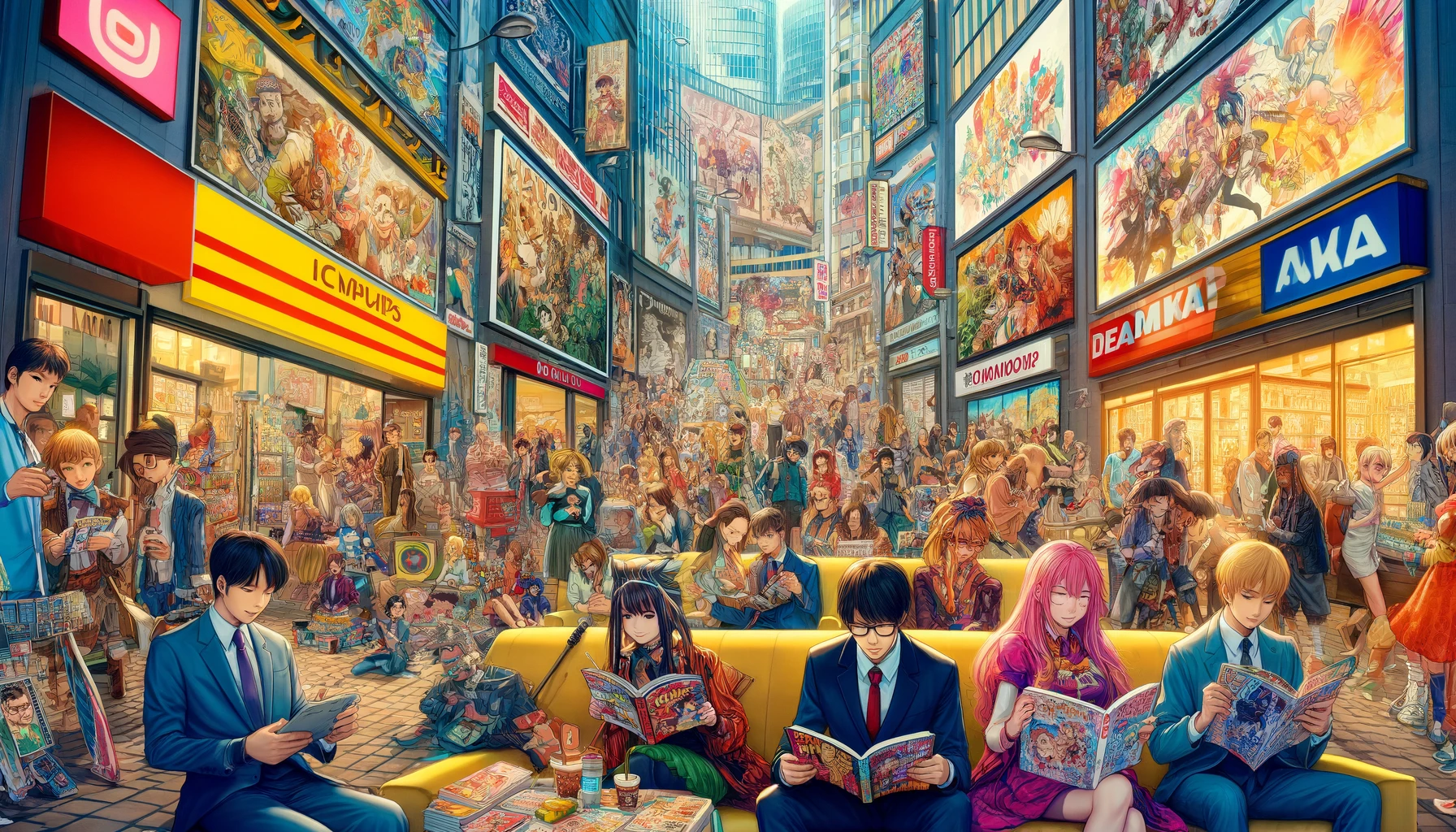
Anime stopped being a marginal pastime or youthful curiosity. Today it’s a global-scale cultural and economic ecosystem connecting creative industries, governments, brands, and millions of followers. What began as local entertainment evolved into one of the most sophisticated forms of contemporary intellectual property.
Its model fuses narrative, design, music, and technology to generate value beyond the screen. Each story is an asset that can transform into experience, product, and community. This multiplication capacity converts anime into a stable source of growth and a symbol of how culture can function as economy.
Unlike the traditional film industry, dependent on massive budgets and celebrities, anime sustains itself on expansive universes capable of renewing themselves for decades. Its strength lies in continuity, not momentary spectacle.
In a world where attention is the scarcest resource, anime has achieved something few industries manage: building intergenerational loyalty. That loyalty, converted into cultural and financial capital, is perhaps the most powerful competitive advantage in 21st-century entertainment. And while other sectors chase the next viral trend, anime demonstrates that consistency, long-term vision, and authenticity can also be strategies for exponential growth.