



Let’s be honest—when you see your child glued to a screen, controller in hand, eyes locked on the latest adventure or challenge, your first instinct probably isn’t to celebrate. Most parents worry. Are they wasting time? Will this affect their grades? Should I be limiting screen time even more?
But here’s something that might surprise you: video games aren’t the developmental villain they’ve been made out to be. In fact, recent research is painting a much more nuanced picture, one where gaming—when approached thoughtfully—can actually support your child’s motor, emotional, and intellectual growth in ways that might make you reconsider that timer you’ve set on the console.
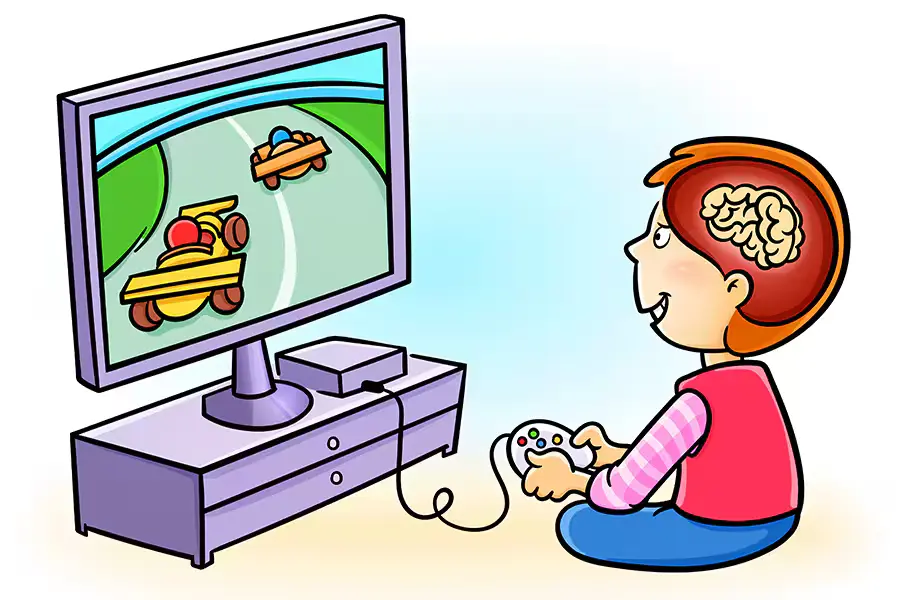
The brain-boosting power of gaming
Think about what happens when your child plays a video game. They’re not just passively watching a screen—they’re making split-second decisions, solving complex puzzles, remembering patterns, and coordinating their hands and eyes in ways that would make a concert pianist jealous.
Research from New York University found that well-designed games can support children’s senses of autonomy, competence, creativity, and identity. A study of nearly 2,000 children discovered that those who played video games for three hours or more per day actually performed better on cognitive tests involving impulse control and working memory compared to children who had never played video games.
But what does this mean in practical terms? When your child navigates a complex game world, they’re exercising their spatial reasoning—the same skill that helps with geometry and reading maps. When they’re figuring out how to defeat a challenging boss or solve an in-game puzzle, they’re developing problem-solving strategies that transfer to real-world situations. Strategy games, in particular, have been linked to improved planning skills and the ability to think several steps ahead.
Action games can sharpen visual attention and processing speed. Your child learns to track multiple objects simultaneously, make quick decisions under pressure, and adapt their strategies on the fly. These aren’t just gaming skills—they’re cognitive abilities that serve them well in everything from sports to academics.
More than just thumb exercises
When people think about video games and motor development, they often joke about “thumb muscles.” But the reality is far more interesting. Gaming requires a sophisticated level of hand-eye coordination that rivals many traditional activities.
Consider what happens during gameplay: your child sees something on screen, processes that visual information, decides on an action, and executes precise finger movements—all within milliseconds. This rapid feedback loop between visual input and motor output strengthens neural pathways in ways that can benefit other activities.
Research published in medical journals has shown that certain video games can even be used therapeutically. Children with Cerebral Palsy who participated in video game-based interventions showed motor improvements that exceeded traditional therapy methods. Virtual reality games, in particular, are being explored as tools for physical rehabilitation and motor skill development.
For typically developing children, games that require precise timing, quick reflexes, and coordinated movements can complement traditional physical activities. Rhythm games, motion-controlled games, and even standard controller-based games all contribute to fine motor skill development in different ways.

The emotional intelligence connection
Here’s where things get really interesting. Video games create a unique emotional laboratory where children can experience, process, and regulate a wide range of feelings in a safe environment.
Think about it: when your child faces a difficult level, fails repeatedly, and finally succeeds, they’re learning persistence and emotional regulation. They’re experiencing frustration, managing that frustration, and discovering that effort leads to achievement. According to UNICEF research, games can help children regulate emotions and build relationships when designed with their needs in mind.
Many modern games also feature rich narratives with complex characters facing moral dilemmas. When children engage with these stories, they’re developing empathy and perspective-taking skills. They’re learning to understand different viewpoints and consider the consequences of actions—all while thinking they’re just having fun.
Studies have found that gaming can provide stress relief by reducing activity in the amygdala, the part of the brain responsible for the fight-or-flight response. For many children, gaming offers a healthy escape valve for daily stresses, a way to decompress after a challenging day at school.
Building social bridges in digital spaces
Remember when gaming meant sitting alone in a dark room? Those days are long gone. Today’s gaming landscape is intensely social, and for many children, it’s become a primary way to connect with friends.
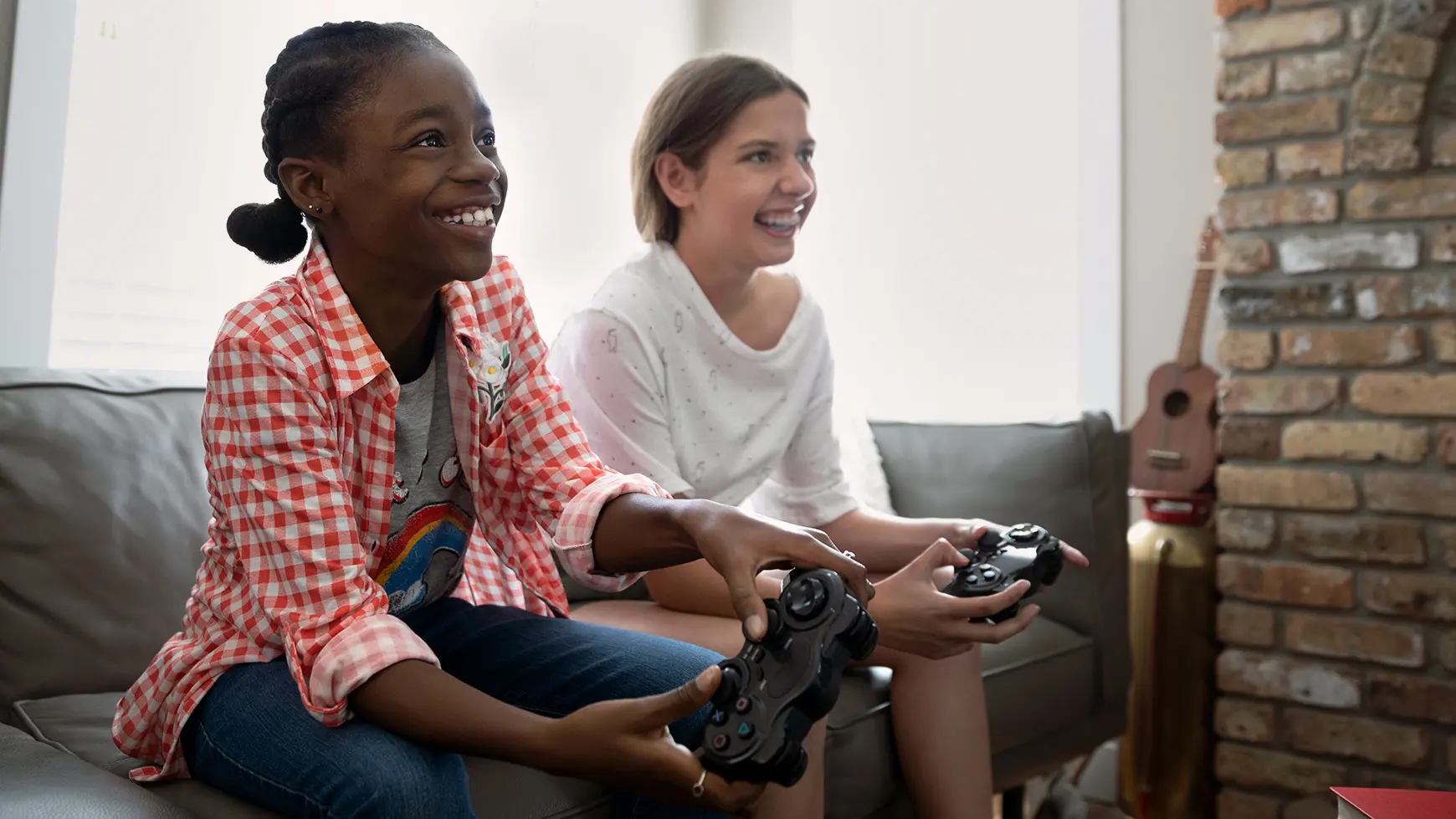
Multiplayer games require communication, teamwork, and collaboration. Your child might be coordinating strategies with teammates, negotiating roles, or working together to achieve common goals. These are the same social skills they need in group projects at school or team sports.
For shy or introverted children, gaming can be particularly valuable. Research indicates that online gaming helps children build confidence, teamwork, and communication skills that often transfer to real-life situations. The digital environment can feel less intimidating than face-to-face interactions, providing a stepping stone for developing social confidence.
Gaming communities also teach children about shared interests and belonging. When your child finds others who love the same game, they’re learning that they’re part of something larger than themselves. They’re developing their identity and finding their tribe—important developmental tasks for children and adolescents.
The intellectual workout you didn’t know about
Video games are essentially interactive problem-solving exercises. Many games require players to learn complex systems, remember detailed information, and apply knowledge in creative ways.
A comprehensive review found that educational games can improve academic skills in diverse content areas including math, science, language, and reading. But even games not explicitly designed for education can foster learning. Simulation games teach systems thinking. Role-playing games often involve reading comprehension and strategic planning. Even seemingly simple puzzle games strengthen logical reasoning and pattern recognition.
The key is that games make learning feel effortless. When children are engaged and motivated, they absorb information more effectively. They’re willing to persist through challenges because the game provides immediate feedback and rewards progress. This creates a positive association with learning and problem-solving that can benefit them academically.
Finding the balance, what parents need to know
Now, before you hand over unlimited gaming privileges, let’s talk about balance. The benefits of gaming don’t mean that more is always better. Like most things in life, moderation matters.
The American Academy of Pediatrics recommends limiting gaming to one or two hours per day, and there’s good reason for this. Excessive gaming can displace other important activities like physical exercise, face-to-face social interaction, homework, and sleep. Studies show that children who game excessively may experience increases in emotional problems and decreases in prosocial behavior.
Screen time before bed can interfere with sleep quality by suppressing melatonin production. Since sleep is crucial for memory consolidation, emotional regulation, and overall development, protecting your child’s sleep schedule is essential.
So what’s a parent to do? Here are some practical guidelines:
Choose games thoughtfully. Not all games are created equal. Look for games that encourage creativity, problem-solving, and cooperation. Games that allow children to build, create, and explore tend to offer more developmental benefits than those focused solely on repetitive actions.
Play together when possible. Gaming can be quality family time. Playing alongside your child gives you insight into what they’re experiencing and creates opportunities for conversation and connection.
Set clear boundaries. Establish rules about when and how long gaming is allowed. Make sure gaming doesn’t interfere with homework, chores, physical activity, or sleep.
Encourage variety. Gaming should be one of many activities in your child’s life, not the only one. Ensure they’re also getting physical exercise, creative play, and face-to-face social interaction.
Stay involved. Know what games your child is playing. Talk with them about their gaming experiences. Use it as a window into their interests and social world.

The bottom line
Video games aren’t the enemy of childhood development—but they’re not a magic solution either. Like any tool, their impact depends on how they’re used. When integrated thoughtfully into a balanced lifestyle, gaming can support your child’s cognitive development, enhance their motor skills, provide opportunities for emotional growth, and facilitate social connections.
The research is clear: well-designed games, played in moderation, can contribute positively to your child’s development. The key is being an informed, engaged parent who helps your child navigate the gaming landscape wisely.
So the next time you see your child immersed in a game, take a moment to look closer. They might be building a virtual world, but they’re also building real skills—problem-solving, perseverance, creativity, and collaboration. And that’s something worth celebrating, controller and all.