



If you thought the ASUS and AMD X3D CPU drama was finally calming down, think again. The saga just got a new chapter, and this time it’s dragging the brand-new Ryzen 7 9850X3D into it.
A Reddit user going by u/UniversewillDecide recently shared their painful story: they bought a Ryzen 7 9800X3D and paired it with an X870P WiFi motherboard.
Everything ran fine for about a week, until it didn’t. System freezes, random crashes, and an increasing refusal to boot started showing up out of nowhere. They ran every test they could think of, including OCCT memory tests, which came back clean.
But the WHEA errors kept piling up, and those are never a good sign, they typically point to hardware instability tied to voltage, the memory controller, or the CPU itself.
From bad to worse: Same problem, brand new chip
After returning the 9800X3D through Amazon, the user decided to go with the newer Ryzen 7 9850X3D, AMD’s freshly launched, slightly faster sibling. You’d think a different chip would fix things, right? Nope.
A few weeks later, the exact same nightmare started all over again. The 9850X3D began showing the same instability patterns, with boot failures happening even more frequently than before.
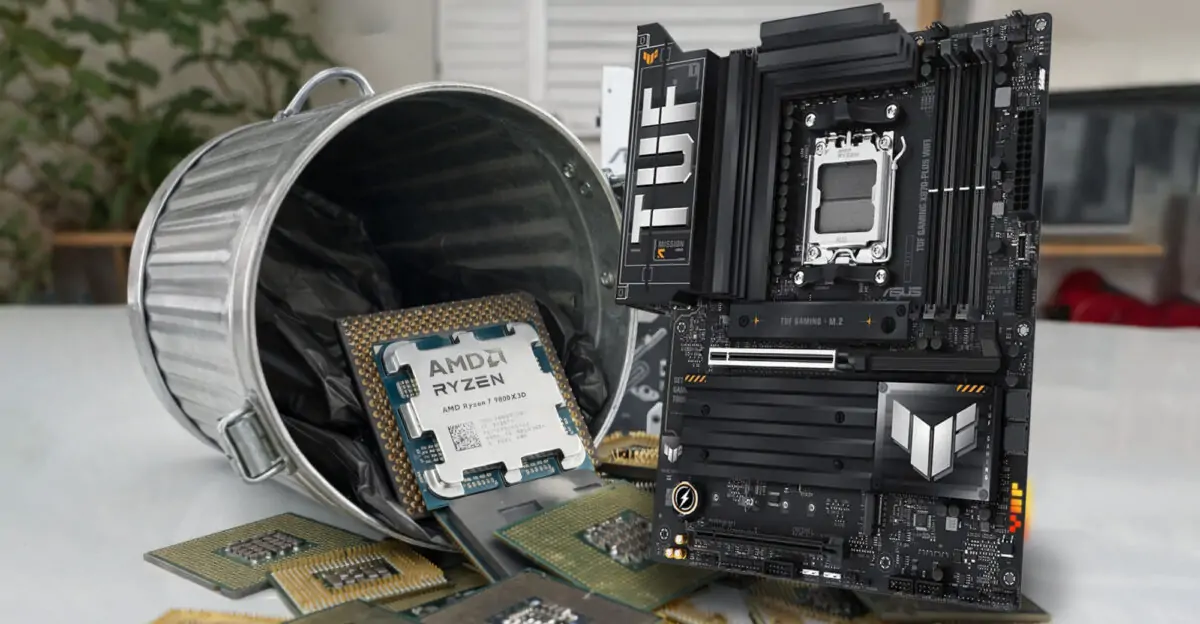
The user suspects the ASUS TUF X870P WiFi BIOS was applying incorrect voltage settings, essentially pushing too much juice through the CPU without any overclocking involved. He’s already ordered an MSI motherboard to move on. Interestingly, there are no visible signs of physical damage on either CPU, which makes this a particularly tricky situation to diagnose.
ASUS is aware, but the problem keeps growing
This isn’t exactly breaking news for ASUS. Back on January 23, 2026, the company publicly acknowledged reports of Ryzen 9800X3D failures on its 800-series motherboards and launched an internal review alongside AMD.
Their official advice? Update your BIOS immediately using ASUS EZ Flash or BIOS Flashback. They also encouraged affected users to reach out to customer service directly.
Reports of failures go all the way back to the Ryzen 7000 X3D era, with some cases showing visible scorching on the processor or even damage inside the AM5 socket. This latest 9850X3D case marks a worrying escalation, as it suggests the issue isn’t exclusive to the 9800X3D, it may affect the entire X3D lineup when paired with certain ASUS boards.
ASRock has also been hit hard by these reports, though unlike ASUS, they released firmware updates that reportedly brought some CPUs that had trouble booting back to life, though that won’t help chips that are already completely gone.
For now, if you’re running an AMD X3D processor on an ASUS 800-series motherboard, do yourself a favor: check for the latest BIOS update before your rig decides to take a permanent vacation.
What do you think about all this ASUS and AMD X3D drama? Are you worried about your own build, or do you think it’s being blown out of proportion? Drop your thoughts below, we want to hear from you!