



Developer MAGES. has issued a complete ban on streaming, live commentary, and uploading any gameplay footage of Steins;Gate RE:BOOT, the upcoming remake of the beloved 2009 visual novel. The announcement came through the game’s official Japanese website and leaves zero room for interpretation: no one, under any circumstance, is getting permission to broadcast this game publicly.
The statement from MAGES. is direct: “Regarding streaming and gameplay commentary for Steins;Gate Re:Boot, due to the nature of this product, our company does not grant permission for any such activity whatsoever.”
Console sharing features are technically allowed, but strictly for private, personal use only. The moment content reaches an unspecified number of viewers, whether through a livestream or an uploaded video, it crosses into prohibited territory. No exceptions, no workarounds, no gray areas.
For fans already planning to tune in to their favorite streamer’s playthrough on launch day, August 20, 2026, that’s simply not going to happen. And for those who think they can quietly upload a clip and get away with it, MAGES. and Kadokawa have already proven they are more than willing to go after people who try.
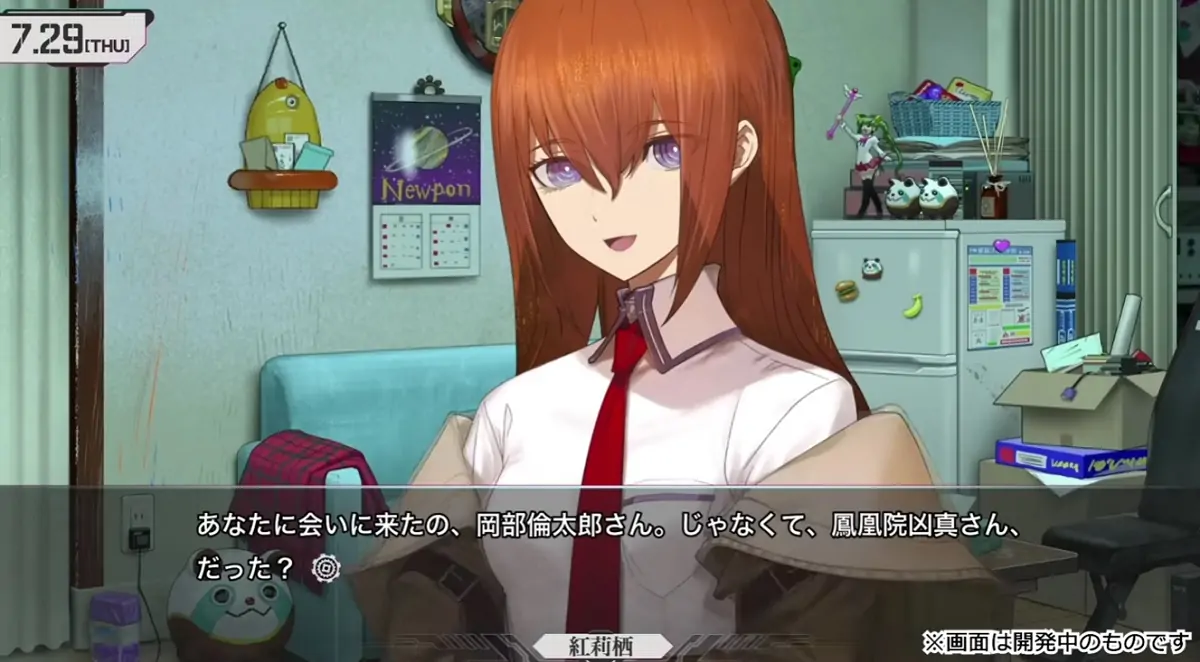
This is not new, and MAGES. has proven they mean business
Longtime fans of the franchise won’t be surprised by this decision. Previous Steins;Gate releases have carried similar restrictions, and rights holder Kadokawa has a well-documented track record of enforcing them aggressively. The clearest, and most extreme, example happened in 2023, when a 53-year-old Japanese web creator named Shinobu Yoshida uploaded an hour-long playthrough of Steins;Gate: My Darling’s Embrace to YouTube, including its endings, which were explicitly banned from public sharing under the game’s guidelines.
Yoshida had been uploading content from Steins;Gate and other properties since 2019, earning ad revenue along the way. The video accumulated over 800 million views before Kadokawa noticed and alerted the authorities. He was arrested by the Miyagi Prefectural Police in May 2023, making it the first arrest ever made in Japan for uploading video game gameplay footage.
By September of that year, a Sendai court found him guilty of copyright infringement and sentenced him to two years in prison, suspended for five years, along with a fine of 1 million yen, roughly $6,400 USD. Yoshida himself admitted he knew the uploads were illegal when he made them.
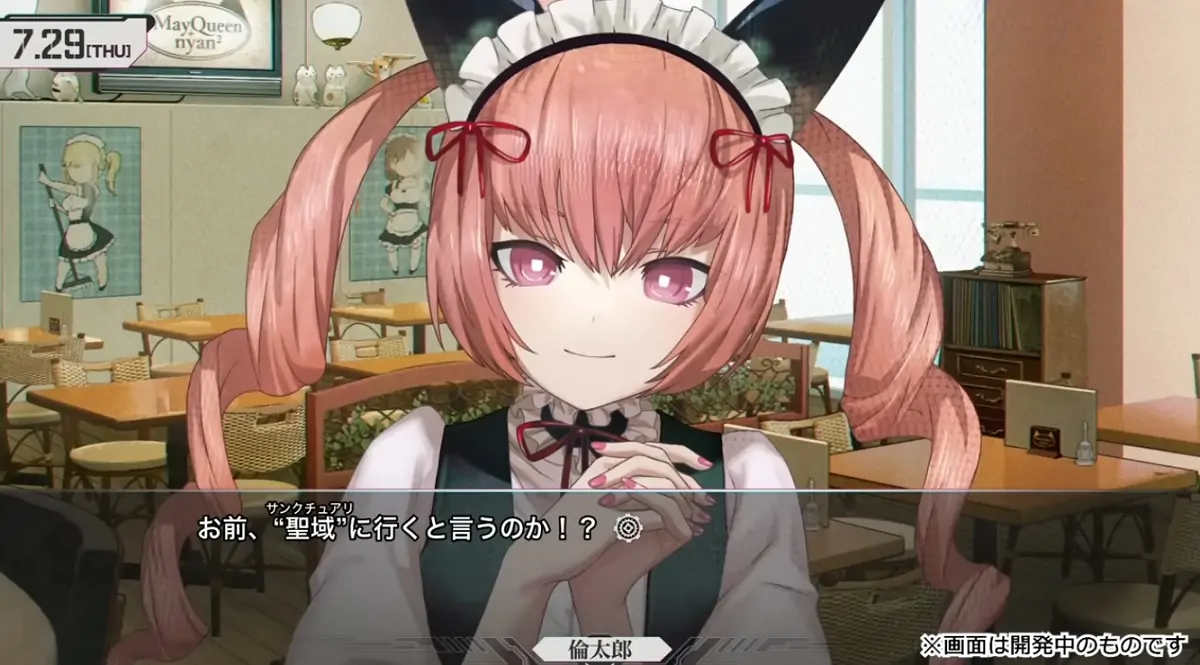
That case set a precedent that hangs over RE:BOOT’s launch. MAGES. isn’t warning players out of formality, they have demonstrated, in court, that they will pursue legal action against people who ignore these rules. The message going into August 20 is about as clear as it gets.
The reasoning behind the ban also ties directly to the nature of visual novels as a format. Unlike an action game or an open-world RPG, where the experience of actually holding the controller is a huge part of the appeal, a visual novel lives almost entirely in its story. Watching a full playthrough online is a near-complete substitute for buying and playing the game yourself. For a narrative-driven title, that’s an existential threat to sales, and MAGES. knows it.
A remake worth protecting, new ending, new art, new everything
Steins;Gate RE:BOOT isn’t just a graphical polish job. It’s a full remake of the original 2009 visual novel, rebuilt from the ground up. Character artwork has been completely redrawn by original designer huke, the voice acting has been fully re-recorded, and the game introduces dynamic E-mote character animations for the first time in the series.
Background graphics have been recreated using period reference materials to portray Akihabara as it looked in 2010, with new locations like Manseibashi Bridge and the coin laundromat next to the lab added to expand the world players already know.
Most significantly, RE:BOOT includes a brand-new ending, and that detail is what makes the streaming ban feel especially justified this time around. The original Steins;Gate story has been out for over fifteen years. The 2011 anime adaptation, which follows the same narrative, holds a 100% score on Rotten Tomatoes.
A large portion of the people picking up RE:BOOT will already know exactly how the story goes. The new ending is one of the biggest reasons to come back to it, and if it gets spoiled on Twitch or YouTube before players even get their hands on the game, that reason evaporates entirely.
RE:BOOT releases in Japan on August 20, 2026 for PlayStation 4, PlayStation 5, Xbox Series X|S, Nintendo Switch, Nintendo Switch 2, and PC via Steam. A Western release is also planned for 2026, though no specific date has been announced.
The fandom is split, and the debate is worth having
Not everyone in the community sees the ban as a good thing, and the conversation around it is legitimate. There’s a clear divide between fans who support the decision as a way to protect the experience, especially given how much Steins;Gate depends on its plot twists hitting without warning, and those who are genuinely worried about what it means for the game’s visibility.
Streaming and content creation are among the most powerful organic marketing tools available to any game in 2026. When a title gets locked out of Twitch and YouTube before launch, it loses a massive discovery pipeline.
New players who might have stumbled across Steins;Gate through a clip, a highlight, or a recommendation algorithm simply won’t get that introduction. For a remake that wants to bring the franchise to a new generation alongside longtime fans, that’s not a small trade-off.
It’s the same argument the community had with previous entries in the series, just with more at stake now that streaming culture is bigger than ever. Whether MAGES.’s decision is the right call to preserve the experience or a miscalculation that limits the game’s reach is something the fandom will keep debating long after August 20 comes and goes. Either way, one thing is certain, they will enforce it. They already have. El Psy Kongroo.
Do you think the streaming ban is the right call to protect the story, or does it hurt the game’s chances of reaching new players? Drop your take in the comments!