



Update April 29, 2026
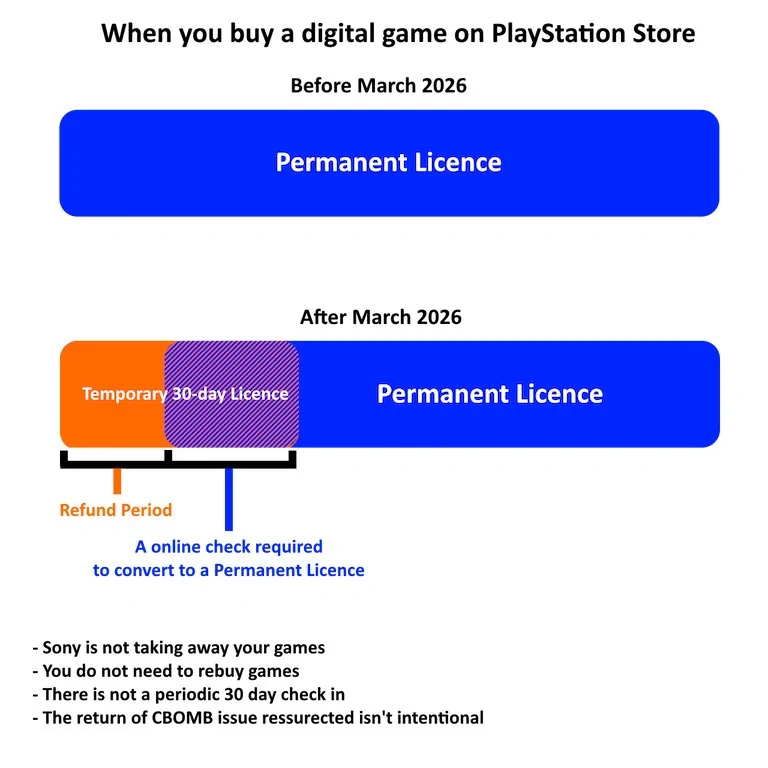
Sony released an official statement regarding this issue:
“Players can continue to access and play their purchased games as usual. A one-time online check is required to confirm the game’s license, after which no further check-ins are required.”
According to ResetEra, Sony introduced this to address an exploit where users could extract a permanent license from a purchased game on vulnerable consoles, then refund it and keep playing for free.
Original Article:
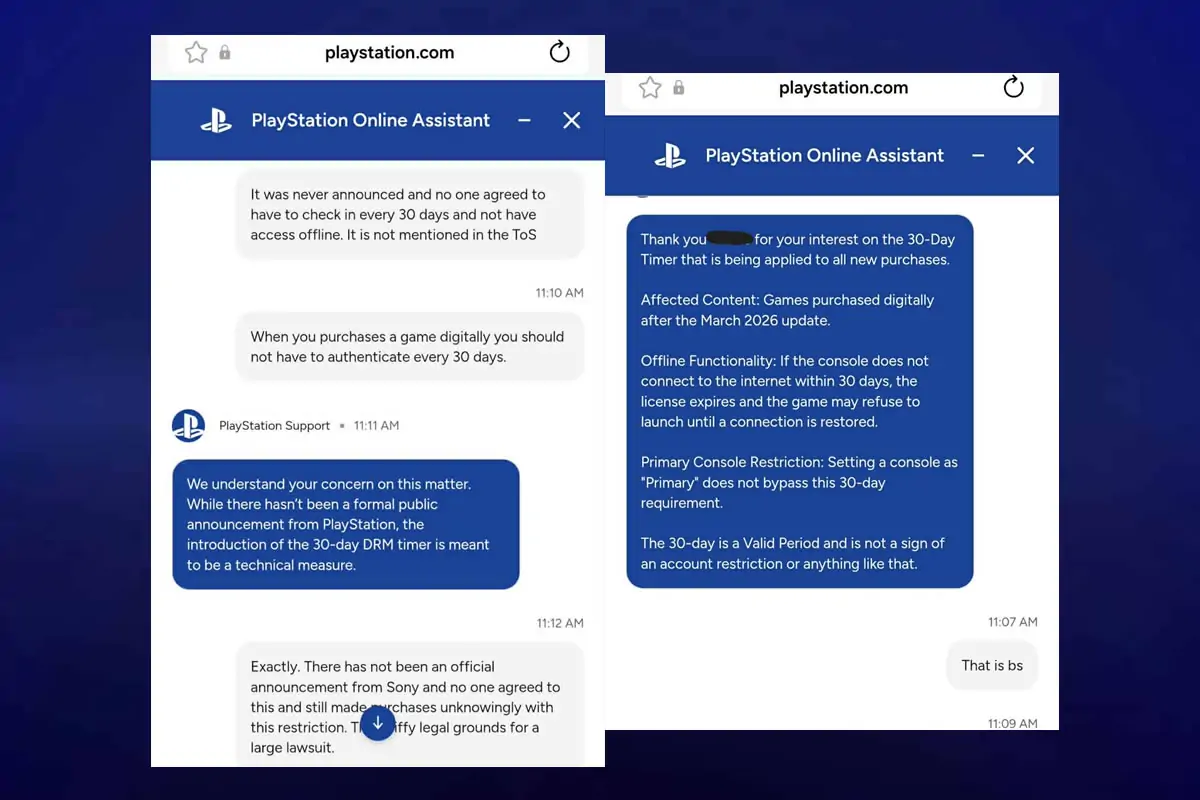
It was a rumor for a few days, something the community hoped would turn out to be a glitch, a firmware mistake, something that would quietly disappear with a patch and zero acknowledgment from Sony. That’s not what happened. PlayStation Support has now confirmed directly to a user, through an official conversation on playstation.com, that the 30-day DRM timer applied to all new digital purchases is real, intentional, and already running on your console right now.
The conversation was shared publicly on X by user @xMBGx, and it originated with @SoulxBanish, who decided to skip the speculation and go straight to Sony for answers. What came back from PlayStation Support wasn’t a denial or a vague non-answer. It was a clean, point-by-point explanation of how the new system works, written in the calm tone of something that was never supposed to be a controversy.
According to PlayStation Support, all digital games purchased after the March 2026 system update are affected. If your console doesn’t connect to the internet within 30 days, the license expires and the game may refuse to launch until you restore a connection. Support also made clear that the 30-day window is what they’re calling a “Valid Period,” and that it’s not a sign of any account restriction, it’s just how things work now.
No press release. No blog post. No notification in the app. Sony quietly changed the rules in March 2026 and let players find out on their own.
Setting your console as primary won’t save you
For years, the Primary Console feature was the safety net that made buying digital games feel secure. Set your PS4 or PS5 as your Primary console and you could play your entire digital library offline, without signing in, without verifying anything. It was the one argument that consistently held up in the digital versus physical debate, your games were yours, connection or not.
That’s over now, at least for anything purchased after March 2026. PlayStation Support confirmed it explicitly: setting a console as Primary does not bypass the 30-day requirement. It doesn’t matter how long you’ve owned the console, or whether it’s the only PlayStation in your home. Every new game needs that monthly check-in, no exceptions.
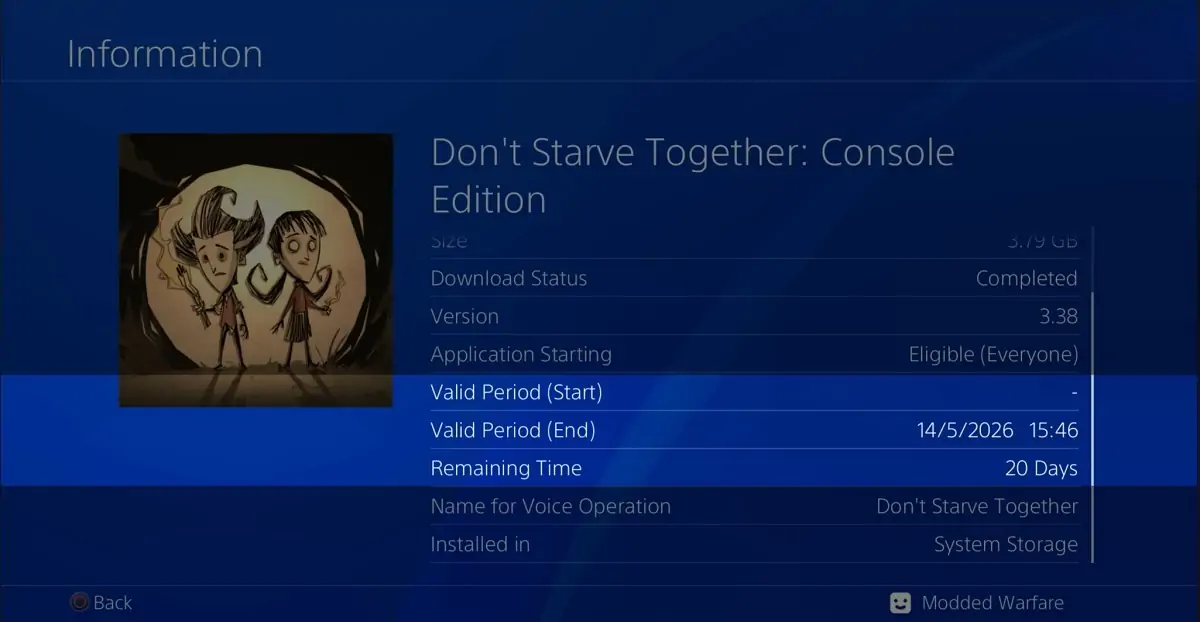
Community testers have also confirmed something that makes the situation even worse. If your console’s CMOS battery dies, the small battery that keeps your system clock running when the console is unplugged, any digital game with the timer becomes completely unplayable, even on a Primary console. That’s a real problem for people with older hardware, and an even bigger one for anyone thinking about their game library five or ten years down the line.
Players are furious, and they have every right to be
The user who contacted PlayStation Support didn’t hold back in their response. They pointed out that this was never announced publicly, that nobody agreed to authenticate their purchases every 30 days, and that it isn’t mentioned anywhere in Sony’s Terms of Service. PlayStation Support acknowledged all of it: “While there hasn’t been a formal public announcement from PlayStation, the introduction of the 30-day DRM timer is meant to be a technical measure.”
The customer’s reply was blunt, no formal announcement means people made purchases without knowing about this restriction, and that, in their words, puts Sony on “iffy legal grounds for a large lawsuit.”
Across social media the reaction has been just as sharp. One user on X put it plainly: “This should be illegal. The minute they decide that the net interface for these consoles is no longer worth funding, your games are useless. Why would anyone care about the morality of piracy when media companies constantly try to take away ownership of the stuff you purchase?”
The comparisons to Microsoft’s disastrous Xbox One reveal in 2013, when the console required a 24-hour online check-in to play any game, including physical discs, have been everywhere. That policy was so universally hated that Microsoft reversed it before the console even launched. Sony just did something remarkably similar, for an existing platform, without saying a word about it.
The timing doesn’t help either. Sony recently faced backlash over testing dynamic pricing on the PlayStation Store, and this lands right on top of that unresolved frustration. Players are increasingly feeling like the rules of digital ownership are being rewritten around them without their consent, and they’re not wrong.
Sony’s own fine print has long stated that digital games are licensed, not sold, and that offline functionality can be changed at their discretion. Most players never read that clause. Now they don’t have to. They’re living it, one 30-day countdown at a time.
Sony has not issued any formal public statement on the matter. The only official word so far came through a support chat on playstation.com, which says everything about how Sony has handled this from the start.
What do you think about Sony’s 30-day DRM timer? Is this a dealbreaker for you or are you okay with it? Let us know in the comments!