



On March 22, 1996, Capcom released a survival horror game for PlayStation called Resident Evil. Producer Tokuro Fujiwara expected it to sell around 200,000 copies. Thirty years later, the franchise has moved more than 180 million units worldwide, spawned nine mainline games, six live-action films, multiple animated movies, two Netflix adaptations, and a world concert tour. Today, on its actual 30th anniversary, Capcom’s flagship horror series is in better commercial shape than at any point in its history.
Resident Evil Requiem, the ninth mainline entry released on February 27, sold five million copies in just five days, making it the fastest-selling game in franchise history. It currently sits as the best-selling game of 2026 in the United States, ahead of NBA 2K26, Call of Duty: Black Ops 7, and Madden NFL 26. Executive Producer Jun Takeuchi confirmed on March 22 that Requiem has now surpassed six million players worldwide. Three decades in, and Capcom is still setting records.
From the Spencer mansion to Raccoon City: How survival horror was born
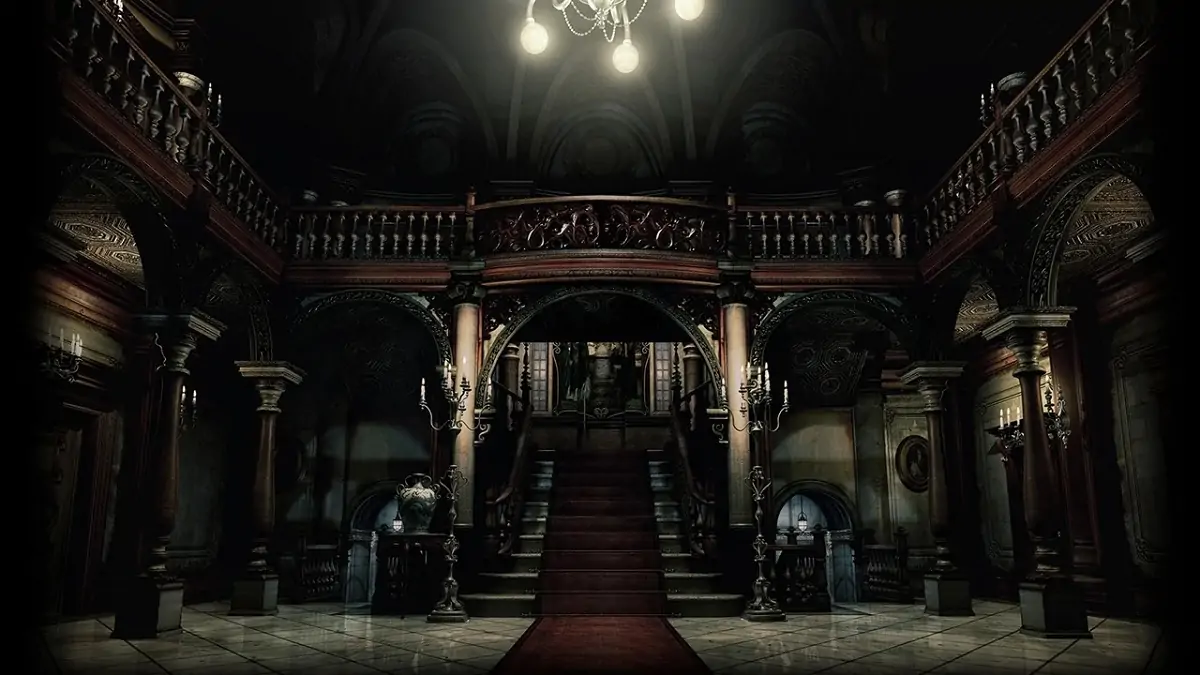
The original Resident Evil was directed by Shinji Mikami, who had originally conceived the game as a haunted house filled with ghosts. Due to his own fear of ghosts, he changed the enemies to zombies. The game went through several redesigns, first as a Super NES title in 1993, then as a fully 3D first-person PlayStation game in 1994, before arriving at the fixed-camera, third-person format that defined the final product.
Several of the Spencer Mansion’s pre-rendered backdrops were inspired by The Overlook Hotel from Stanley Kubrick’s 1980 film The Shining. The iconic fixed camera angles were actually a technical compromise: the team could not render full 3D environments on PlayStation hardware, so pre-rendered backgrounds were used instead. The blind spots in those camera angles were intentional, designed to increase tension.
Players chose between two characters: Chris Redfield, a S.T.A.R.S. operative with more firepower but a smaller inventory, or Jill Valentine, who carried a lock pick and had the support of Barry Burton. The moment the first zombie turned its head in that dining hall, survival horror had a name, and a genre was born.
Resident Evil 2 followed in 1998, moving the action from a mansion to Raccoon City mid-outbreak. It introduced Leon S. Kennedy, a rookie cop on his first day of work, and Claire Redfield, Chris’s younger sister searching for her brother. The game’s two interconnected campaigns, the Licker crawling across the ceiling in that hallway cutscene, and the introduction of the hulking pursuer Mr. X became series staples.
Resident Evil 3: Nemesis arrived in 1999 and introduced one of gaming’s most iconic antagonists: Nemesis, a bio-organic weapon sent specifically to hunt down surviving S.T.A.R.S. members. His first appearance, emerging to kill Brad Vickers right in front of Jill Valentine outside the Raccoon City Police Department, set the tone immediately. His gravelly growl of “S.T.A.R.S…” became one of gaming’s most recognizable sounds.
Resident Evil 4 in 2005 changed the series completely. Leon, now a government agent, traveled to rural Spain to rescue the President’s kidnapped daughter. The fixed cameras were gone. The zombies were replaced by Ganados, humans infected by a parasite called Las Plagas. The game introduced the over-the-shoulder third-person camera that has since become standard across the entire action-adventure genre.
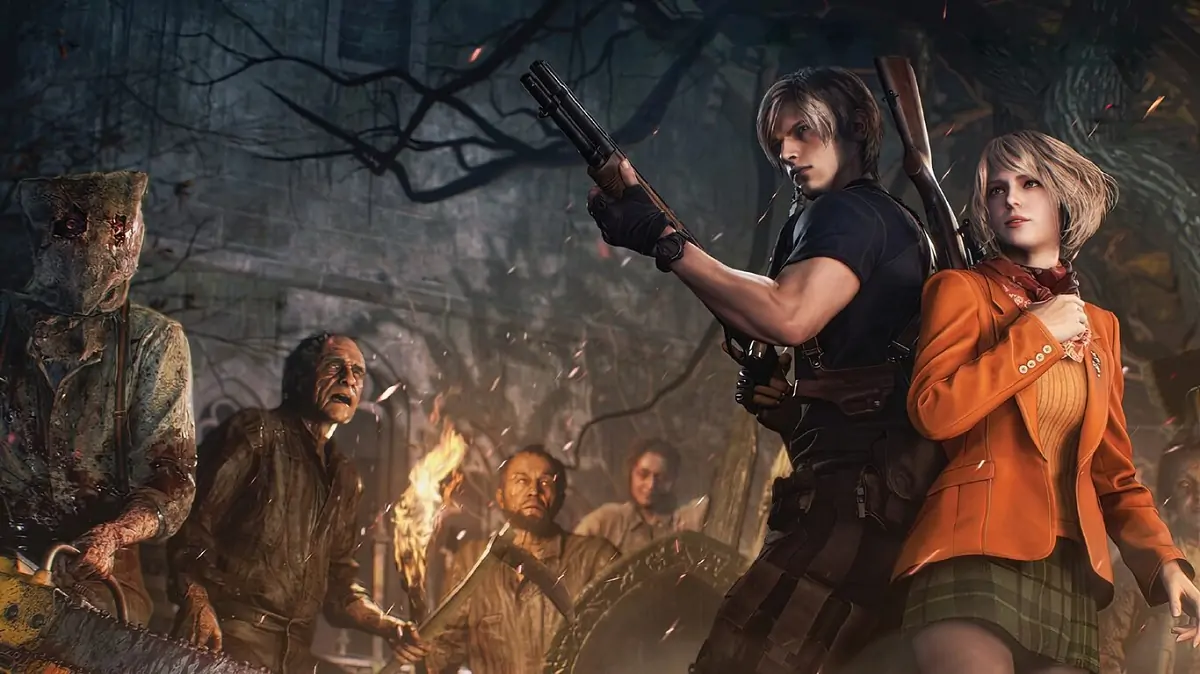
The village fight in the opening chapter, surrounded by torch-wielding villagers, a chainsaw-wielding maniac closing in, no way out, remains one of the most celebrated sequences in gaming history. A church bell rings, the villagers disperse, and you exhale for the first time in ten minutes.
Resident Evil 5 and 6 pushed the series deeper into action territory. RE5, set in Africa with mandatory co-op, stripped away most of the horror. RE6 went further, with four interconnected campaigns and a scope so bloated that critics and fans alike pushed back hard. By 2013, producer Masachika Kawata acknowledged publicly that the franchise needed to recommit to horror.
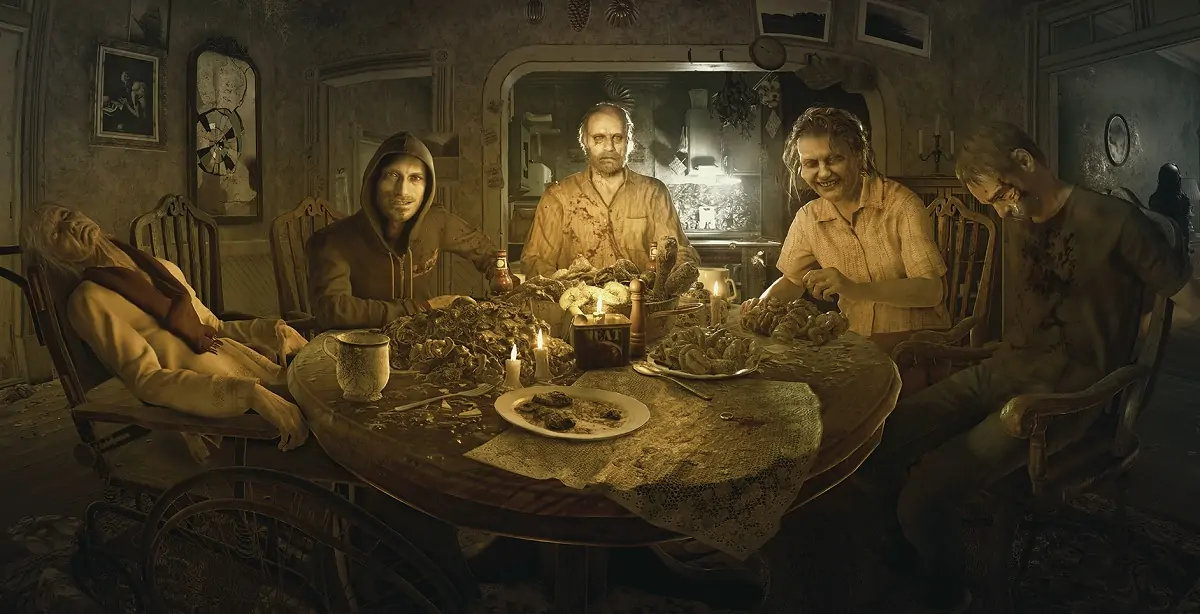
The course correction came in 2017 with Resident Evil 7: Biohazard, a first-person, deeply claustrophobic game set in a decaying Louisiana plantation. The Baker family replaced Umbrella as the immediate threat. Their introduction, Ethan Winters waking up strapped to a chair at the dinner table, surrounded by a cannibalistic family inspired directly by the 1974 film The Texas Chain Saw Massacre, is one of the most disturbing opening sequences the series has ever produced. The horror was back.
Resident Evil Village in 2021 balanced that horror with the action pacing of RE4, introduced Lady Dimitrescu, and became a cultural phenomenon. The remake era then delivered two of the franchise’s best-reviewed games: the Resident Evil 2 remake in 2019, which has now sold over 16 million copies worldwide and features Mr. X as one of gaming’s most terrifying pursuers, and the Resident Evil 4 remake in 2023, which sold four million units in its first two weeks and holds a Metacritic score of 94.
Thirty years of content also means thirty years of experiments. Beyond the mainline games, Capcom has used the franchise to try things it couldn’t do in a numbered entry, online co-op with civilian survivors in Resident Evil Outbreak (2003), on-rails shooters recapping series history with The Umbrella Chronicles (2007) and The Darkside Chronicles (2009), and more grounded survival horror in Resident Evil Revelations (2012) and its 2015 sequel, which starred Jill Valentine and Claire Redfield respectively and did a solid job of filling in the gaps between mainline entries.
Not everything worked, Resident Evil: Operation Raccoon City (2012) and Umbrella Corps (2016) were poorly received, but that willingness to experiment across genres and platforms is a big part of how the franchise has stayed visible for three decades straight.
Leon, Jill, Chris, and Wesker: The characters that built a franchise
Few gaming franchises have produced a cast as enduring as Resident Evil’s. Leon S. Kennedy debuted as a naive rookie cop in RE2 and grew into one of gaming’s most recognizable action heroes, carrying the series through RE4, Resident Evil 6, and now Requiem. Jill Valentine, one of the original S.T.A.R.S. members from the 1996 game, remains one of gaming’s most iconic characters.

Chris Redfield has appeared in more mainline entries than any other character, evolving from a straightforward protagonist into a morally complex figure whose decisions the series continues to interrogate. All three are widely recognized as video game icons.
Albert Wesker is the franchise’s greatest villain. He appeared as the trustworthy captain of S.T.A.R.S. Alpha Team in the original game and was revealed to be an Umbrella agent who had been manipulating events from the start. His obsession with human evolution, his physical enhancements, and his absolute certainty in his own superiority made him a compelling antagonist across multiple entries. His final confrontation with Chris and Sheva Alomar in Resident Evil 5, culminating at an active volcano in West Africa where he was ultimately destroyed by rockets and fell into the lava, remains one of the series’ most over-the-top and memorable endings.
The glue beneath all of it is Umbrella Corporation, a pharmaceutical company concealing biological weapons development behind corporate legitimacy. Resource management has always been at the core of what makes Resident Evil work: ammo is scarce, healing items are never where you need them, and puzzles block your progress at the worst possible moments. That combination of exploration, problem-solving, and survival pressure is what defined the franchise in 1996, and it is what every great entry has returned to ever since.
From Hollywood to Raccoon City: The franchise beyond the games
The live-action film series, while divisive, became a commercial juggernaut on its own terms. Paul W.S. Anderson directed and wrote the first entry in 2002, which starred Milla Jovovich as Alice, an original character created for the films, and was made on a $33 million budget that returned over $102 million at the box office. Anderson continued as writer and producer through Resident Evil: Apocalypse (2004) and Resident Evil: Extinction (2007), returning as director for Afterlife (2010), Retribution (2012), and The Final Chapter (2016).

Despite consistent critical resistance, the six-film series grossed over $1.3 billion worldwide and became the most commercially successful video game film franchise of all time. A more game-faithful reboot arrived in 2021 with Resident Evil: Welcome to Raccoon City, directed by Johannes Roberts. The canonical CGI animated films, Resident Evil: Degeneration, Damnation, and Vendetta, follow game characters like Leon, Claire, and Chris in stories set between the mainline entries. Netflix has also entered the picture twice, with the animated series Infinite Darkness and a separate live-action production.
On the gaming side, the pipeline looks strong. According to reliable industry insider Dusk Golem, Capcom is expected to announce a remake of Resident Evil Code: Veronica in 2026, with a release reportedly targeting the first half of 2027. Code: Veronica, originally released for the Dreamcast in 2000 and starring Claire Redfield searching for her brother Chris on a remote island, has been one of the most requested remakes in the community for years.
Dusk Golem has also reported that the remake will be “heavily remixed”, every enemy, location, and event from the original will be present and expanded, with nothing cut. Given the widespread criticism the RE3 remake received for removing major areas like the Clock Tower, Capcom appears to have adjusted its approach. The same insider has also claimed that full production on a remake of the original Resident Evil has gotten underway, though it is described as years away from release.
As part of the 30th anniversary, Capcom has announced a collaboration with Universal Studios Japan tied to Requiem, a new RE2-based arcade experience from Bandai Namco featuring air jets and floor vibration technology, and a world concert tour called Symphony of Legacy. A 30th anniversary exhibition has also opened at the CAPCOM CONNECT SPACE venue in Osaka, Japan, featuring a full history of the series including a large mural of past logos and artwork.
Resident Evil’s influence on modern horror gaming is well documented, Dead Space, Amnesia, The Evil Within, and Outlast all owe something to what Capcom built in 1996. The series is credited with defining the survival horror genre and with sparking a revival of the zombie genre in popular culture that shaped film and television throughout the 2000s. Thirty years later, with six million players already in Requiem, a Code Veronica remake apparently on the way, and a potential remake of the original Spencer Mansion somewhere down the pipeline, the franchise shows no signs of slowing down.
Thirty years. And Capcom is still making people afraid to open doors.
Which Resident Evil game is your all-time favorite, and what are you most hyped for next? Tell us in the comments!