



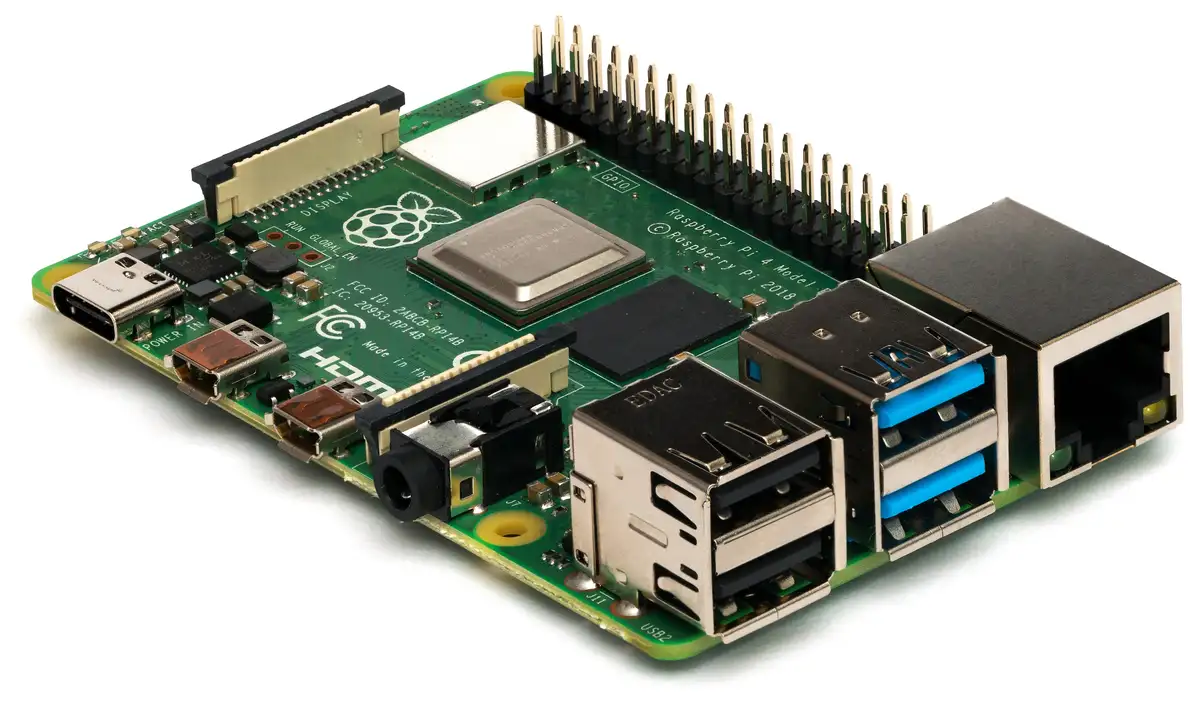
Raspberry Pi announced on April 1, yes, April Fools’ Day, though CEO Eben Upton was quick to clarify this is completely real, a new 3GB Raspberry Pi 4 model priced at $83.75, alongside a fresh wave of price increases across a significant portion of their product lineup. The reason behind both moves is the same: the LPDDR4 DRAM used in the Raspberry Pi 4 and 5 has increased in price seven-fold over the last year, according to the official Raspberry Pi blog.
And the broader memory market isn’t in much better shape, with DRAM prices surging 171% year-over-year and DDR5 spot prices quadrupling since September 2025. The culprit, in large part, is the global AI boom.
The new 3GB variant is Raspberry Pi’s direct response to the situation. Rather than simply passing costs along, the company has been doing engineering work to expand the range of memory-density options available, so buyers can choose exactly the tier they need without paying for more than their project requires. The board is available now through Raspberry Pi Approved Resellers worldwide.
A wide range of products takes a price hit
The price increases affect Raspberry Pi 4 and 5 variants with 4GB or more of memory, the Raspberry Pi 500 and 500+, all variants of Compute Module 4, Compute Module 4S, and Compute Module 5, the Development Kit for Compute Module 5, and the Raspberry Pi AI HAT+ 2. The 4GB versions of the Pi 4 and Pi 5 go up $25, the 8GB variants increase by $50, and the Raspberry Pi 5 16GB model jumps $100.
The Raspberry Pi 500+ takes the biggest hit, with both the standalone unit and the kit going up $150, a figure that prompted at least one reader to note in the official comments section that, by their own calculation, the board now costs them nearly £200 more than what they paid when it launched last year.
Not everything is going up, though. Raspberry Pi has held the price of the Raspberry Pi 400 with 4GB of memory at $60, and the 1GB and 2GB variants of the Pi 4 and Pi 5 remain between $35 and $65. Classic products, the Zero, Zero W, Zero 2 W, and the Raspberry Pi 1, 3, 3B+, and 3A+ lines, are not expected to see any increases either, as they run on older LPDDR2 DRAM, of which Raspberry Pi currently holds substantial inventory.
Why RAM prices are hitting everyone right now
The memory crisis affecting Raspberry Pi is part of a much larger global situation. AI is the primary driver. Training large language models and running inference at scale demands enormous amounts of fast memory, and the GPUs powering those workloads rely heavily on High Bandwidth Memory, a form of DRAM stacked vertically and optimized for extreme throughput. Every wafer going into HBM production is one fewer wafer available for standard DDR5, LPDDR5X, or GDDR6.
Chip manufacturers have followed the demand and the margins, shifting production accordingly and squeezing the supply of older memory types in the process.
At the same time, DDR4 and LPDDR4X are being phased out across the industry. According to multiple industry reports, Samsung halted production of certain DDR4 chips in 2025, with Micron and SK Hynix reportedly following similar paths. The combination of manufacturers walking away from legacy memory and AI absorbing a growing share of what remains has created a severe supply crunch for products that depend on LPDDR4, exactly the memory standard inside a Raspberry Pi 4.
AI is reported to consume as much as 20% of total DRAM production in 2026, and that figure is expected to grow. For context on how fast prices have moved: a 32GB DDR4 kit that sold for between $60 and $90 in October 2025 was already fetching between $150 and $180 by January 2026.
Raspberry Pi has been transparent that this situation is temporary. The company has committed to reversing all price increases once memory costs come down, and in the meantime, their advice to buyers is straightforward: right-size your build. If a 1GB or 2GB model covers what your project actually needs, go with that. The lower-memory variants of the Pi 4 and Pi 5, as well as the Pi 400 and the classic Zero line, remain at accessible price points.
Analysts at Counterpoint Research have noted that the memory market impact is expected to continue through the second half of 2027, so the situation is unlikely to resolve quickly, but Raspberry Pi’s commitment to affordable computing, and their track record of keeping older products in production and supported, gives the community something to hold onto while the market works itself out.
What do you think about these price increases, are they manageable for your projects, or is this starting to price you out? Let us know in the comments!