



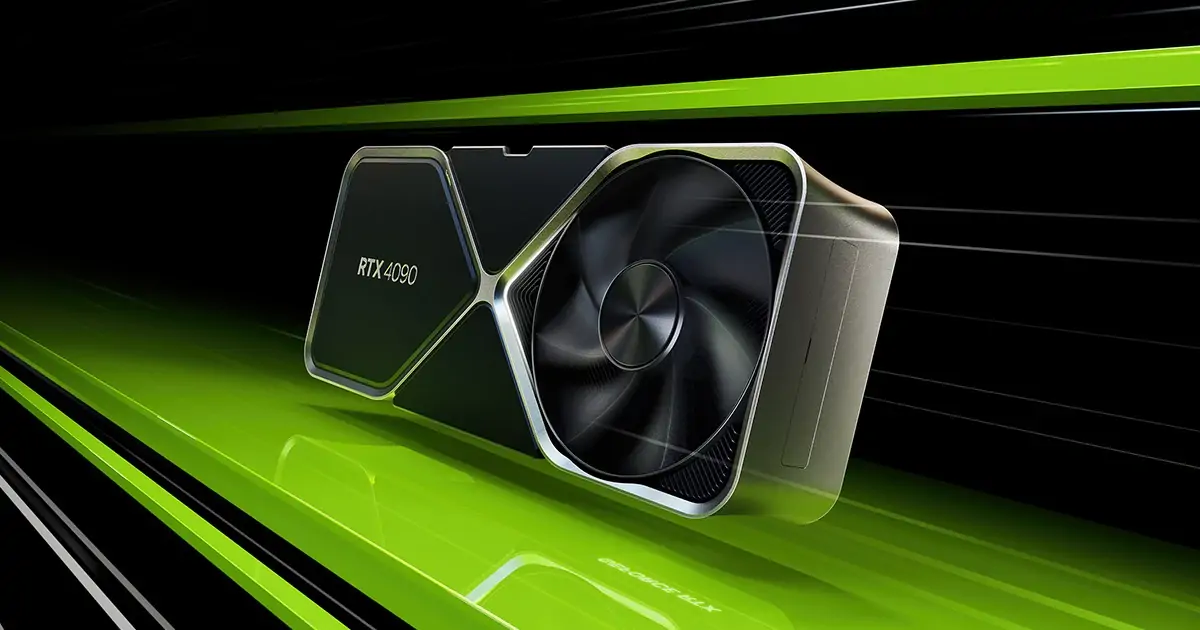
Power consumption in computing has reached levels that would have been unthinkable a decade ago. The NVIDIA GeForce RTX 4090, the current consumer flagship GPU, carries an official Total Board Power of 450 watts. In 2014, the top consumer GPU at the time, the GTX 980, ran at just 165 watts. That is nearly three times the power draw for a card serving the same market, a decade later.
At the data center level, the numbers are far larger. The NVIDIA H100 SXM5, the most widely deployed AI training accelerator in the world, is officially rated at up to 700 watts per chip. Next-generation accelerators on NVIDIA’s roadmap are expected to reach 1,000 to 1,200 watts per unit. According to the International Energy Agency, global electricity consumption by data centers reached approximately 415 terawatt-hours in 2024, representing roughly 1.5% of total global electricity use. In the United States alone, data centers consumed about 183 TWh that year, more than 4% of the country’s total national electricity consumption, comparable to the annual energy demand of all of Pakistan.
Three factors driving the surge in energy demand
The first driver is artificial intelligence. The explosion in demand for large language models, image generators, and real-time inference has created an appetite for compute that grows faster than the hardware industry can efficiently supply. AI systems operate continuously, process enormous volumes of data, and require specialized accelerators that consume far more power per server rack than traditional infrastructure. This is not a temporary spike, it is structural demand baked into how AI services are deployed at scale.
The second factor is the slowdown of Moore’s Law. The principle that transistor counts would double approximately every two years, and bring efficiency gains along with them, no longer delivers what it once did. Since around 2018, the number of transistors on a chip has continued to grow, but computations per watt have not kept pace. Engineers can no longer count on transistor scaling alone to make hardware more efficient. More performance now requires more power, not less.
The third factor is the sheer scale of data center construction. The IEA projects that data center electricity consumption will grow at approximately 15% per year through 2030, more than four times faster than the growth of all other sectors combined. Microsoft’s total investment in Wisconsin data centers alone has surpassed $7 billion across two AI campuses: the first, costing $3.3 billion, is set to come online in early 2026 housing hundreds of thousands of NVIDIA GB200 GPUs, with a second $4 billion facility following in subsequent years. Major cloud companies are expected to collectively spend over $600 billion on capital expenditures in 2026, with approximately $450 billion directed specifically at AI infrastructure.
What the industry is doing to respond
Chip companies are investing heavily in specialized silicon. Rather than relying on general-purpose processors running AI workloads at reduced efficiency, companies including Google, AMD, and NVIDIA are developing accelerators purpose-built for specific AI tasks. The goal is higher output per watt, not higher output alone.
Cooling is emerging as one of the most critical engineering challenges in this transition. Traditional air cooling becomes ineffective once chip thermal design power pushes past approximately 280 watts. Liquid-based cooling systems, including direct-to-chip cold plates and full immersion setups where servers are submerged in non-conductive fluid, are now standard in new AI data center builds. By 2024, liquid-based cooling had already captured 46% of the entire data center cooling market, according to Mordor Intelligence. Microsoft has cited immersion cooling as a key component of its data center strategy going forward.
On the hardware design side, techniques such as 3D chip stacking, chiplet architectures, and advanced packaging are giving engineers new ways to increase performance without proportionally increasing power draw. Moore’s Law today is increasingly measured in terms of performance per watt rather than raw transistor count, and that shift is now driving product roadmaps across the entire semiconductor industry.
What this means for PC builders and everyday users
The power trend is already visible to anyone who has built a high-end PC in recent years. NVIDIA recommends a minimum 850-watt power supply for the RTX 4090, and systems with overclocked CPUs are advised to use units rated at 1,200 watts or more. A few years ago, a 650-watt PSU covered most high-end builds comfortably. That is no longer the case.
Thermal management has also become a more serious consideration at the consumer level. Cards drawing 400-plus watts generate heat that requires proper case airflow to manage. CPU liquid cooling, once an enthusiast option, is now common in any system paired with a top-tier GPU. For users running rendering workloads, local AI models, or extended creative sessions, the impact on electricity bills is increasingly measurable.
Efficiency, not raw power, will define what comes next
The trajectory is clear: more AI demand, more data center construction, more watts consumed at every level of the stack. The IEA projects global data center electricity consumption will double to approximately 945 terawatt-hours by 2030. At that scale, the companies that win the next decade of computing may not be those with the most powerful chips, but those that can deliver the same results while consuming the least energy. Efficiency is no longer a secondary concern, it is becoming the central engineering challenge of the industry.
Now we want to hear from you, do you think the industry will actually solve the power problem, or are we just delaying the inevitable? Drop your take in the comments. And if you’ve had to upgrade your PSU in the last couple of years just to keep up with a new GPU, tell us about it below.