



NVIDIA has been at the center of one of the most complicated geopolitical disputes in recent tech history, and things are not getting simpler. The American chip giant finds itself squeezed between a US government that keeps rewriting the rules and a Chinese market that is quickly learning to live without it. Sell the H200 and risk the wrath of Congress and national security critics. Don’t sell it and hand the entire Chinese AI infrastructure market to Huawei. There is no easy way out.
How NVIDIA went from $5.5 billion in losses to a 25% government surcharge
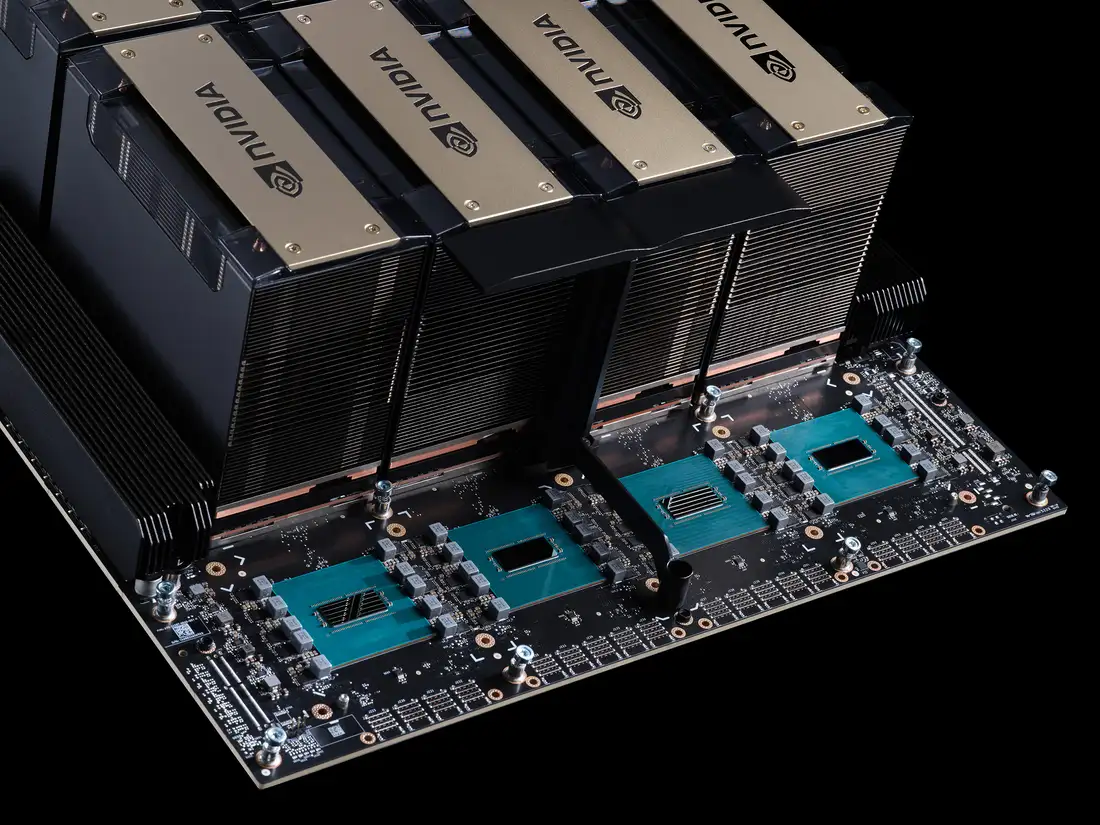
When the Biden administration began restricting chip exports to China in 2022, NVIDIA responded by engineering a chip specifically designed to comply with those limits. The result was the H20, a deliberately downgraded GPU that kept the company in the Chinese market without crossing regulatory lines. It was not a perfect solution, the H200 is roughly 13 times more powerful in FP16 performance than the H20, but it kept Chinese customers at the table.
That window closed in April 2025 when the Trump administration banned even the H20, requiring a special export license to sell it in China. NVIDIA disclosed a $5.5 billion charge covering inventory, purchase commitments, and reserves tied to that chip. Its stock dropped more than 6% in after-hours trading. The company had spent years engineering a compliant product, and the rules changed overnight.
By August 2025, the situation shifted again. The US government reached a deal with NVIDIA and AMD allowing both companies to resume H20 sales to China, this time with a condition: 15 percent of China sales revenue would go directly to the US Department of Commerce in exchange for export licenses. It was a strange new arrangement, effectively turning chip sales to a geopolitical rival into a revenue-sharing program with the federal government.
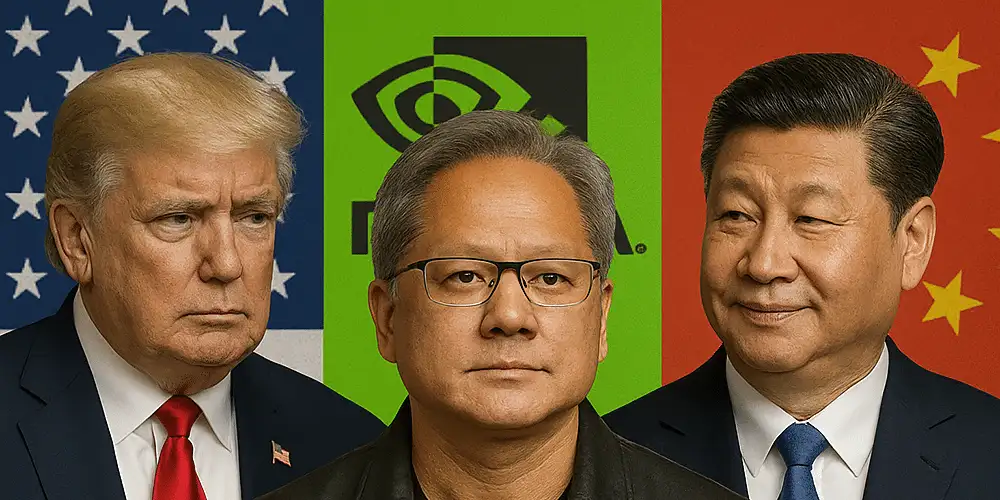
Then in December 2025 came the biggest reversal yet. President Trump announced via Truth Social that NVIDIA would be allowed to ship its H200 chips to approved customers in China, with the US government taking a 25 percent cut from each sale.
Trump noted that Chinese President Xi Jinping had responded positively to the proposal, and that AMD and Intel would be eligible for the same arrangement. NVIDIA applauded the decision publicly, calling the deal “a thoughtful balance that is great for America.” The H200, part of NVIDIA’s Hopper generation and a full generation behind the current Blackwell lineup, was considered advanced enough to be valuable but old enough to avoid handing over America’s most cutting-edge AI technology.
China read the strategy immediately and pushed back
The logic behind offering the H200 specifically made sense from Washington’s perspective. The chip is powerful, but it is already one generation behind Blackwell and two behind the upcoming Rubin series. The idea was to undercut Huawei’s growing domestic chip business by offering Chinese companies something significantly better than what local manufacturers could produce, while still holding back NVIDIA’s best hardware.
China figured out the play almost immediately. White House AI adviser David Sacks was direct about what happened: “They are rejecting our chips. It seems they do not want them, and I think the reason is that they want semiconductor independence.”
Sacks went further, explaining the original calculation behind the offer: “What you see is China’s not taking them because they want to prop up and subsidize Huawei. That was part of our calculation, selling not the best, but lagging chips to China, to take market share away from Huawei. But I think the Chinese government has figured that out, and that’s why they’re not allowing them.”
Beijing is backing that position with serious resources. China is weighing an incentive package of up to $70 billion to strengthen its domestic chip industry and reduce reliance on foreign suppliers. Huawei’s Ascend 910C currently trails the H200 in performance, but analysts estimate Huawei will not produce a chip that can match the H200 until the end of 2027. That gap is real, but Beijing appears willing to accept a temporary performance disadvantage in exchange for long-term independence.
The picture is not entirely one-sided, however. Following NVIDIA CEO Jensen Huang’s first visit to China in 2026, Beijing approved the sale of 400,000 H200 chips to China’s top AI firms, suggesting that some Chinese companies are hungry enough for better compute power to work around the government’s tough public stance. Analysts described it as a twin-track strategy: let top AI firms access better hardware to stay globally competitive while continuing to build up domestic chip production for everything else.
Congress is sounding the alarm while NVIDIA bleeds revenue
Back home, the H200 deal has not gone over well with everyone. Democratic representatives Gregory Meeks and Senator Elizabeth Warren demanded answers from the Commerce Department, calling the approval “a deeply concerning pattern that undercuts our nation’s security.” Their concern is grounded in something concrete: research shows China’s military is actively seeking NVIDIA chips to power AI-enabled military systems, and the line between commercial and military use in China is not always clear.
Those concerns were reinforced in December 2025 when the Department of Justice announced it had dismantled a sophisticated smuggling network that had moved at least $160 million worth of restricted NVIDIA AI chips out of the United States. The operation, called Operation Gatekeeper, involved straw purchasers, domestic warehouses, and deliberate rebranding to make the chips untraceable. If people are willing to risk federal prosecution to get these chips into China, the demand is clearly real.
NVIDIA’s counter-argument is equally straightforward. The company has stated publicly that three years of export restrictions have boosted foreign competitors and cost US taxpayers billions of dollars. Jensen Huang has estimated the Chinese data center market at up to $50 billion, and Bloomberg Intelligence analysts projected annual H200 revenue in China at around $10 billion if Chinese firms accept the chips. Those are not numbers a company walks away from quietly.
The deeper problem is that every available option carries serious risk. Sell aggressively and critics argue you are handing an adversary the tools to close the AI gap faster. Restrict sales and Huawei keeps growing, domestic Chinese alternatives keep improving, and NVIDIA loses relevance in the world’s largest single chip market. As one Chinese analyst put it plainly, NVIDIA has already missed its best window. China is no longer a market that cannot live without it, and that shift changes everything about the negotiation.
What’s your take, should the US let NVIDIA sell the H200 freely in China, or is the security risk just too high? Tell us what you think in the comments!