



Starting today, Monolith Soft is releasing a three-day interview series with the development team behind their work on The Legend of Zelda franchise. Day one covers Character Art and Modeling, and it’s exactly the kind of behind-the-scenes content Zelda fans have been waiting for, direct, detailed, and full of moments that make you look at Tears of the Kingdom completely differently.
For those who don’t know, Monolith Soft has been a key Nintendo collaborator for years, contributing to world design, art, and development on the Zelda series in ways that don’t always make headlines. This interview series is one of the rare times the studio lets the people actually doing the work speak for themselves, and what they have to say is well worth your time.
Three members of the modeling team are featured. H.O. led the team and personally handled multiple NPCs throughout the game. E.S. was in charge of enemies and creatures, overseeing fellow modelers in that area and building several enemy models himself, including bosses. A.O. handled weapons and materials while also building and maintaining the internal tools the entire modeling team depended on during production. All three worked directly on Tears of the Kingdom, and together they give one of the most honest, detailed looks at game development you’ll find from a project of this size.
They were there from day one, and it showed
The first thing that stands out is how early Monolith Soft got involved. This wasn’t a situation where Nintendo handed over a design document and said “build this.” H.O. explains that the team joined right at the start of development, during a phase where the game’s world and direction were still completely open. There was a shared internal space where anyone could post ideas, sketches, and concepts freely, no pressure, no defined direction yet. Each team member was drawing based on keywords and themes passed along by Nintendo’s art director, imagining what kind of world might be worth building.
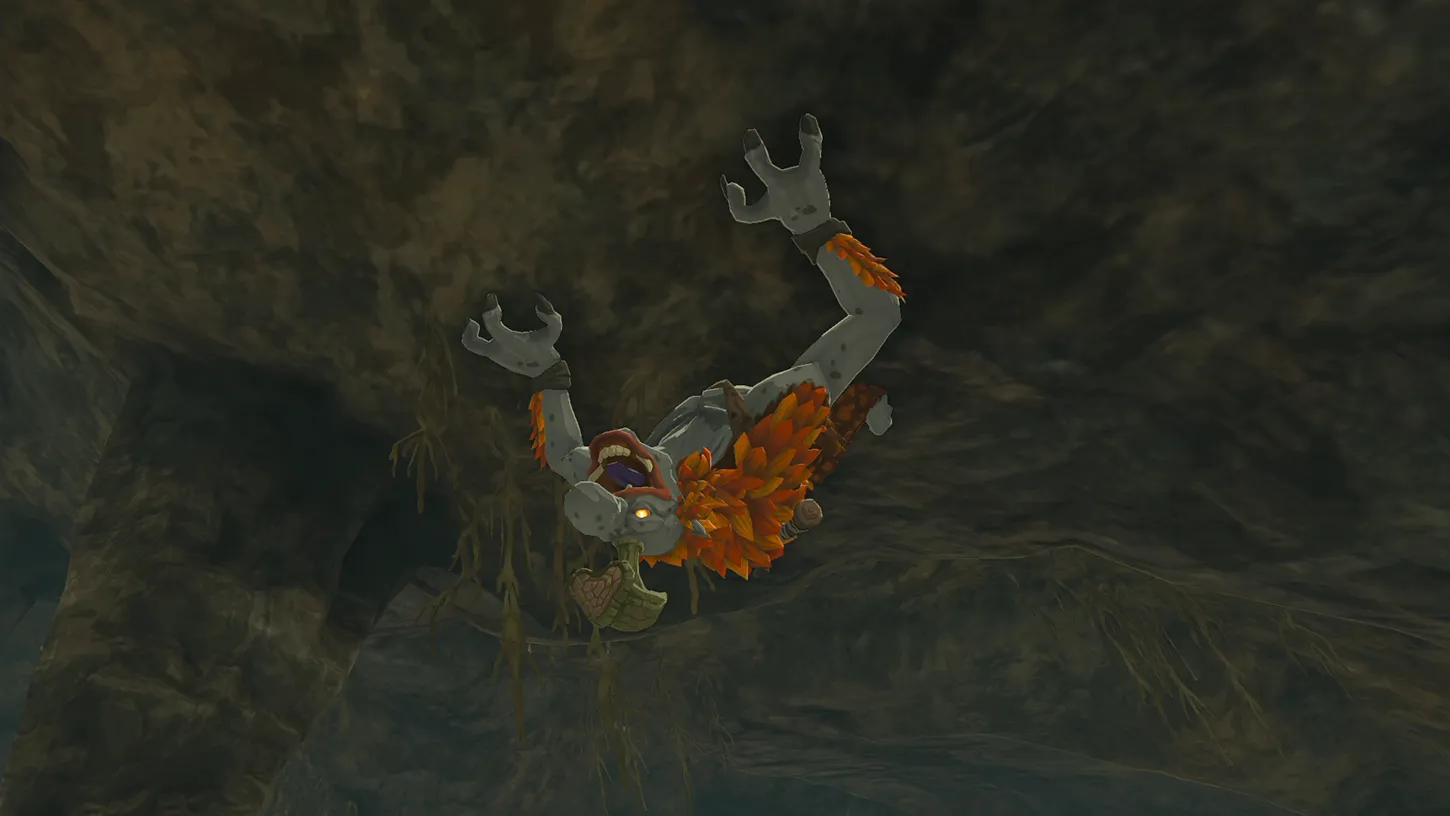
That freedom produced real results. E.S. shares that some of those early sketches made it all the way into the finished game. The best example is the Horriblin, that creepy, ceiling-clinging cave enemy that catches you off guard in underground areas. Just two weeks into the project, a designer took the keyword “cave” and ran with it. What came out of that session eventually became the Horriblin.
It didn’t get adopted right away, at that point, the cave gameplay mechanics hadn’t been defined yet, so there was nothing to attach the design to. But when those systems were eventually built out, the design fit so naturally that it got officially adopted. An idea from week two of production survived all the way to launch. That’s not nothing.
H.O. adds that throughout this early phase, Nintendo’s design leadership was giving regular feedback on the team’s concepts, not just approving or rejecting things, but having ongoing conversations that helped Monolith Soft gradually understand the visual language Tears of the Kingdom was going for. By the time formal production ramped up, the team already had a strong, intuitive feel for the game’s direction because they had been part of building it from the ground up.
While everyone else was sketching and sculpting, A.O. was dealing with something completely different. As the person responsible for building the tools the entire modeling team would use throughout production, he spent a big chunk of that early period wrestling with Python rather than drawing anything. And here’s the detail that really says something about the studio: Python wasn’t a skill A.O. had when he joined Monolith Soft. He learned it there, with time specifically set aside for that and support from the studio’s technical artists. For someone whose work would end up underpinning the productivity of the whole team, that’s a significant bet to make on a new hire, and it clearly paid off.
Getting Ganondorf right was an obsession that lasted until the very end
Of everything the team worked on, H.O. calls out Ganondorf as one of the most demanding challenges of the entire project. Not because of technical complexity alone, but because of what the character needed to communicate. In Tears of the Kingdom, Ganondorf isn’t simply a big scary villain. He has a quality that’s much harder to pin down, a dark charisma, a sinister elegance that makes him feel genuinely compelling even in moments where he’s barely doing anything. Getting that to read through a 3D model is a very different problem from just making a character look strong or threatening.
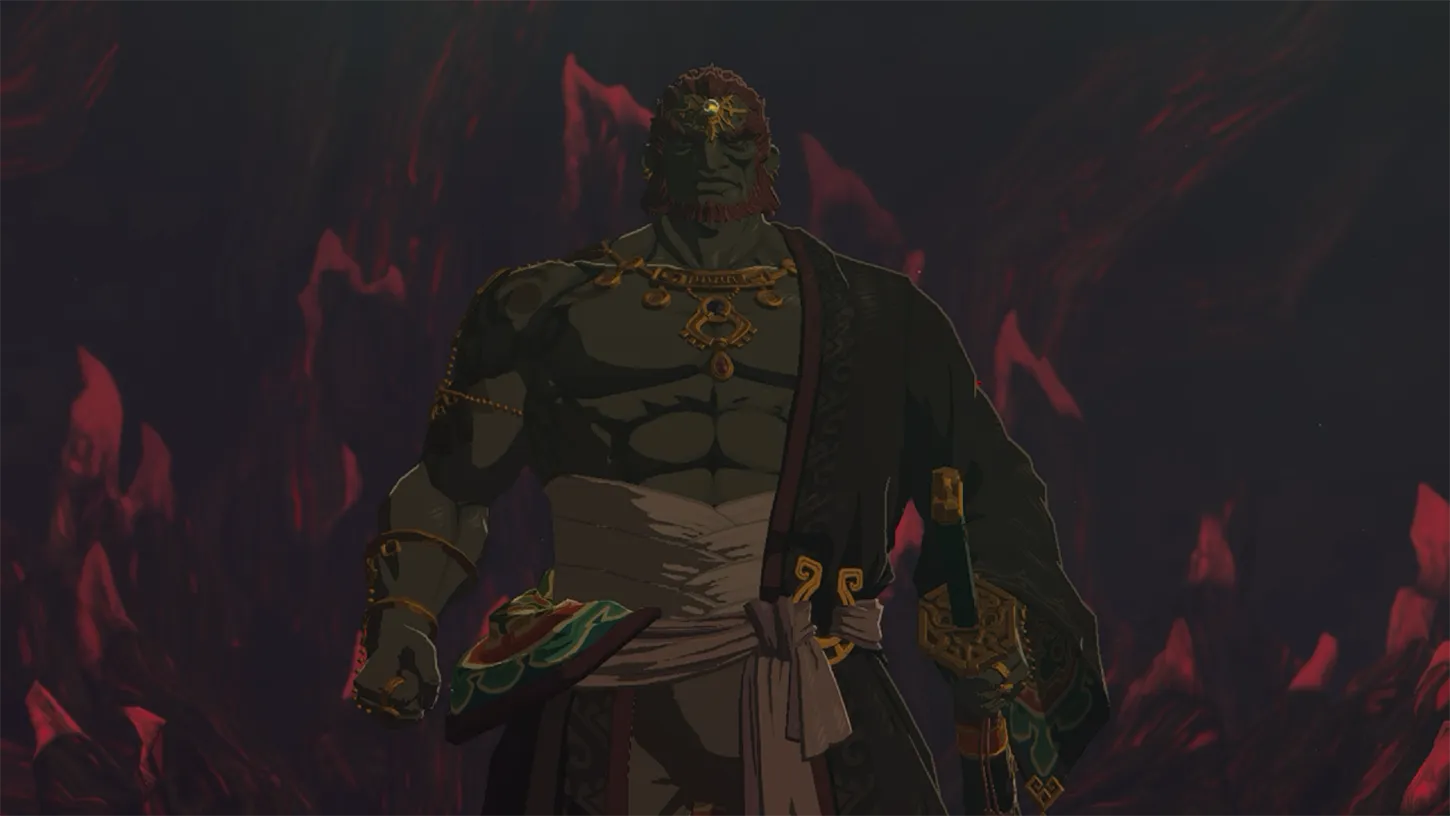
H.O. and the team spent significant time in conversation with Nintendo about how to actually achieve that. They talked about the specific way his muscles should be shaped, not just massive, but defined in a way that suggests controlled, deliberate power rather than raw bulk. They talked about his face and, critically, about how shadows fall across it. Those shadows aren’t accidental, they’re engineered to create a sense of mystery and underlying menace that holds up whether you’re seeing him in a cutscene or catching a glimpse from across the room. H.O. says the muscle structure and facial shading were things the team was still refining in the final stages of production. Not because they were behind, but because they cared enough to keep pushing until it was exactly right. A villain this central to everything the game is doing deserved that level of attention, and the team clearly understood that.
120,000 combinations and the invisible art of visual communication
The creative side of this work is fascinating, but the systems side is where things get genuinely staggering. And running underneath all of it is a question the team kept coming back to throughout production: does what we built on screen actually tell the player what they need to know, clearly and instantly, in the middle of a game where decisions happen in seconds?
That question drove a lot of the enemy work in ways most players never think about. E.S. explains it through the Soldier Construct, a golem-type enemy that shares a broadly similar silhouette with friendly golems also in the game. That similarity created an immediate practical problem: players need to know at a glance which one is going to attack them. The team’s answer wasn’t just “make it look scarier.”
They gave the Soldier Construct specific, deliberate visual signals, large unsettling eyes, prominent horns, and visible teeth, and every one of those elements had a job to do beyond aesthetics. The eyes communicate where the enemy’s attention is directed. The horns tell you what materials you’ll get after defeating it, which feeds directly into the crafting systems. The teeth needed enough visual presence to reinforce the creature’s aggression without pulling focus away from the information the player actually needed to read quickly.
Nailing that balance isn’t something you can do from a design document. E.S. describes the team repeatedly playing through the game, watching how the Soldier Construct read at different distances and in different combat situations, adjusting until the visual hierarchy stayed clear even when the action was chaotic. There’s one specific detail he highlights: when combat starts, the enemy’s mouth opens to drive home its threatening nature.
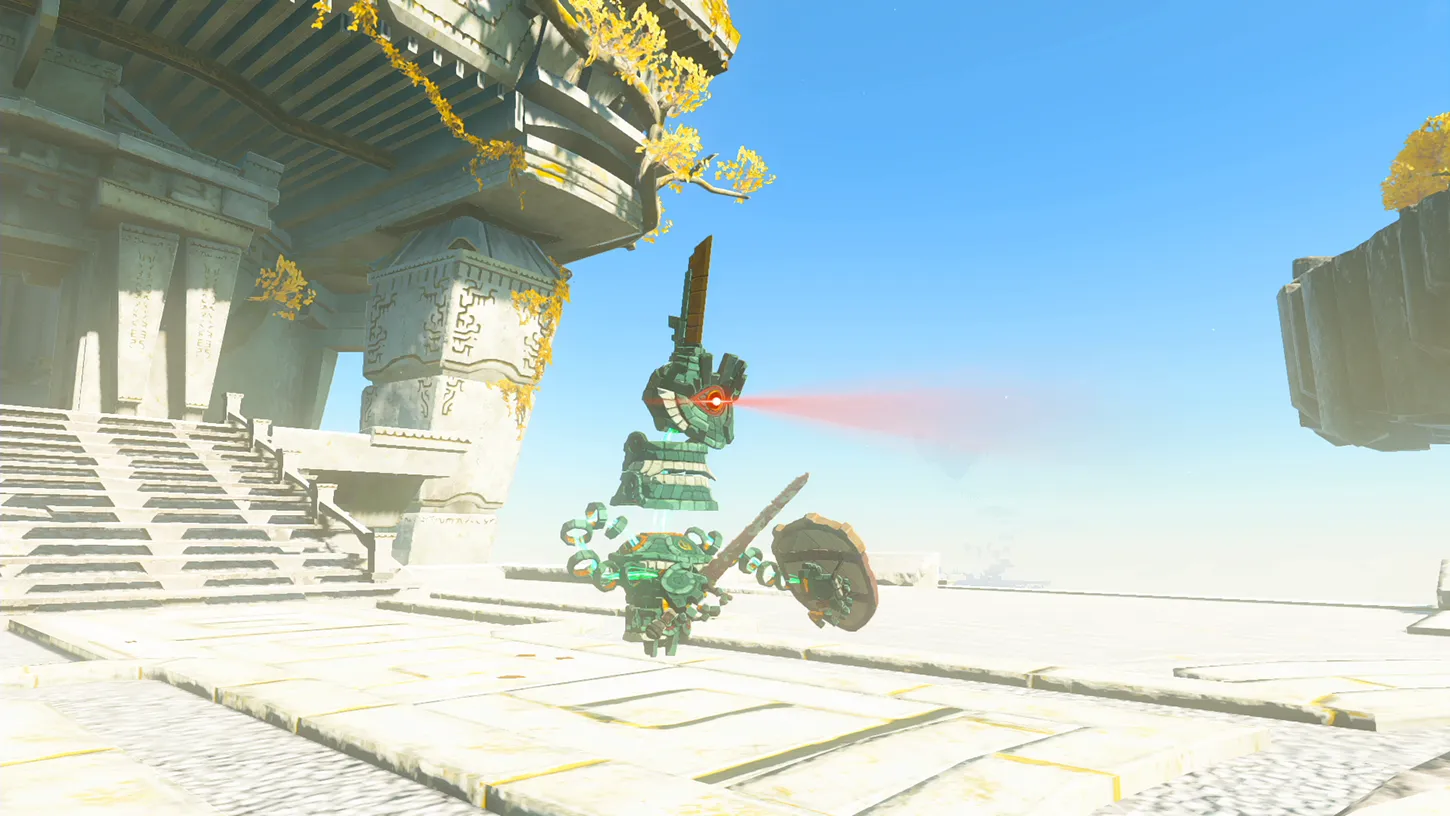
That moment needed to land with impact without disrupting the visual clarity the player was relying on. Getting that precise calibration right took iteration, real playtesting, and a willingness to keep adjusting long after the model might have been considered done by a less demanding standard.
Then there’s A.O.’s challenge, which operates on a scale that takes a second to process. Tears of the Kingdom introduced Fuse, the mechanic that lets players combine weapons with materials to create hybrid versions. It’s one of the most inventive systems in the game and one of the most demanding to execute. There are 120,000 possible weapon-and-material combinations in Tears of the Kingdom. Every single one had to work visually, without producing anything broken, misaligned, or incoherent.
Nintendo shared tools and techniques to help manage that volume, but because Fuse had no precedent anywhere in the series, Monolith Soft had to build their production workflow for it essentially from scratch.
A.O. walks through what that actually looked like: documenting the rules for how materials attach to different weapon types, defining the quality standards every output had to meet, and staying in constant communication with Nintendo to make sure the team’s mass-produced data was clean and consistent throughout. This was the kind of infrastructure work that players never see and rarely think about, but without it, the creative ambition behind Fuse would have fallen apart under its own weight.
The fact that you can spend hours experimenting with weapon combinations and never hit a visual break is a direct result of the systems A.O. quietly built and maintained across the entire production.
Hundreds of people, one direction, no room for guessing
Something the entire team keeps coming back to is how important organizational alignment was on a project this size. H.O. describes a weekly meeting where the full project team, across every studio and department involved, gathered to hear directly from the director about where development stood and what the priorities were for that stage. Not filtered through a manager or summarized in a document, directly from the director, to everyone, at the same time. That consistency meant no one had to piece together the project’s direction from secondhand information or conflicting signals.
E.S. recalls that as production advanced, those video calls regularly had hundreds of participants. The scale of it was something he hadn’t fully anticipated. For A.O., who was going through a debugging phase of this size and complexity for the first time, that structural clarity changed the experience completely. When the purpose of each testing step was explained directly and thoroughly to the whole group, the work felt purposeful rather than mechanical. He understood why each piece mattered, not just what he was supposed to do.
E.S. puts into words something that sounds simple but clearly took the whole project to fully absorb: his job didn’t end when the model was finished. Being part of production all the way through to master-up meant sustained collaboration with testers, other departments, and people from entirely different companies, each one bringing their own view of what the game needed to feel right. That exposure, he says, gave him a much more complete picture of what game development actually looks like than any single-phase involvement could have.
A.O. says it in the most direct terms of anyone in the interview: the goal was never to complete the model. The goal was to deliver a fun game to players. Keeping that in focus, rather than treating your own deliverable as the finish line, is what shaped every decision, every late-stage adjustment, every refinement that might otherwise have seemed excessive.
Looking ahead, H.O. is straightforward about where the team wants to go. Modeling technology moves fast, and staying current means actively tracking what’s changing and expanding what the team can express. They also want to grow their headcount, and H.O. is clear about the kind of people they’re looking for, those with their own drive, who move toward opportunities rather than waiting for them. Both E.S. and A.O. joined through career hiring, and Tears of the Kingdom was their first project at the studio.
Neither expected to be involved from the earliest concept stages through to final debugging. That’s exactly what happened, and both describe it as the most complete development experience of their careers so far. H.O.’s goal is a team that can answer any creative challenge the industry puts in front of them, no matter the scale, no matter the technology.
The second interview in Monolith Soft’s three-day series drops tomorrow. This is a genuinely rare look inside a studio that usually stays quiet and lets the games do the talking, and if day one is any indication, the next two are not something you want to miss.
What do you think, did any of these behind-the-scenes details change the way you see Tears of the Kingdom? Drop it in the comments, we’d love to know!