

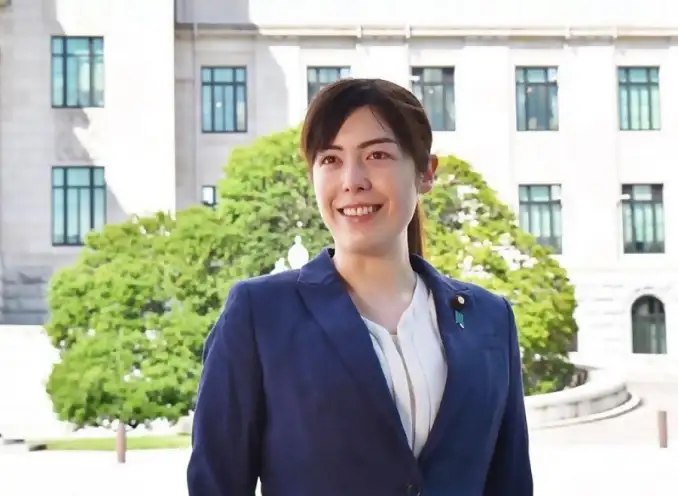

During the Nico Nico Super Conference 2026, held April 25 and 26 at Makuhari Messe, Kimi Onoda, Minister of State for Economic Security and Cool Japan Strategy within Prime Minister Sanae Takaichi’s cabinet, delivered what is already being considered one of the most memorable speeches in the otaku community’s recent history. Her message was direct: the Japanese government will not tolerate foreign interference in the creative freedom of its anime, manga, and video game industries, and the state will act as a shield against any outside pressure.
The phrase that immediately went viral was blunt and unambiguous. Yakamashii, kore ga Nihon ja!, “Shut up, this is Japan“, resonated instantly across social media, spreading well beyond Japan’s borders within hours of the event.
「やかましい、これが日本じゃ!」
小野田大臣がニコニコ超会議で「海外基準で日本のコンテンツが攻撃を受けたときに、国が毅然とした対応で守り抜くから “もう好きにやって” という腹の括りは必要」と言及
“政府は口出しせず後押し”クリエイターへの利益還元や人材育成も熱く語る#ニコニコ超会議2026 pic.twitter.com/jV3HllByQM— ニコニコニュース (@nico_nico_news) April 26, 2026
Creators first, politicians second
Onoda was explicit about one thing from the start: the global success of otaku culture has nothing to do with government policy or bureaucratic decisions. Every bit of that success belongs to the creators who built it and the fans who showed up for it. The government’s role, she argued, is simply to support from a distance, without dictating, without restricting, and without attaching conditions to that support.
The most intense moment of her speech came when she addressed the issue of foreign censorship directly. If a Japanese creative work faces irrational criticism or pressure from outside the country, Onoda promised the government will step in as a shield to protect it. No public apologies to satisfy international markets, no bowing to outside moral standards. She also proposed creating a single administrative window to handle all international procedural paperwork, so that creators can focus on their work instead of fighting bureaucracy.
Onoda is not a newcomer to these discussions. She is the youngest minister in Takaichi’s cabinet, born in Chicago to a Japanese mother and an Irish-American father, and she has been publicly identified as an otaku for years. Old social media posts of hers went massively viral, she has over one million followers on X, in which she openly declared her love for 2D characters and her complete disinterest in real-life romance.
Before entering politics, she worked in the Japanese creative content industry, specifically at a company that produced female-oriented narrative games and drama CDs. She is also a member of the Parliamentarians’ League for Japan’s Anime, Manga and Games, a group within the Liberal Democratic Party dedicated to protecting the creative industry.
For the otaku community, her presence in government has never been purely symbolic. She has consistently argued that fiction and real-world responsibility are two separate things, and that anime and manga should never be used as scapegoats for social problems.
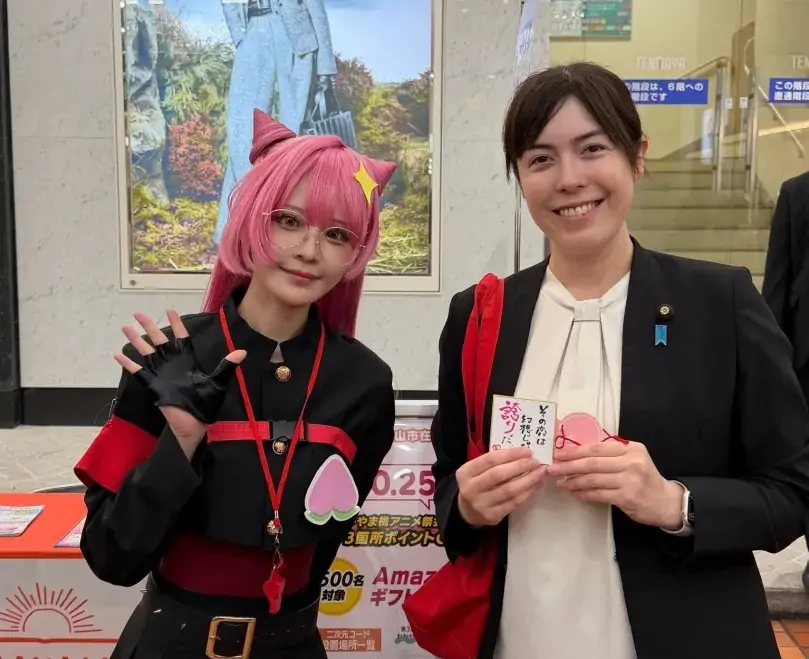
Why this moment matters beyond the speech
The timing of Onoda’s statement is not accidental. In recent years, the otaku industry has faced a very specific and damaging kind of external pressure that goes beyond criticism. Several American credit card companies and payment processors, influenced by certain social movements, began blocking transactions on Japanese websites that offered content with controversial themes or higher age ratings, even when that content was completely legal under Japanese law. The impact on small and medium-sized Japanese companies was severe, cutting off international revenue streams and threatening the survival of businesses that depended on those sales.
At the same time, creators had growing concerns that government or corporate funding would start coming with strings attached, financial support in exchange for content adjustments. That concern had real precedent. Previous Cool Japan initiatives had a history of creating more bureaucracy than actual results for creators on the ground.
Onoda’s speech addressed both fears at once. The government will not meddle in what gets created. And when foreign pressure comes, financial, political, or otherwise, the state will push back rather than comply.
A policy backed by billion-dollar ambitions
Onoda’s position fits squarely into a much larger strategic framework. Japan’s Ministry of Economy, Trade and Industry has set a goal of expanding the overseas market for domestic content, anime, manga, video games, music, and live-action, to 20 trillion yen by 2033. Anime alone is targeted to grow from 2.1 trillion yen in overseas revenue in 2024 to 6 trillion yen by 2033, roughly tripling in under a decade.
One of the five key principles underpinning that plan, proposed by METI in late 2025, is a direct promise of “no interference in creative works.” The principle was designed specifically to reassure studios and artists that government funding would not come attached to content restrictions. Onoda’s speech at Nico Nico is the loudest and most public expression of that principle to date, delivered directly to the community it was meant to protect.
For anime fans worldwide, what happened at Nico Nico Super Conference 2026 represents something genuinely new. A cabinet-level official, who is herself a self-identified otaku with a documented passion for the culture, stood in front of that same community and made a binding public commitment: creative freedom is non-negotiable, and Japan will defend it. Whether execution matches the promise remains to be seen, but the statement itself is unprecedented in scope and tone.
Minister Kimi Onoda has, without question, become the most talked-about politician in the global otaku community. And given everything she said, and everything she backed it up with, it’s not hard to understand why.
Do you think Japan is making the right move by standing firm against foreign pressure on anime and manga? Tell us what you think in the comments, we want to hear from you!