



Although it may seem like a simple task, the way you charge your smartphone has a direct impact on your battery’s longevity. The real key point isn’t solely the phone’s state during charging, but rather the conditions and the habits around when and how you plug it in.
Modern devices incorporate intelligent technology to manage electrical flow, but applying the right routines makes a significant difference in battery performance over time, and the sooner you start, the better.
Charging on or off: what actually makes a difference
For most people, keeping their phone on while charging is the most convenient approach, and it works fine as long as you’re not pushing the device hard at the same time. Activities like gaming, streaming video, or running heavy apps while charging increase internal temperature, and that heat is what does the real damage to the battery over hundreds of cycles.
Charging with the phone turned off is technically faster and more efficient, since no background processes are consuming power and all the incoming current goes directly to the battery. In practice, few people do it because staying reachable matters, but it’s a useful option when you need a quick top-up and can afford the downtime.
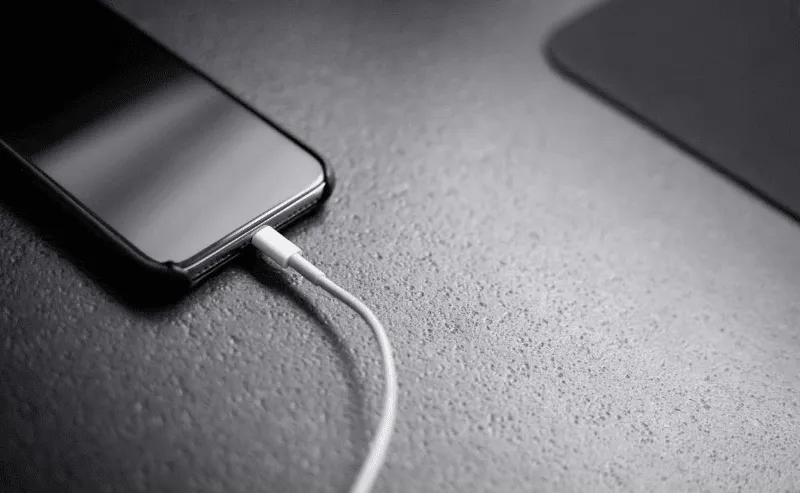
What most users don’t realize is that their phone already has a built-in system quietly working in their favor. Apple’s Optimized Battery Charging uses on-device machine learning to learn your daily routine and delays charging past 80% in certain situations, reducing the time your iPhone spends fully charged.
Google Pixel phones offer Adaptive Charging, which slows down the charging process when the phone detects it will be plugged in for an extended period. Samsung devices include a feature called Protect Battery that caps the charge at 85%, keeping the battery away from the voltage stress that comes with hitting 100% every day. If you haven’t checked whether any of these features are active on your device, it’s worth doing it now.
Fast charging: use it smart, not by default
Fast charging is one of the most convenient features in a modern smartphone, going from 0 to 50% in under 30 minutes is genuinely useful. But there’s a tradeoff that doesn’t get enough attention. When you push high current into a lithium battery quickly, it generates heat that degrades the electrolyte, warps the anode’s graphite structure, and triggers unwanted chemical reactions inside the cell.
A 2026 peer-reviewed study published by researchers at the University of West Attica found that after 500 projected charging cycles, continuous fast charging at high wattage brings battery health down to roughly 87%, compared to 92% with standard charging.
That 5-point gap may not sound like much, but for anyone who holds onto their phone for three or four years, it’s the difference between a battery that still gets through the day comfortably and one that doesn’t.
The smarter approach is to reserve fast charging for when you actually need it, rushing out the door, low battery before a meeting, and default to a standard charger whenever you’re not in a hurry, especially overnight. The slower the charge, the less heat, and the less wear accumulated over time.
The habits that are quietly destroying your battery
The 20 to 80 percent rule is the single most impactful thing you can apply starting today. According to Isidor Buchmann, CEO of Cadex Electronics and the main contributor to Battery University, lithium-ion batteries don’t like to be fully charged.
The science backs him up: Battery University’s BU-808 data shows that every 0.1V reduction in peak charge voltage doubles the cycle life of a lithium-ion cell, which means consistently charging to around 80% instead of 100% can roughly double how long your battery holds up before noticeable degradation sets in.
Overnight charging is another habit that seems harmless but adds real stress over time. Once the phone reaches 100%, the charger kicks back in every time the voltage drops slightly, keeping the battery pinned at a high charge level for hours. If your device has Optimized or Adaptive Charging enabled, this is handled automatically. If not, unplugging before you fall asleep is the better call.
Heat is the one factor that accelerates everything. Avoid charging in hot environments or leaving your phone under pillows, in cars, or in direct sunlight, all of these raise the temperature inside the battery and speed up chemical degradation significantly. Cold extremes are also a problem, slowing down charging and affecting performance, so room temperature is always the ideal environment.
Finally, the accessories. Always use the charger that came with your device or one certified by the manufacturer. Uncertified chargers can deliver unstable currents that put your battery, and your phone, at risk. That cheap cable isn’t worth it.
What habits do you follow when charging your phone? Do you use fast charging every day or are you more careful about it? Tell us in the comments!