



Guillermo del Toro isn’t holding back when it comes to generative AI, and his latest comments are hitting even harder than before. In a recent interview with Consequence, where he was named their 2025 Filmmaker of the Year, the Oscar-winning director delivered one of his sharpest critiques yet: AI “vandalizes the fact that art without pain is illustration”.
This isn’t just another hot take from a filmmaker resistant to new technology. Del Toro, whose newly released Frankenstein stands as one of the year’s best films, has built his entire career on painstaking craftsmanship. From the practical creature effects in Pan’s Labyrinth to the meticulous stop-motion animation of Pinocchio, his work screams human touch in every frame.
What makes Del Toro’s stance different
The director made it clear he’s not completely anti-AI. He acknowledged that artificial intelligence could potentially benefit fields like law, engineering, and chemistry, where there’s a finite number of data points to work with. But when it comes to art? That’s where he draws a hard line.
Del Toro explained that calling AI-generated content “generational” when it’s really just appropriation of human-created work doesn’t sit right with him. He pointed to music as a prime example, saying that when you listen to John Lennon, you know he lost his mother in a traffic accident. When you hear Bob Dylan, you understand the risks he took crossing from folk to rock. That biographical struggle, that lived experience, that’s what infuses art with meaning.
“If you remove any of that, then it’s illustrative art, and illustrative of what?” del Toro asked. It’s a question that cuts to the heart of the debate.
The director went even further, making a striking observation about what it would mean if society actually embraced AI-generated art. “I think the real barrier is if a society ends up making songs written by AI thrive, then that society without a doubt deserves songs written by AI,” he said. It’s a sobering thought that positions the AI art debate not just as a technical question, but as a reflection of what we value as a culture.
The human element in Frankenstein
Del Toro’s commitment to human craftsmanship shines through in his Frankenstein adaptation. Production designer Tamara Deverell spent months building an immense laboratory set inside an abandoned Scottish stone building. She and del Toro didn’t rely on digital shortcuts. Instead, they shared visual references, visited old sewage plants and towers in Scotland, and constantly traded paintings and architectural details.
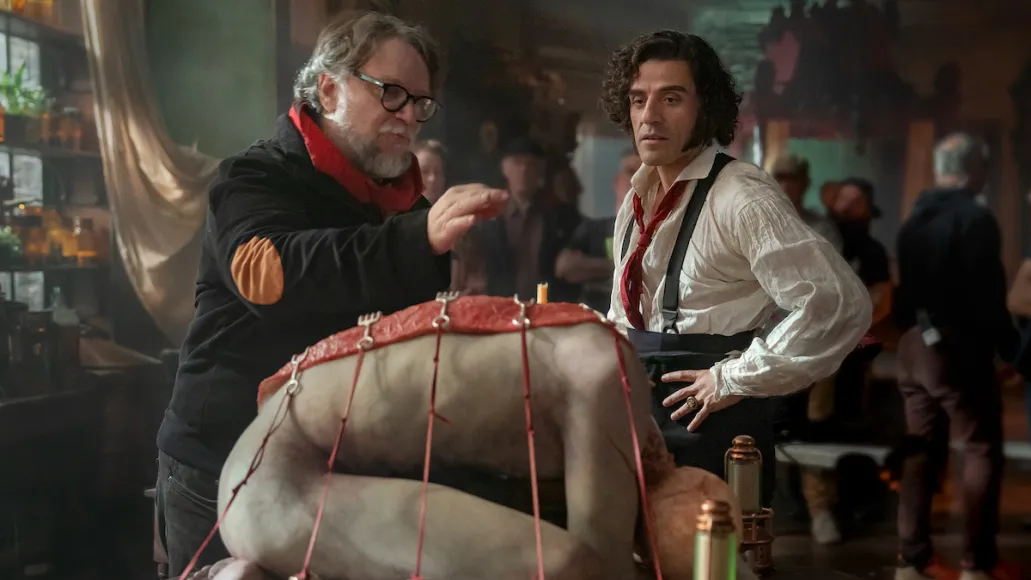
When Deverell first stepped inside the completed set, she couldn’t help but repeat the novel’s most famous line: “It’s alive!” That kind of emotional response, that connection between creator and creation, is exactly what del Toro argues can’t be replicated by algorithms.
Even creature designer Mike Hill worked with the same philosophy when designing Jacob Elordi’s Creature. Del Toro didn’t want a mechanical monster stitched together. He wanted a newborn, raw and vulnerable. Hill avoided any prosthetic that would distract from the eyes, the soul, because del Toro was adamant the audience must feel for the Creature more than fear him. Every decision came from a place of human intention and emotional truth.
This approach stands in stark contrast to what del Toro has previously called AI’s “semi-compelling screensavers.” At a BFI talk in London last year, he emphasized that the value of art isn’t about how little effort it requires, but about what you’d risk to create it. “How much would people pay for those screensavers?” he asked. “Are they going to make them cry because they lost a son?”
Del Toro even went so far as to say at a recent screening that he’d “rather die” than use generative AI. For him, machine-made images are empty shortcuts that strip away the work, risk, and struggle that make art genuinely meaningful.
A legacy of Anti-AI sentiment
This isn’t the first time del Toro has spoken out against AI art. Back in 2022, during the press tour for his Netflix film Pinocchio, he was already making his position crystal clear. “I think that art is an expression of the soul,” he told Decider. “At its best, it is encompassing everything you are. Therefore, I consume, and love, art made by humans. I am completely moved by that. I am not interested in an illustration made by machines and the extrapolation of information.”
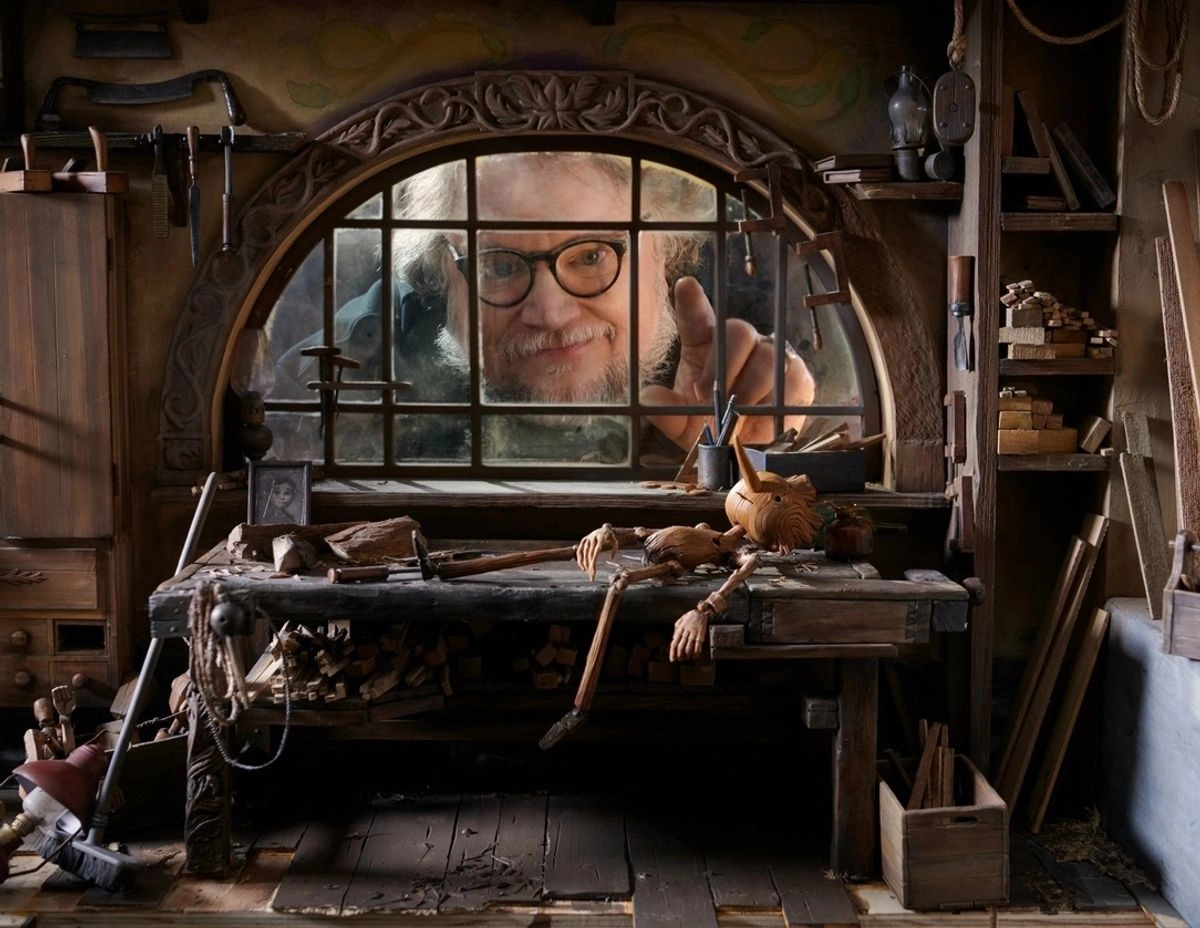
He even referenced conversations with renowned artist Dave McKean, who worked on iconic comics like Sandman and Hellblazer. According to del Toro, McKean’s greatest hope is that AI cannot draw. “AI can interpolate information but it can never draw,” del Toro explained. “It can never capture a feeling or a countenance or the softness of a human face.”
The bigger picture: A battle for art’s soul
Del Toro joins other legendary filmmakers like Hayao Miyazaki in pushing back against AI-generated content. Miyazaki, the co-founder of Studio Ghibli and the visionary behind films like Spirited Away and Princess Mononoke, called AI art “an insult to life itself” after viewing an AI-generated zombie animation. “Whoever creates this stuff has no idea what pain is whatsoever,” Miyazaki said in a 2016 documentary. “I am utterly disgusted.”
Miyazaki went even further, expressing concern about what AI art says about humanity’s self-image. “I feel like we are nearing to the end of the times,” he said. “We humans are losing faith in ourselves.”
The timing of these comments matters more than ever. As AI tools become more sophisticated and accessible, the entertainment industry faces real questions about what role this technology should play. Major companies are already implementing AI into their platforms and services. Some worry that AI could replace human artists in their jobs. Others argue it’s just another tool, like Photoshop or digital cameras before it.

But del Toro’s stance, backed up by the breathtaking human craftsmanship on display in Frankenstein, serves as a powerful reminder that some things can’t be algorithmed into existence. The blood, sweat, tears, and lived experience that go into creating meaningful art, the biographical struggles and risks that give music its soul, the months of physical labor building sets by hand, these aren’t inefficiencies to be optimized away. They’re the entire point.
Art without pain might technically be illustration, but as del Toro suggests, what’s the point of an illustration that illustrates nothing real? What moves us about John Lennon isn’t just the arrangement of notes, it’s knowing the loss behind the lyrics. What makes Frankenstein resonate isn’t just the visual spectacle, it’s understanding the human hands that built every piece of that world.
In an age where we can generate thousands of images with a few keystrokes, del Toro’s Frankenstein stands as a defiant statement. Real creation, true artistry, requires something machines will never have: a human soul willing to pour itself into the work, pain and all.
Feeling inspired by del Toro’s defense of real artistry? Swing by Geek Realm Hub where we’re always breaking down the biggest debates in film, gaming, and everything geek. Hit that follow button on Facebook and join the conversation!