


Disney has officially pulled out of its landmark deal with OpenAI, ending plans for a $1 billion equity investment in the artificial intelligence company led by CEO Sam Altman. The decision came today, hours after OpenAI announced it would be shutting down Sora, its standalone AI video generation app, without providing an official explanation for the closure. According to sources familiar with the matter, “the deal is not moving forward.”
It also appears that no actual money changed hands, as the deal was never formally finalized. What looked like one of the most ambitious partnerships between Hollywood and Silicon Valley dissolved in a matter of months, announced in December, dead by March.
The deal that almost rewrote the rules
The partnership was announced on December 11, 2025, with significant fanfare from both companies. Under the three-year licensing agreement, Sora would have been able to generate user-prompted videos from a set of more than 200 masked, animated or creature characters from Disney, Marvel, Pixar and Star Wars. ChatGPT Images would also be able to generate fully formed images using the same licensed intellectual property, and Disney+ was set to add a curated selection of Sora-generated videos to its platform starting in early 2026.
The agreement was the first of its kind, a major entertainment studio not only tolerating AI-generated content using its characters, but actively licensing them for it. It was a bold move, and one that immediately drew strong criticism from Hollywood unions and creators who saw it as a direct threat to their livelihoods and intellectual property.
There’s an important detail in how the deal was structured regarding characters. Disney agreed to license characters specifically unassociated with any talent likenesses or voices. In other words, you could have seen Elsa in an AI-generated video, but you wouldn’t have heard Idina Menzel’s voice. The distinction mattered legally, but it wasn’t enough to quiet the backlash.

The deal had been brokered by then-Disney CEO Bob Iger, who had previously expressed a desire to introduce user-generated AI content on Disney+. The passing of the torch from Iger to new CEO Josh D’Amaro took place just last week during the 2026 Walt Disney Company Annual Meeting of Shareholders. D’Amaro essentially inherited this deal on his way in, and watched it collapse almost immediately after taking the reins.
Disney was also navigating a complicated dual position throughout all of this. Shortly before announcing the pact with OpenAI, Disney sent Google a cease-and-desist demand, alleging the internet giant was engaging in copyright infringement on a “massive scale” using AI models and services to exploit and distribute infringing images and videos.
That came after Disney had earlier in 2025 sent cease-and-desist letters to Meta and Character.AI, as well as lawsuits Disney filed together with NBCUniversal and Warner Bros. Discovery against AI companies Midjourney and Minimax alleging copyright infringement. The company was simultaneously suing AI platforms over IP violations while investing in one.
OpenAI pulls the plug on Sora
OpenAI had previewed Sora, its text-to-video model, in February 2024, released the first public version in December of that year, and launched the standalone Sora app in September 2025. The platform quickly drew attention for the stunning realism of its output, but it also generated immediate controversy in Hollywood over copyright concerns and how the model was trained.
When Sora first launched, filmmakers noted the tech was leaps and bounds ahead of other generative video models. Filmmakers could direct Sora to produce specific camera movements, vivid background detail, or multiple events happening simultaneously within a single prompt. Sora 2, released in September 2025, pushed things even further, native sound became possible, something AI video had historically lacked entirely.
The second iteration of Sora used an opt-out model for copyrighted material, requiring IP owners to proactively flag that they wanted their works excluded from the system. In November 2025, Japanese content trade group CODA, whose members include animation house Studio Ghibli, issued a letter to OpenAI demanding the company stop using their content to train Sora 2. Disney had originally opted out of the system before eventually agreeing to the licensing deal.
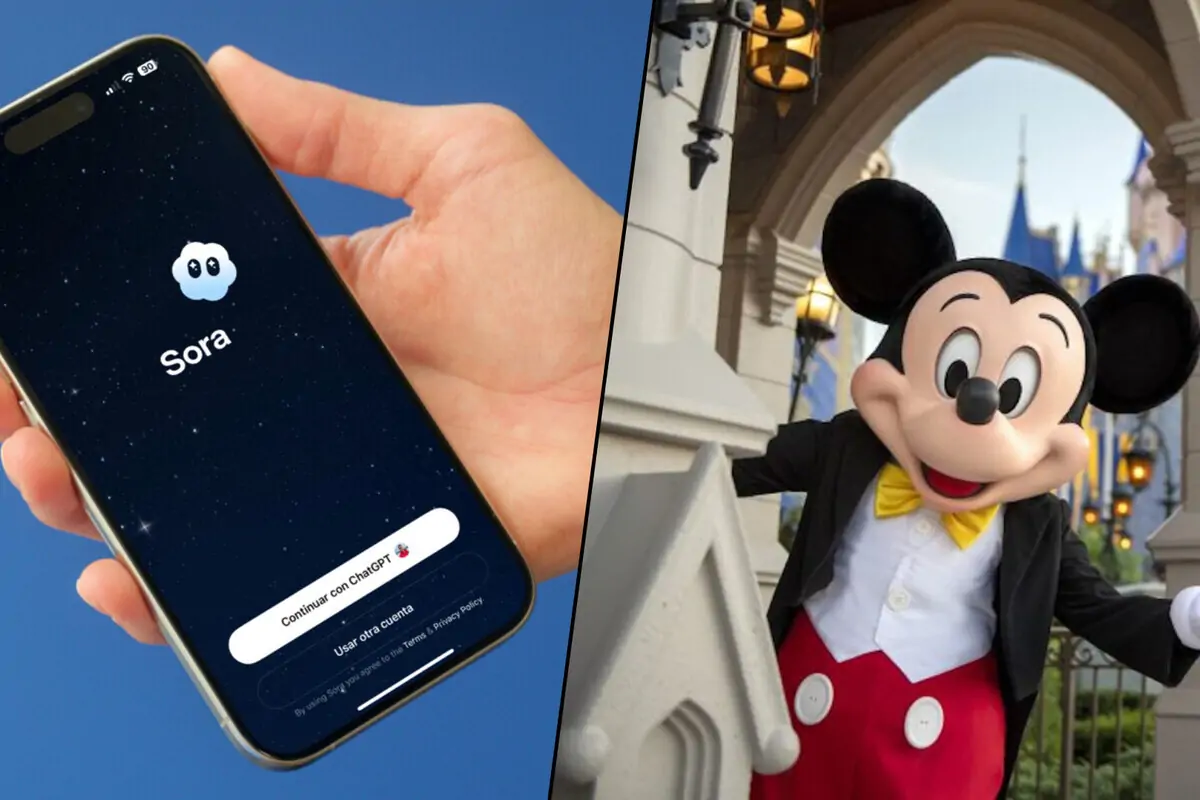
Sora was also making its way into film festivals like Tribeca, and actors were publicly touting its capabilities, all signs that despite the controversy, the platform was gaining real traction in creative circles.
Then came the shutdown announcement, with no warning. OpenAI posted via the official Sora account on X: “We’re saying goodbye to the Sora app. To everyone who created with Sora, shared it, and built community around it: thank you. What you made with Sora mattered, and we know this news is disappointing. We’ll share more soon, including timelines for the app and API and details on preserving your work.”
According to the Wall Street Journal, OpenAI is refocusing its efforts on coding and other business priorities ahead of a planned IPO. The developer API version of Sora is also being discontinued, and video generation within ChatGPT will no longer be supported. However, OpenAI is not abandoning AI video entirely, the company appears to be folding those capabilities into its broader product ecosystem rather than maintaining them as a standalone offering.
Disney responded to the news with a measured statement. A company spokesperson said: “As the nascent AI field advances rapidly, we respect OpenAI’s decision to exit the video generation business and to shift its priorities elsewhere. We appreciate the constructive collaboration between our teams and what we learned from it, and we will continue to engage with AI platforms to find new ways to meet fans where they are while responsibly embracing new technologies that respect IP and the rights of creators.”
What comes next for AI video
With Sora out of the picture, the competitive landscape shifts considerably. Its closure puts Google in a position of power, making it essentially the only player in the space with scale, though Google has not inked any licensing deals with IP holders and has in fact been facing lawsuits from some of them.
Other competitors are also moving fast. Chinese company ByteDance released its Seedance 2.0 model, a similarly powerful video generation tool with even fewer guardrails on likeness protections and copyrights. Google DeepMind’s Veo 3 is another powerful model that has been actively courting filmmakers with its suite of creator tools.
It will be interesting to see how film studios themselves respond in the absence of a major tool like Sora, including the possibility of launching their own models trained exclusively on their own IP. Disney, for its part, is clearly not stepping away from AI. The company’s statement makes that plain, they’re already looking toward other platforms and partners to continue exploring AI-driven content experiences.
Sora’s shutdown reflects more than a single product decision. It shows how quickly legal, creative, and business pressures can reshape AI development. For Hollywood, the fight over AI and intellectual property is far from over. Sora arrived with enormous ambition and real technological achievement behind it, and still didn’t survive long enough to fulfill any of the promises made around it.
What do you thin, was OpenAI right to shut down Sora, or did they pull the plug too soon? Drop your take in the comments, we want to hear from you!