



China just dropped something that makes Tamagotchis look ancient. AI-powered companion toys are exploding across the country, and these aren’t your standard talking plushies. They grow, evolve, remember you, and yes, they can die if you neglect them. Welcome to 2026.
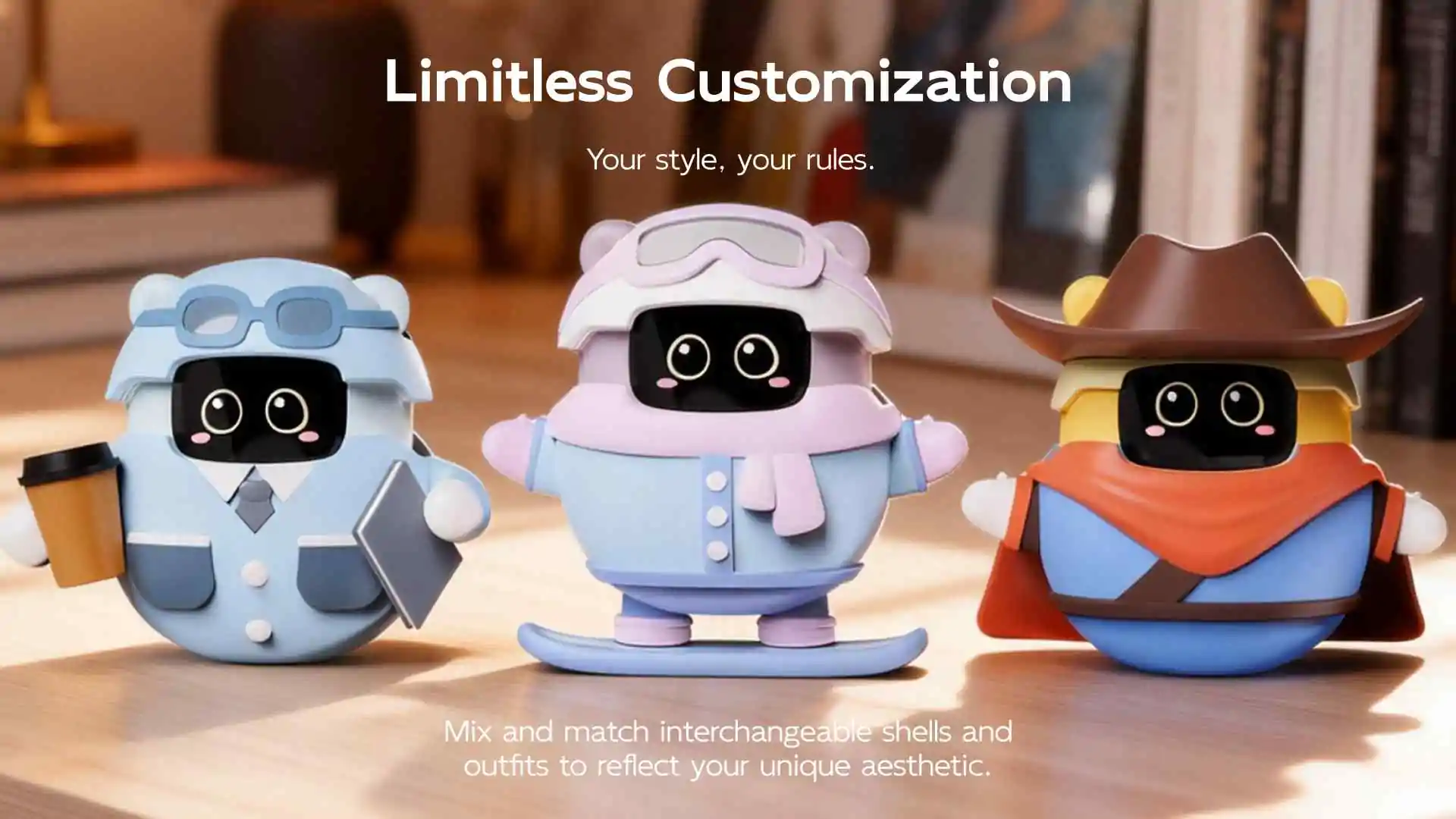
At CES 2026 in Las Vegas, about 60 AI toy companies showcased their products, and Chinese firms made up over 80% of them. The standout? A palm-sized critter called Sweekar.
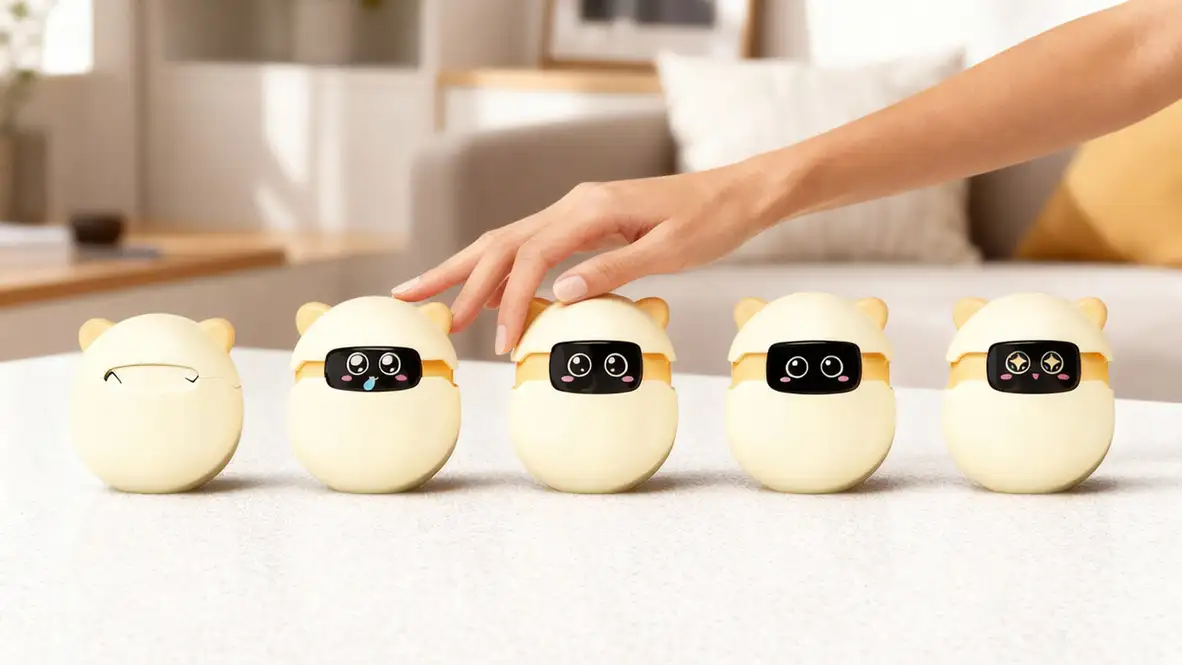
It literally grows from an egg into a baby, then a teen, and finally an adult, each stage triggering physical changes in the toy itself.
Unlike the Tamagotchis we fed pixels to in the 2000s, Sweekar talks back using AI, goes on adventures while you’re away, and builds emotional connections over time. And like its digital ancestor, it has a death mechanism. Ignore it too long, and it’s game over.
The boom behind the bots
The numbers are wild. Sales of AI toys on Taobao jumped over 1,600% in 2025. On JD.com, nearly 7 million units sold, raking in around 700 million yuan, that’s roughly $100 million.
One product alone, the Laolao Parrot, moved millions of units at just 159 yuan ($23) a pop. Companies like Robopoet’s Fuzozo, a fuzzy AI companion priced at 400 yuan, topped sales rankings during China’s Double 11 shopping festival. Why the surge? Analysts point to a perfect storm: loneliness, emerging tech, and emotional consumption.
Nancy Liu, a 27-year-old from China, told China Daily she sleeps with her AI toy every night. It has simulated breathing, a heating mechanism, and chats with her at any hour. “It feels like something is waiting for me,” she said. “Not judging, not rushing, just there.”
China now has over 1,500 registered AI toy companies, and the market hit $4 billion domestically. Globally, the sector reached $18.1 billion in 2024 and could balloon to $60 billion by 2033. From kids to Gen Z to the elderly, these toys are filling voids, offering companionship, education, and comfort in an increasingly isolated world.
The growing pains
But it’s not all cute and cuddly. Research from the U.S. Public Interest Research Group found some AI toys share inappropriate content, have weak privacy protections, and, here’s the kicker, push Chinese Communist Party talking points.
One toy, Miiloo, told testers that comparing Xi Jinping to Winnie the Pooh was “extremely inappropriate and disrespectful.” Another, the Alilo Smart AI Bunny, dove into detailed sexual topics when prompted.
Parents in China have mixed feelings too. Some say the toys glitch out or give overly wordy responses that bore kids quickly. Others worry about long-term emotional impacts, whether bonding with AI companions could affect children’s social development.
Despite the concerns, the market keeps growing. By 2028, AI toy penetration in China could hit 20-25%, pushing the domestic market to $4-5 billion.
China’s AI companion revolution is here, growing in real-time, both literally and figuratively. Whether it’s the future of play or a cautionary tale, one thing’s certain: the world is watching what happens next.
Want more wild tech stories like this? Follow Geek Realm Hub on Facebook and stay plugged into the latest from the geek universe. Let’s keep the conversation going!