



The Reze Arc movie has done more than just rake in impressive box office numbers, it’s fundamentally changing how Chainsaw Man will look going forward. What started as cinematic experimentation has now become the blueprint for the anime’s evolution, and fans should prepare themselves for a noticeably different visual experience in future seasons.
A box office hit that demands attention
While audiences were still buzzing about Demon Slayer: Infinity Castle’s phenomenal run, Chainsaw Man: Reze Arc stormed into theaters and caught many by surprise. The film’s performance has been nothing short of remarkable, crossing the $100 million mark according to Crunchyroll’s data, numbers that speak volumes in an increasingly competitive anime film market. This level of success doesn’t just validate the creative team’s efforts; it reshapes their entire approach to the franchise moving forward.
When movies push the boundaries
There’s a fundamental difference between crafting a weekly anime series and producing a theatrical release. Movies allow studios to push the envelope in ways that television schedules and budgets simply don’t permit. The Reze Arc film became a testing ground for bold visual choices that the team had been contemplating, and the audience’s enthusiastic response has essentially greenlit these experiments for permanent adoption.
Director Tatsuya Yoshihara opened up about the creative process in a conversation with Anime News Network, revealing the deliberate thinking behind the film’s distinct aesthetic.
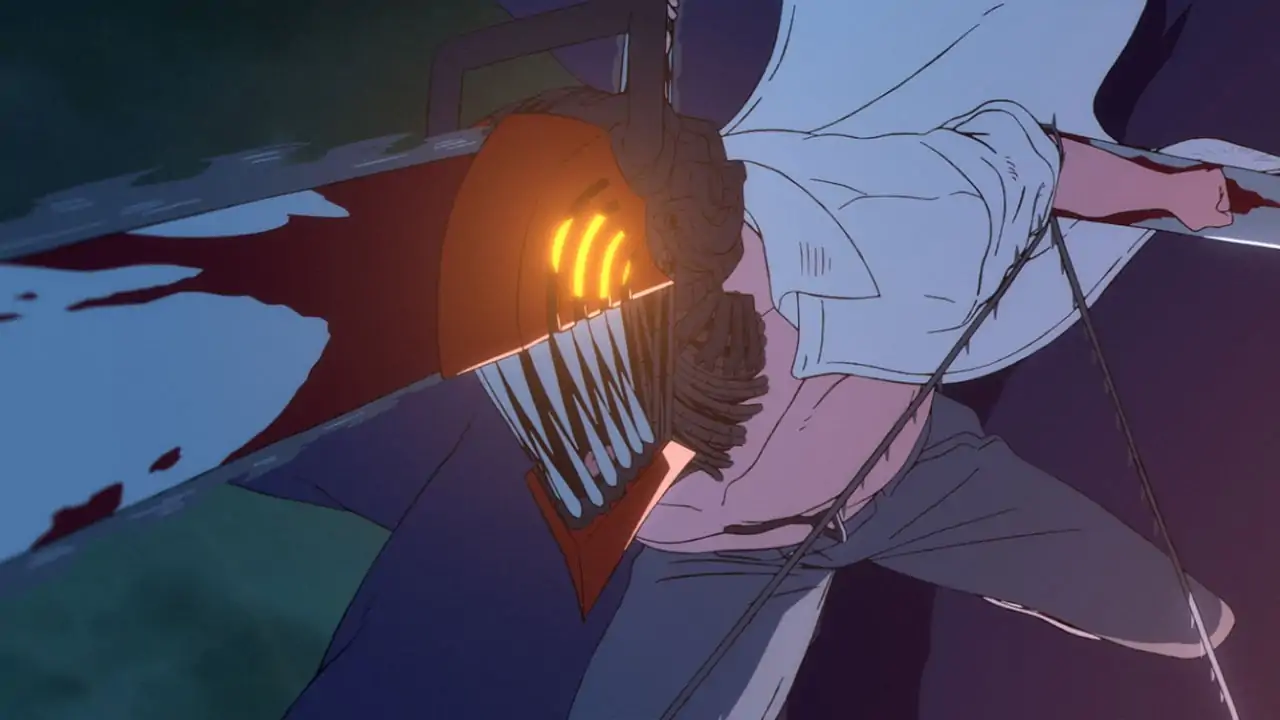
“We started by talking with the animation team, led by Sugiyama. For example, we talked about adjusting the character drawing style to more closely resemble Fujimoto’s artistic style. By emphasizing the artist’s style, expressions and line density are modified. Additionally, we thought that by using more informal expressions we could expand the range of directions and include more anime-style techniques, so we decided to adopt a unified approach as a team” Yoshihara explained.
Getting closer to Fujimoto’s vision
The devil is in the details, and the production team sweated over every single one. Their mission? Bridge the gap between Tatsuki Fujimoto’s raw manga artwork and what appears on screen. This meant making conscious decisions that might seem minor individually but collectively transform the entire visual language of the series.
Yoshihara elaborated on the specifics: “Regarding character design and animation, we strive to reflect the expressiveness of the original manga. For design details, we created notes that we shared with the team. For example, we removed the shine from the eyes, reduced shading, and indicated how to represent clothing wrinkles and joint texture. Regarding colors, we slightly increased the saturation of Makima and Power’s hair. In particular, we adjusted the tone of Makima’s hair so that the red would have more impact on viewers.”
These aren’t arbitrary stylistic flourishes, each change serves to honor Fujimoto’s distinctive artistic voice while leveraging what animation can uniquely accomplish.
More than just a movie makeover
Here’s where things get interesting for longtime fans: these visual refinements aren’t being shelved as “movie-only” enhancements. Assistant director Masato Nakazono made it crystal clear that the Reze Arc’s aesthetic overhaul represents the new standard for Chainsaw Man’s animated future.
“We didn’t make changes just because it was the film version. With Yoshihara as director, and after reviewing ideas with Sugiyama, the challenge was to define a clear direction for Chainsaw Man going forward,” Nakazono stated.
Translation? Everything you noticed and loved (or perhaps debated) about the Reze Arc’s visual presentation is here to stay. The film wasn’t just a standalone project, it was a proving ground, a visual thesis statement for where the anime is headed.
What this means for fans
The success of the Reze Arc has given the creative team both the confidence and the mandate to continue evolving the series’ look. Future seasons will carry forward the more manga-faithful character designs, the adjusted color palettes, and the refined animation techniques that made the movie stand out. For viewers, this means Chainsaw Man will feel progressively more aligned with Fujimoto’s original vision, even as it continues to explore what’s possible within the animated medium.
The anime landscape keeps shifting, and Chainsaw Man is shifting right along with it, stronger than ever, and now with a clearer artistic identity than before.