

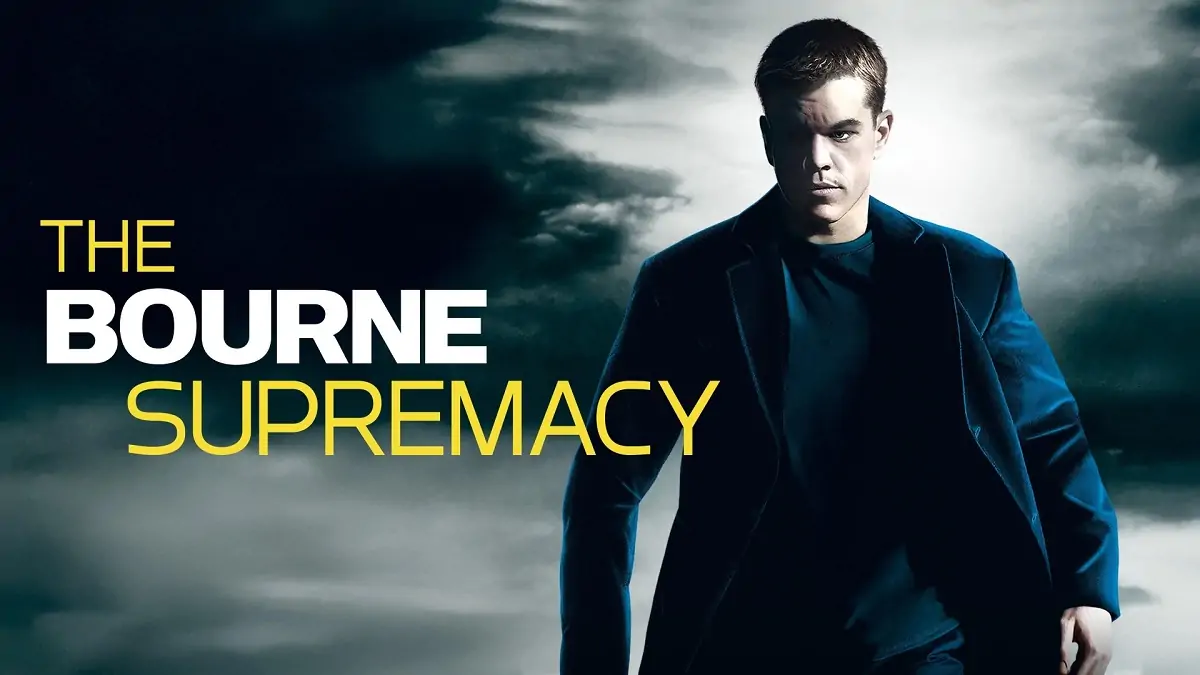

In July 2004, just two weeks before The Bourne Supremacy was set to hit theaters, director Paul Greengrass and star Matt Damon came up with a brand new ending for the film.
The idea was better than what they had, they were sure of it, but making it happen would cost $200,000 and require pulling Damon off the European set of Ocean’s Twelve to fly in for a reshoot. The producers agreed, reluctantly. It turned out to be one of the best decisions in the franchise’s history.
The film had already been shot, edited, and was days away from release. And yet Greengrass made the call anyway.
The ending that almost was
Originally, The Bourne Supremacy closed with Jason Bourne collapsing after his emotional confrontation with Irena Neski, the daughter of the two people he had been ordered to kill years earlier, and then waking up in a Moscow military hospital, where CIA Deputy Director Pamela Landy was waiting for him.
The two had essentially the same conversation that ends up in the final film: his real name, David Webb, his date of birth, the quiet acknowledgment between two people who had been hunting each other across the globe. Landy steps out of the room, then Bourne vanishes from the hospital room through an open window, and the film cuts to him walking down a cold Russian street as Moby’s “Extreme Ways” kicks in.
It wasn’t a bad ending. But it wasn’t a great one either, and the test screening numbers backed that up.
The original Moscow ending proved so unpopular with audiences that Greengrass got together with Damon, came up with a completely new approach, and phoned the producers to tell them the new idea was “way” better. Damon was in Europe filming Ocean’s Twelve alongside George Clooney and Brad Pitt at the time, but the team made it work. He was pulled from that set and brought in for a one-day reshoot.
A New York rooftop changes everything
Instead of a Moscow hospital room, the new ending placed Bourne in New York City, watching Landy from a rooftop across the city as he calls her on the phone. She gives him his real name. He tells her she looks tired and should get some rest. Then he disappears into the crowd.
It’s a completely different emotional note. In the original version, Bourne is wounded and horizontal, reactive, almost helpless. In the new version, he’s standing above the city, calm and untouchable, completely in control. It’s the same information delivered in a completely different context, and that context changes everything about how the audience experiences the character.
The film tested 10 points higher with the new ending. In the world of studio test screenings, that’s a massive gap, the kind of number that justifies every dollar spent and every logistical headache that came with a last-minute reshoot.
The numbers don’t lie
The Bourne Supremacy opened at number one at the domestic box office and spent eight of its first nine weeks in the Top 10. It grossed over $290 million worldwide on a $75 million budget and earned an 81% approval rating on Rotten Tomatoes. For a sequel that replaced its original director and completely reinvented its visual style, Greengrass brought his documentary-style handheld camera work after replacing Doug Liman from the first film, those numbers were a statement.
The $200,000 reshoot turned out to be a fraction of a percent of the film’s total budget, and arguably the most impactful money spent on the entire production. It also set the emotional and stylistic tone for The Bourne Ultimatum, where that same New York rooftop scene is revisited as the third film picks up exactly where the second left off.
Matt Damon later said the ending of Supremacy is one of his personal favorites, specifically the sequence where Bourne arrives at Irena Neski’s apartment to confess what he did to her parents. Pair that scene with the New York phone call and you have a closing act that works on every level: guilt, grief, and then a strange quiet sense of freedom. It’s an ending that doesn’t tie anything up neatly, but it gives the character exactly the kind of haunting dignity the story earned.
There’s also an interesting production detail buried in all of this: the film was actually shot in reverse order of its settings, with Moscow filmed first and Goa last. So even the production itself was working backward. The reshoot was just one final course correction at the very end of a process that had been unconventional from the start.
Two weeks. $200,000. One phone call from a director who trusted his instincts. That’s all it took to give audiences one of the most memorable endings in modern action cinema.
Do you think the New York ending was the right call, or would the original Moscow version have worked just as well? Tell us in the comments!