

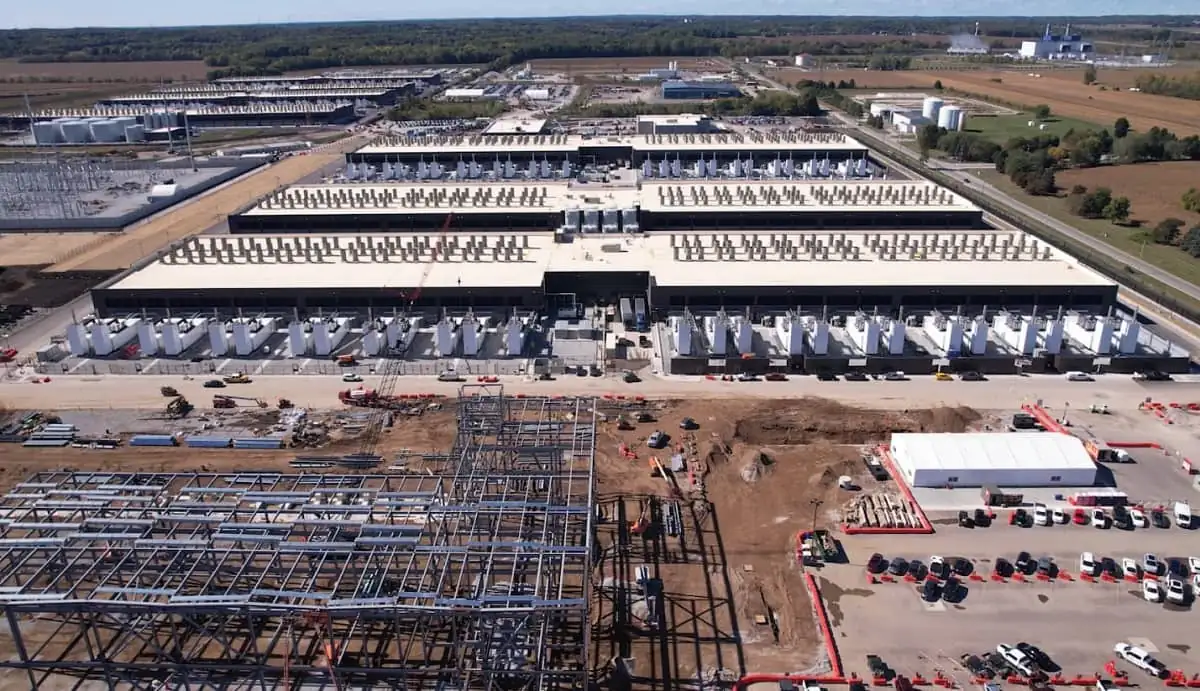

Across the United States, a fight most people never saw coming is playing out block by block, county by county: ordinary residents versus the AI industry’s most physical footprint, the data center. What used to be a quiet zoning matter has turned into one of 2026’s most contentious tech stories, with communities organizing against the power grabs, water drains, and constant noise that come standard with these facilities, and increasingly, winning.
The scale of the pushback is no longer marginal. A Gallup poll found that 71% of Americans oppose having an AI data center built near them, citing resource strain, pollution, noise, and rising utility bills as their core objections.
Research firm Data Center Watch tracked at least 75 major projects worth more than $130 billion that faced serious community resistance in the first quarter of 2026 alone, many of them ultimately delayed or canceled.
On July 18, 142 separate protests against data centers were held across 42 states, and more than 300 cities, towns, and counties nationwide have already enacted bans or moratoriums on hyperscale data center construction. Harvard researchers counted over 4,000 U.S. facilities already operating as of April 2026, with another 3,000 planned or under construction, and total data center power demand is projected to more than double by 2030.

The power bill nobody signed up for
Data centers already consumed roughly 4% of all U.S. electricity in 2024, a figure set to climb sharply as more AI infrastructure comes online. The real friction, though, isn’t just the raw consumption, it’s who ends up paying for it. When a utility has to build new substations, transmission lines, or generation capacity to serve a single massive customer, those costs frequently land on everyone else’s bill, including households that never asked for a data center in the first place.
In states with a heavy concentration of these facilities, electricity prices have climbed by as much as 267% over the past five years. Consumer Reports documented the case of John Steinbach, whose monthly electric bill jumped from about $100 to $281 practically overnight, a spike the outlet tied to the broader wave of rate increases linked to nearby data center demand. The strain has already forced utilities to take drastic action.’
AEP Ohio has paused new data center interconnections altogether, unable to keep up with the pace of requests. And in Northern Virginia, a power shortage led local communities to ask nearby data centers to fire up their own backup generators just to ease pressure on the grid, effectively shifting the noise and diesel pollution problem right back onto the residents living beside them, a case North Carolina activists have since pointed to as a cautionary tale.

There’s also growing scrutiny over what these facilities actually are. During public comment on a proposed data center in North Carolina’s Edgecombe County, an advocacy group spokesperson alleged that the developer’s own project documents indicated the facility could drill and burn natural gas on-site, require a dedicated pipeline, and run large diesel generators around the clock, meaning some of these proposals, according to their opponents, function less like data centers and more like unpermitted power plants with server racks attached.
The claim came from opponents’ testimony rather than independently confirmed permitting records, but it reflects the level of scrutiny these projects are now facing at public hearings nationwide. A number of tech executives have since signed onto a White House-sponsored pledge aimed at limiting the impact of data centers on residential electric bills, though the commitment remains voluntary.
Drought, groundwater, and the water nobody talks about
If electricity is the visible cost, water is the one that sneaks up on communities until it’s too late to reverse. A single mid-sized 100MW data center can burn through around 300,000 gallons of water a day for cooling, roughly what 2,600 households use.
The largest hyperscale campuses go much further, with some sites reportedly consuming up to 5 million gallons per day, comparable to the water usage of 50,000 people. Google disclosed using 6.1 billion gallons of water across its data center portfolio in 2023, while Microsoft reported 7.8 billion gallons that same year.
The geography makes the problem worse. A Guardian analysis found that more than half of all data centers planned across the United States are slated for drought-stricken regions, despite the enormous water volumes these facilities require to function.
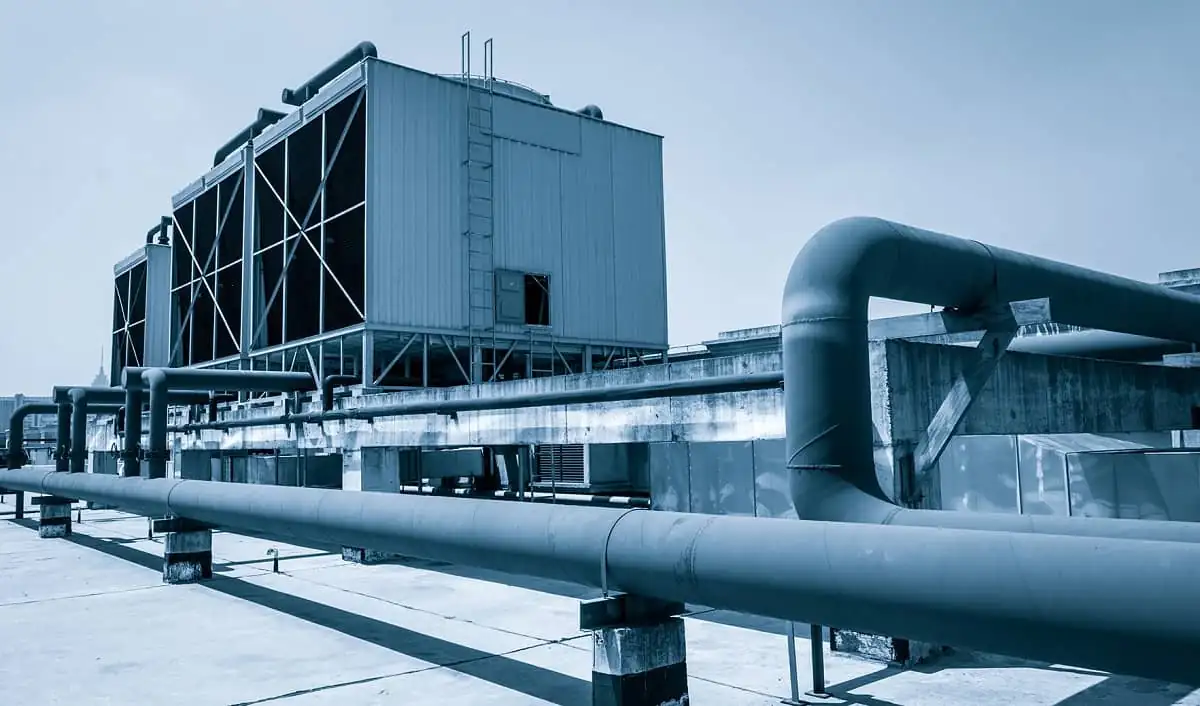
In The Dalles, Oregon, Google’s data center expansion triggered serious community backlash over water use, and in Arizona and Nevada, data center growth is now colliding directly with agricultural and residential water users against the backdrop of an already strained Colorado River basin.
For rural counties watching groundwater tables fall or rivers hit historic lows, adding a facility that needs hundreds of thousands, or millions, of gallons daily isn’t an abstract policy debate. It’s a direct threat to whether there’s enough water left for farming, drinking, and everyday life.
North Carolina, ground zero for the backlash
Nowhere illustrates the shift better than North Carolina, where at least 11 counties and 17 towns have enacted data center moratoriums in 2026 alone. Durham extended its pause to a full year, Asheville passed one unanimously, and Farmville approved a 12-month hold to give officials time to draft more permanent restrictions.
Florida has seen its own version of the fight: Escambia County commissioners voted 5-0 to adopt a resolution barring data centers from unincorporated county land entirely, after residents surfaced an email showing a developer had quietly approached a commissioner about a project before the public was ever informed.
Edgecombe County produced one of the clearest wins in this national pattern. Developer Energy Storage Solutions had been pursuing a data center campus near Tarboro that could have eventually reached roughly 300 acres and 900MW of capacity. Local resident Vinson Bridgers told commissioners during a public meeting that the Tar River had hit a historic low and groundwater levels kept dropping, arguing a small tax break wasn’t worth the risk to the county’s water and power supply.
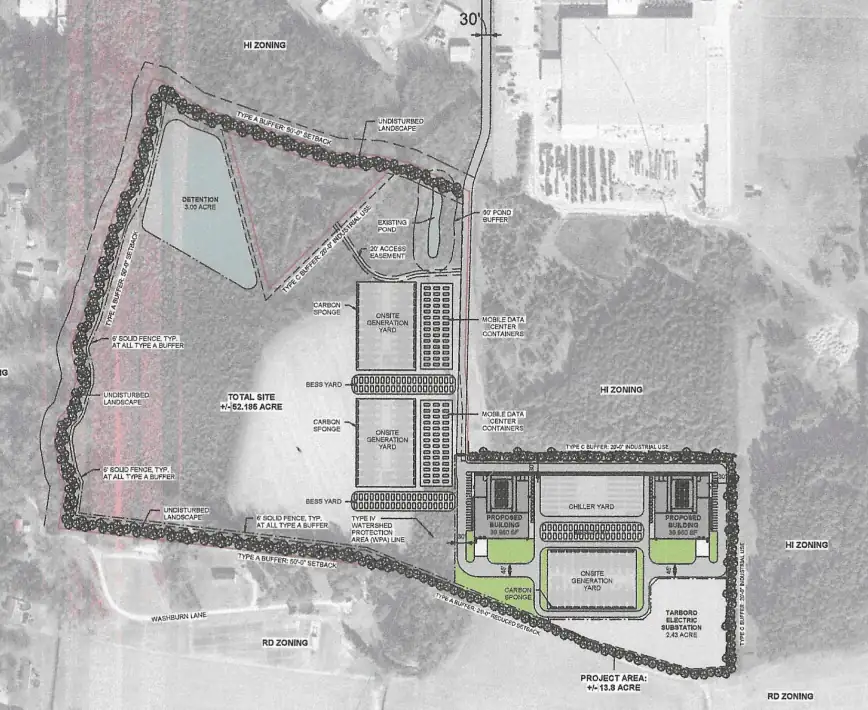
The Tarboro Town Council had already rejected the company’s permit application in a 6-1 vote, and after months of legal battles and sustained community pressure, the developer withdrew entirely in July 2026. Company president Dan Shaffer admitted in an email that investors chose to pursue “other projects that we have in friendlier communities.”
Edgecombe commissioners are now moving forward with a proposed 24-month moratorium on new data center development, following a petition signed by more than 1,300 residents. Board Chair Leonard Wiggins summed up the shift to North Carolina Health News: “Our county is getting active, and as we get active, our citizens get active… We’ve been sitting here for years doing as we please without question from our public. Our public is beginning to question what we do, it’s another day.”
Good Jobs First analyst Kasia Tarczynska framed the broader trend bluntly, noting that communities are increasingly recognizing these projects as extractive, taking far more than they give back. That recognition is no longer isolated to a handful of towns, it’s turning into coordinated, cross-state policy pressure that developers can no longer safely ignore.
None of this signals that AI infrastructure is disappearing; the industry’s growth curve remains steep. But it does mean the era of quietly dropping a massive server farm into a small town has ended. Communities are watching closely, asking harder questions, and, increasingly, showing up in numbers large enough to change the outcome.
So, do you think local communities should always have the final say over whether an AI data center gets built near them? Sound off below, genuinely curious where everyone lands on this.