



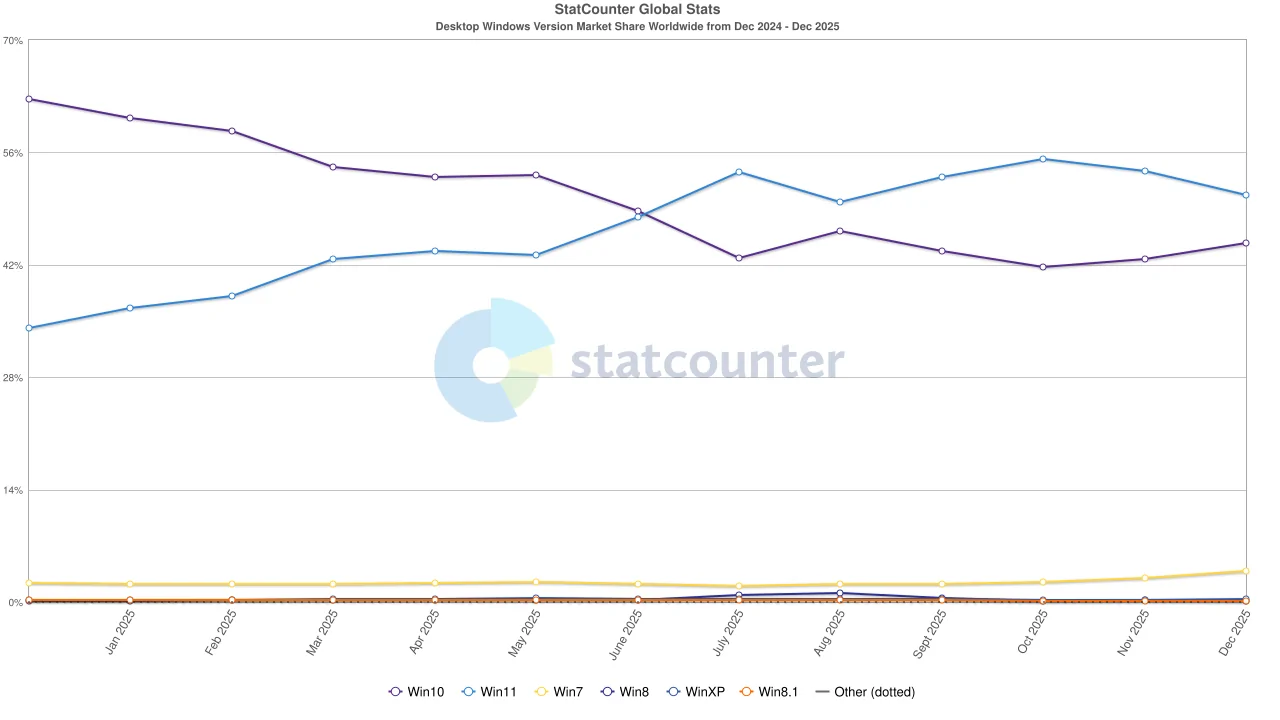
Something strange is happening in the Windows ecosystem, and Microsoft’s probably not thrilled about it. For three consecutive months, Windows 10 has been gaining market share while Windows 11 bleeds users, despite Windows 10 being out of support and no longer commercially available.
The December 2025 data from StatCounter tells a story Microsoft didn’t want written: users are actively ditching Windows 11, and they’re not looking back.
Here’s the kicker: no new PC, laptop, or device has shipped with Windows 10 preinstalled for over two years. Every single piece of hardware rolling off assembly lines comes with Windows 11 baked in.
Yet somehow, the older system is growing. Windows 11 dropped to 51.75% market share in December, while Windows 10 climbed to 44.29%. That’s not statistical noise. That’s a trend, and it’s pointing in one direction: away from Redmond’s latest operating system.
The math doesn’t lie. No retail channels are selling Windows 10 machines. Corporate deployments have moved on. The installed base of legacy hardware has been stable for years. So where’s this growth coming from? There’s only one explanation that fits: people with Windows 11 are deliberately downgrading.
They’re wiping their drives, hunting down old installation media, and rolling back to an operating system that Microsoft would rather forget exists.
Users are deliberately downgrading
Let’s be clear about what this means. Market share doesn’t materialize out of thin air. If Windows 11 is losing points and Windows 10 is gaining them, those users are coming from somewhere, and that somewhere is Windows 11 itself.
People are reinstalling older versions, performing downgrades, or outright migrating away from the OS Microsoft desperately wants everyone to adopt. This represents a conscious rejection of what Microsoft is offering.
This breaks a fundamental rule of the Windows ecosystem: users don’t go backward. Upgrades have always been the natural flow, even when people complained about Vista or Windows 8.
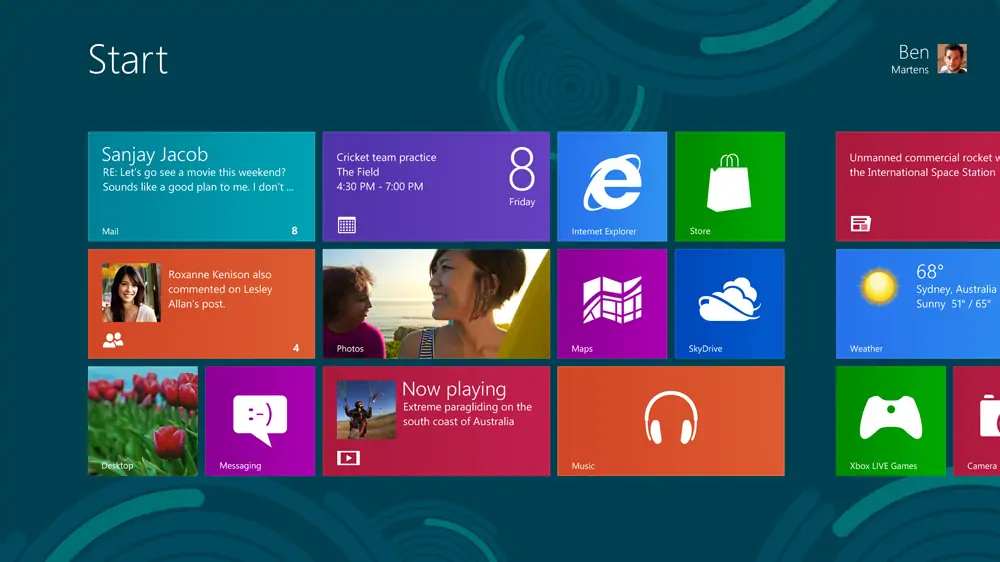
Sure, Vista was a mess and Windows 8’s Start Screen was universally hated, but most users just waited for the next version rather than downgrading.
But Windows 11 has managed to push users into doing something historically rare, rolling back to a system that offers no official support, no security updates, and no future. That should terrify Microsoft.
The numbers from StatCounter show this isn’t a one-month fluke. Windows 11 fell from 53.7% in November to 51.75% in December, a drop of nearly 2 percentage points. Meanwhile, Windows 10 rose from 42.7% to 44.29% in the same period.
Three consecutive months of this pattern means people are fed up enough to take action, and that action involves technical effort, finding installation media, potentially dealing with licensing issues, and accepting security risks.
Why the exodus? Blame AI, requirements, and loss of control
The reasons aren’t mysterious. Windows 11’s restrictive hardware requirements, TPM 2.0, specific CPU generations, Secure Boot mandates, locked out millions of perfectly functional machines from day one.
Microsoft drew an arbitrary line in the silicon sand and told users their three-year-old hardware was suddenly obsolete. That didn’t sit well with anyone, especially when those “unsupported” machines ran Windows 10 perfectly fine.
The redesigned interface frustrated power users who’d spent years building muscle memory.
The centered taskbar, the gutted right-click menus, the removal of features people actually used, it all added up to an operating system that felt like it was designed for touchscreens and tablets, not the desktop workstations and gaming rigs most people actually own.
Background services multiplied. Telemetry became more aggressive. System resources got consumed by features users never asked for and couldn’t easily disable.
And then there’s Copilot, Microsoft’s AI assistant that nobody asked for, few want, and many see as bloatware that creates more problems than it solves. It’s integrated deep into the system, constantly suggesting things, trying to be helpful in ways that just feel intrusive.
For users who want their OS to be a tool that stays out of the way, Copilot represents everything wrong with modern software design: feature creep, forced integration, and the assumption that AI makes everything better.
Users feel like they’ve lost control of their own systems. Windows 11 pushes updates on its own schedule, forces restarts at inconvenient times, and integrates features that can’t be easily disabled without registry hacks or group policy tweaks.
For gamers who need every ounce of performance and professionals who can’t afford downtime or unexpected changes, Windows 10 still delivers what Windows 11 promises but doesn’t always provide.
The data shows the gap between the two systems is now approaching 50-50. Windows 11 at 51.75% versus Windows 10 at 44.29% means we’re just over 7 percentage points away from a statistical tie. If this trend continues through early 2026, through January, February, March, Microsoft will have a full-blown crisis on their hands.
Not because users haven’t complained (they have, loudly and consistently), but because those complaints are now backed by migration data that’s impossible to ignore or spin.
This is the market rejecting their product in real time, and no amount of marketing or forced upgrade prompts can change that.
Even Windows 7, which officially died in January 2020, still holds 2.19% of the market, a testament to how strongly some users resist Microsoft’s push toward constant updates and AI integration.
Maybe this reality check will force Microsoft to reconsider their AI-first approach, dial back the telemetry, loosen the hardware requirements, and prioritize what users actually care about: stability, performance, and control.
Maybe they’ll remember what made Windows great through version 10, a solid, reliable platform that got out of your way and let you do your work. Because Windows 11, as the numbers clearly show, isn’t resonating with the people who matter most: the users themselves. And in the end, that’s the only metric that truly counts.
Want more tech insights and geek culture deep dives? Follow Geek Realm Hub on Facebook and stay plugged into everything that matters in our digital universe!